
 Arka Pratama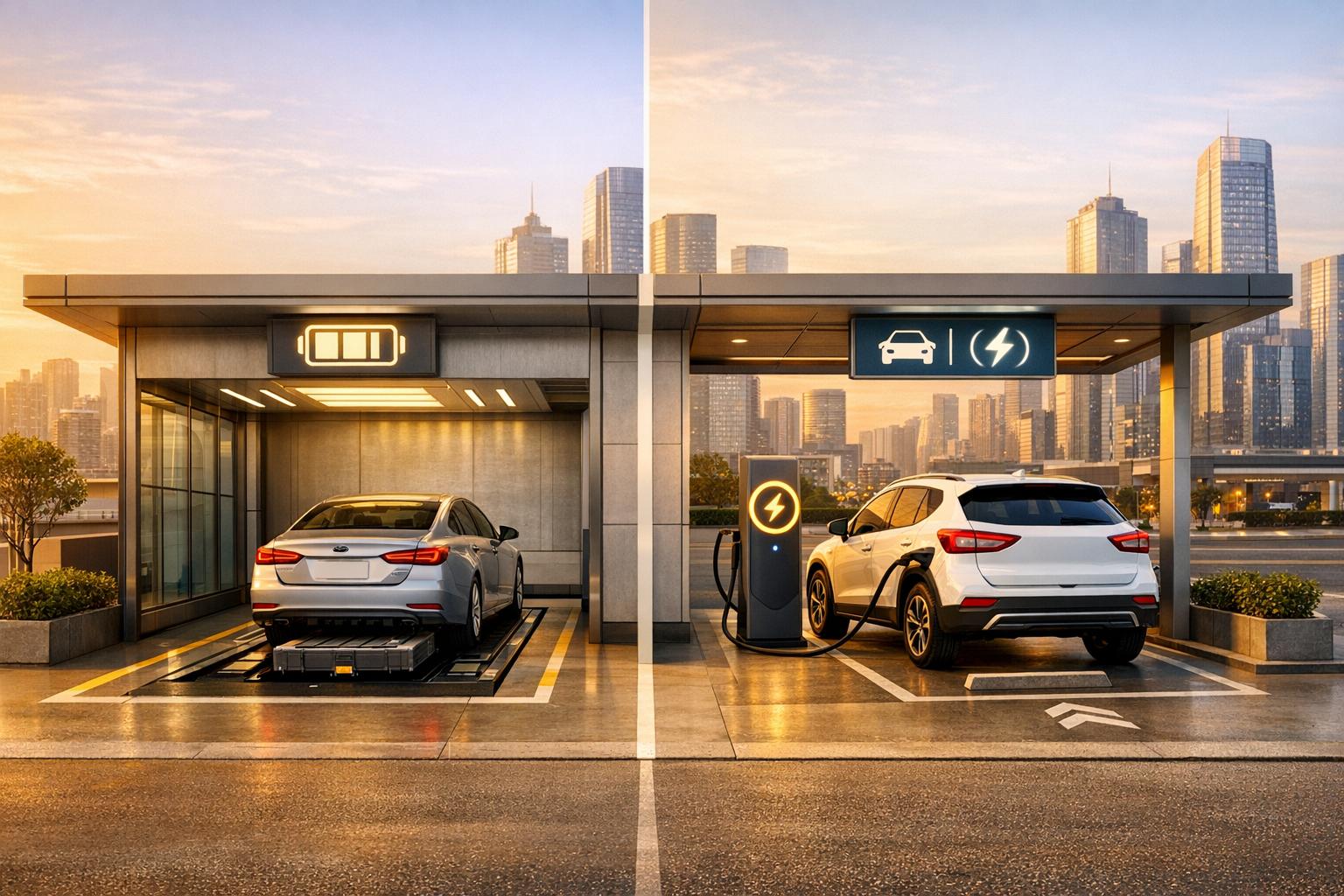
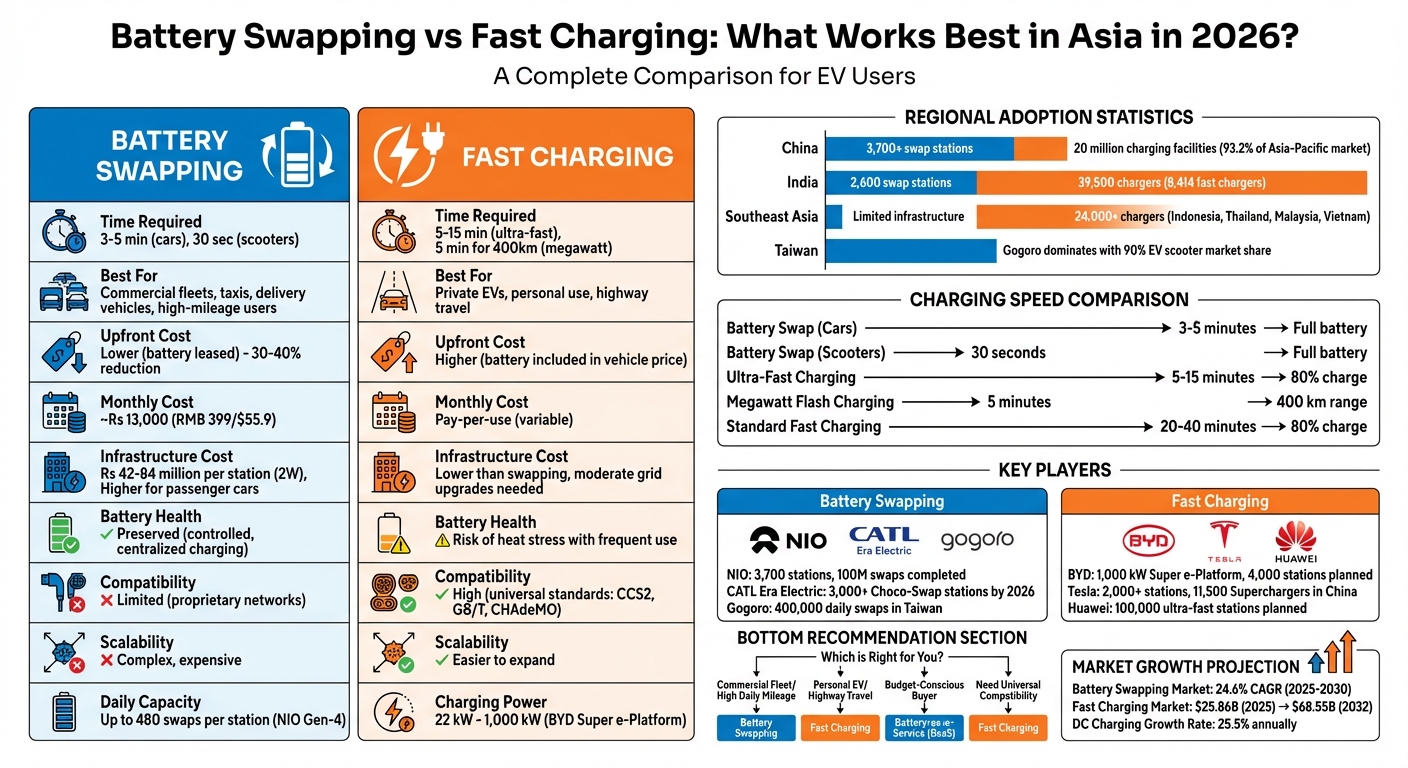
Battery swapping and fast charging are reshaping Asia’s EV market in 2026, each offering unique advantages for different users. Here’s a quick breakdown:
- Battery Swapping: Ideal for commercial fleets (e.g., taxis, delivery vehicles) due to its speed (3-5 minutes for cars, under 30 seconds for scooters) and subscription-based models that lower upfront costs. However, it faces challenges like high infrastructure costs, limited standardisation, and scalability issues outside China.
- Fast Charging: Suited for personal EVs, with ultra-fast chargers now delivering 400 km range in 5 minutes for high-end vehicles. It’s more flexible, widely compatible, and easier to scale, though heavy reliance on fast charging may impact battery lifespan.
China dominates both technologies, with 3,700+ swap stations and 20 million charging facilities, while India focuses on two- and three-wheelers. Southeast Asia is catching up, but infrastructure remains limited in some regions.
Quick Comparison
| Feature | Battery Swapping | Fast Charging |
|---|---|---|
| Time Required | 3-5 min (cars), 30 sec (2W) | 5-15 min (ultra-fast) |
| Best For | Fleets, high-mileage users | Private EVs, highway use |
| Cost (Upfront) | Lower (battery leased) | Higher (battery included) |
| Infrastructure | Expensive, complex | Easier to expand |
| Battery Health | Preserved (controlled charge) | Risk of heat stress |
| Adoption | China leads globally | Growing across Asia |
Both options cater to distinct needs, but the choice depends on usage patterns and local infrastructure.
Battery Swapping vs Fast Charging in Asia 2026: Complete Comparison
How Battery Swapping Works
The Battery Swapping Process
Battery swapping involves replacing a drained battery with a fully charged one, offering a quick and convenient alternative to traditional charging. For passenger cars, this process is entirely automated. A vehicle arrives at a station, where a robotic arm removes the depleted battery from underneath the car and installs a fully charged one in its place – all in a matter of minutes.
The process relies on several key elements: standardised battery modules, uniform mechanical mounting points, high-voltage connectors for quick and secure connections, and advanced communication protocols with the Battery Management System (BMS). These protocols ensure the battery’s safety and operational health. After verifying the vehicle through cloud-based or local sensors, the system removes the used battery for recharging and diagnostics, selects a fully charged replacement, installs it, and confirms the connection via a BMS handshake.
Companies like NIO have streamlined this process impressively. Their Power Swap stations can complete a battery swap in under three minutes. For smaller vehicles like Gogoro scooters in Taiwan, the process is even faster – taking just 30 seconds. A single Gen-4 NIO Power Swap Station can handle up to 480 swaps daily, averaging one every two minutes. Meanwhile, Gogoro facilitates over 400,000 swaps daily in Taiwan, which translates to one swap approximately every 0.2 seconds.
Battery-as-a-Service (BaaS) has added another layer of convenience by separating battery ownership from vehicle ownership. This arrangement reduces the upfront cost of vehicles by around ¥70,000 (roughly Rs 2.9 million), while subscription fees for battery usage start at ¥980 per month (about Rs 39,500). Additionally, batteries are charged and maintained under optimal conditions at these stations, potentially extending their lifespan compared to the wear and tear caused by frequent DC fast charging.
"Battery-swapping in commercial vehicles, especially heavy-trucks, is still faster than the fastest charger technologies currently in the market."
– Yihao Xie, Researcher, International Council on Clean Transportation
These efficiencies are driving rapid advancements in infrastructure, as detailed below.
Battery Swapping Infrastructure in Asia by 2026
Asia has witnessed rapid growth in battery swapping infrastructure, though progress varies across the region. In China, NIO operates approximately 3,700 swap stations as of early 2026. CATL‘s Era Electric has also made significant strides, completing over 1,000 Choco-Swap stations across 45 cities by the end of 2025, with plans to add 2,000 more by 2026, bringing their total to over 3,000. In 2023 alone, China added around 1,600 new swap stations, reaching 3,570 by early 2024.
Building a battery swapping network comes with significant challenges. A typical station requires battery racks for storage, robotic or manual handling systems (depending on vehicle type), on-site chargers for reconditioning batteries, and high-voltage connectors. To ensure zero wait times, operators must maintain a "float" of extra batteries, typically 1.5 to 2 times the number of vehicles in the network. While the cost of setting up a station ranges between $500,000 and $750,000 (around Rs 142 million to Rs 213 million), this investment ensures reliable and fast service.
Selecting suitable sites adds another layer of complexity. Stations require significant land and access to robust power grids. In 2025, Era Electric evaluated over 10,000 plots and secured about 1,000 locations. Operators prioritised areas free from flood risks and within a ten-minute radius of fire services. Modern stations also employ cloud-based monitoring systems that can isolate a faulty battery within 60 seconds and move it to a fire isolation bay if necessary.
The industry is gradually shifting from brand-specific networks to standardised public platforms. For instance, CATL’s universal battery pack models (#20, #25, and #35) now cater to 95% of electric passenger vehicles and light trucks. This standardisation enhances energy management and service reliability. Meanwhile, construction processes have become more efficient, with the average time to build a station dropping from 24 days to 16 days by 2026. Modern systems also boast a swap success rate of 99.96%.
"Throughout 2025, we evaluated more than 10,000 plots of land and ultimately secured about 1,000 sites."
– Qu Guojun, Head of Energy Development, Era Electric
Outside China, the growth of battery swapping is more gradual. In India, the market is projected to grow from $10.2 million (approximately Rs 2.9 billion) in 2023 to $61.57 million (around Rs 17.5 billion) by 2030. However, the infrastructure remains in its infancy, facing hurdles like high capital costs, a lack of standardisation among automakers, and the need for a substantial battery float.
sbb-itb-5f05a6f
How Fast Charging Works
Fast Charging Technology and Speed Levels
Fast charging is all about delivering power directly to an electric vehicle’s (EV) battery using Direct Current (DC), bypassing the onboard charger entirely. This approach allows for much faster charging compared to traditional AC systems, making it ideal for those who need quick turnaround times.
Modern fast charging systems operate on high-voltage architectures ranging from 200V to 1,000V. These systems now support megawatt-level charging, a capability initially developed for heavy-duty vehicles but now making its way into passenger cars. To handle the heat generated by such high power, advanced stations employ all-liquid-cooling systems.
In Asia, fast charging is typically divided into three categories based on power output:
- Standard fast chargers (22 kW to 150 kW): Deliver an 80% charge in 20 to 40 minutes, suitable for urban hubs and public parking.
- Ultra-fast chargers (150 kW to 350 kW): Reduce charging times to about 15 minutes, ideal for highway stops and fleet depots.
- Megawatt Flash Charging (up to 1,000 kW): Offers a 5-minute charge, adding around 400 kilometres of range, and is tailored for high-end EVs and heavy vehicles.
For example, BYD introduced its Super e-Platform in March 2025, featuring a 1,000V system that delivers 400 kilometres of range in just 5 minutes. BYD also plans to establish over 4,000 megawatt-capable stations across China. Similarly, CATL collaborated with SAIC-GM in 2024 to release the Shenxing battery, which provides a 300-kilometre range boost with a 5-minute charge.
Standards for fast charging vary across the region. China relies on GB/T, supporting power levels over 500 kW; Japan uses CHAdeMO, with capacities up to 400 kW; and CCS2 is widely adopted in India and Southeast Asia. However, this diversity can lead to compatibility issues, often requiring travellers to carry multiple adapters.
| Charging Category | Power Output | Typical Charging Time (80%) | Primary Use Case |
|---|---|---|---|
| Fast DC | 22 kW – 150 kW | 20 – 40 minutes | Urban hubs, public parking |
| Ultra-Fast DC | 150 kW – 350 kW | 15 – 20 minutes | Highway corridors, fleet depots |
| Megawatt/Flash | 350 kW – 1,000 kW | 5 minutes | High-end passenger EVs, heavy lorries |
Fast Charging Network Growth in Asia by 2026
China leads Asia’s fast charging infrastructure, accounting for 93.2% of the Asia-Pacific EV charging market in 2024. By the end of 2025, China had built over 20 million EV charging facilities for its 43 million EVs, with nearly 45% of public chargers being fast-charging stations. The government’s action plan for 2025–2027 aims to expand this to 28 million facilities and 300 million kilowatts of public capacity by 2027.
Globally, fast charger installations reached 2 million in 2024, with China contributing 80% of the growth. Ultra-fast chargers (150 kW and above) made up nearly 10% of the total. Huawei, for instance, announced plans in March 2025 to roll out 100,000 ultra-fast charging stations across China.
India’s fast charging market is growing rapidly, with a 130% increase in infrastructure over two years leading into 2026. By late 2025, the country had 39,500 chargers, including 8,414 fast chargers. Companies like Delta Electronics and Tata Motors are playing a key role, with plans for 250 new stations across 50 cities, including Delhi and Mumbai. ESR Group also launched India’s first integrated EV charging facility powered by solar energy in March 2025.
Southeast Asia is not far behind. By 2024, Indonesia, Thailand, Malaysia, and Vietnam collectively had more than 24,000 chargers, a nine-fold increase from 2022. In July 2025, V-GREEN announced a US$300 million investment to deploy over 63,000 charging ports across Indonesian provinces like Bandung and Bali by the end of 2025.
South Korea reached 47,000 fast chargers, including ultra-fast units, by the end of 2024 and aims to have 12,000 fast-charging stations operational by 2025. Japan, meanwhile, plans to install 150,000 charging points by 2030, with 30,000 of them being fast chargers.
Pakistan is still in the early stages of developing fast charging infrastructure, grappling with challenges like high costs, limited grid capacity, and unclear regulations. Despite these hurdles, the Asia-Pacific EV charging market is expected to grow significantly – from US$25.86 billion in 2025 to US$68.55 billion by 2032, with DC charging projected to grow at a rate of 25.5% annually.
"Using the dual-gun charging system, I added 63 kWh in just 15 minutes – that’s incredibly fast!"
– Wang, Truck Driver
The cost of ultra-fast chargers dropped by 20% between 2022 and 2024, making them more affordable for operators. However, low utilisation rates – often under 25% in markets like India and China – pose challenges for profitability. To address grid strain, many operators are integrating battery storage systems and renewable energy sources into their charging stations.
Battery Swapping vs Fast Charging: Direct Comparison
Time Required and User Experience
Battery swapping is impressively quick. For passenger cars, it takes just 3 to 5 minutes – about the same time you’d spend filling up a petrol tank. For two-wheelers, it’s even faster, with manual swaps taking under 30 seconds. Fast charging, however, is catching up. By 2026, premium EVs with 800V systems can add 500 kilometres of range in just 10 minutes or reach 80% in about 15 minutes. In March 2025, BYD introduced a "flash-charging" system capable of delivering 400 kilometres of range in just 5 minutes, giving battery swapping some stiff competition.
The user experience, though, varies. Battery swapping is a go-to choice for high-usage fleets like taxis and delivery services in Asia. But it has its drawbacks – queues at swap stations or a lack of fully charged batteries can disrupt convenience. Fast chargers, on the other hand, are more flexible. They can be installed in places like shopping malls, office car parks, or highway stops, allowing drivers to charge up while going about their day.
By February 2026, Nio had completed 100 million battery swaps across its 3,729 stations, solidifying swapping’s role in China. Yet, as Davis Zhang from Suzhou Hazardtex noted:
"Battery swap has emerged to be an option for the EV industry, but it remains to be seen whether millions of new cars will adopt the technology in future. Ultra-fast charging technology is becoming more popular".
Next, let’s dive into the financial side of things for both operators and users.
Costs for Operators and Users
When comparing costs, the infrastructure and maintenance expenses for these two technologies stand out. Automated swap stations for two-wheelers cost between Rs 42,000,000 and Rs 84,000,000 each. For passenger cars, the costs are even higher, as operators need to maintain an extra "float" of batteries – usually 1.5 to 2 batteries per vehicle in the network. Nio alone has poured 18 billion yuan (around Rs 730 billion) into its swapping technology. In contrast, fast charging stations are less expensive upfront, requiring mainly high-power hardware and grid upgrades.
The Battery-as-a-Service (BaaS) model offers a cost-saving edge for swapping. By leasing the battery separately, it reduces a vehicle’s purchase price by 30–40%. Fast-charging EV buyers, however, own their batteries outright, which increases initial costs, as batteries account for 30–40% of the total vehicle price.
Maintenance costs also differ. Swapping stations face higher expenses due to complex robotics, corrosion issues, and off-board battery upkeep. Fast chargers, on the other hand, have moderate maintenance needs and benefit from universal standards like CCS2, which minimise compatibility problems. To encourage swapping adoption, China’s Hainan Province even offered a one-time subsidy covering 15% of the initial investment in swapping equipment back in 2021.
Battery Lifespan and Vehicle Compatibility
Performance metrics like battery lifespan and compatibility offer more points of comparison. Fast charging, if used exclusively, can cause heat stress and speed up battery degradation without advanced thermal management systems. Battery swapping avoids this issue by using centralised, slow-charging setups in controlled environments, which help maintain battery health. However, because swapped batteries rotate among multiple vehicles, they may accumulate charge cycles faster.
Compatibility is another area where fast charging shines. Universal standards like CCS2 and GB/T allow one fast-charging station to serve a variety of EV models. Swapping, however, struggles with "walled garden" issues – vehicles are tied to specific networks due to a lack of standardised battery designs. By early 2025, India had over 26,367 public commercial EV charging stations, compared to just 2,600 battery swapping stations, highlighting the scalability challenge for swapping.
Here’s a quick side-by-side comparison of these two technologies:
| Key Factor | Fast Charging | Battery Swapping |
|---|---|---|
| Time Required | 5–15 minutes (Ultra-fast) | 3–5 minutes |
| Compatibility | High (Universal Standards) | Low (Proprietary Networks) |
| Primary Use Case | Private Passenger EVs | Commercial Fleets (2W/3W/Trucks) |
| Battery Health | Risk of heat stress | Centralised, optimised charging |
| Upfront EV Cost | Higher (Battery included) | Lower (Battery leased/rented) |
Raghav Bharadwaj, CEO of Bolt.Earth, shared this perspective:
"Fast charging infrastructure tends to yield better ROI across most vehicle categories due to its broader applicability and lower systemic costs".
On the other hand, Yihao Xie from the International Council on Clean Transportation argued:
"Battery-swapping in commercial vehicles, especially heavy-trucks, is still faster than the fastest charger technologies currently in the market".
EV Charging Adoption Across Asia
Adoption Patterns by Country
When it comes to EV charging strategies, Asia is a patchwork of approaches, each tailored to its unique needs and challenges. China leads the charge, commanding an impressive 93.2% share of the Asia Pacific EV charging station market in 2024. The country has embraced a dual-track approach, excelling in both battery swapping and ultra-fast charging. By July 2025, its network of battery swap stations will link 550 cities. This strategy isn’t just theoretical – nearly 50% of electric heavy-duty trucks sold in China in 2023 were equipped with battery-swap technology, highlighting its practicality for commercial use.
India, on the other hand, is focusing on two- and three-wheelers. By 2025, the country had registered 2.3 million EVs, making up 8% of all new vehicle registrations. However, charging infrastructure is still catching up. With 39,500 chargers (including 8,414 fast chargers) by late 2025, the ratio of one charger for every 235 EVs presents a clear challenge. Battery swapping is gaining ground, especially in urban areas where space is tight. Models like Battery-as-a-Service have proven cost-effective for delivery fleets and auto-rickshaws.
In Southeast Asia, the focus is on micromobility. Indonesia, for example, is seeing a major push with V-GREEN’s $300 million (about Rs 84 billion) investment to install over 63,000 charging ports in provinces like Bali and Bandung by 2025. Singapore has also made strides, recently certifying Gogoro for battery swapping. Meanwhile, Japan and South Korea are prioritising fast charging for passenger cars. Japan aims to have 150,000 charging points (including 30,000 fast chargers) by 2030, while South Korea is targeting 12,000 fast-charging stations by 2025 under its Green New Deal.
The battery swapping market in the Asia Pacific is set to grow at a CAGR of 24.6% between 2025 and 2030, with two-wheelers dominating over 50% of the market share in 2022. Chinese automaker BYD is also pushing boundaries with its "Super e-Platform", which features megawatt flash charging technology capable of 1,000 kW power and charging speeds of 2 kilometres per second. The company plans to roll out 4,000 such stations across China, directly competing with the speed of battery swapping.
Government Support and Regulations
Government policies are the backbone of these evolving EV charging strategies. In China, initiatives like the New Energy Vehicle (NEV) mandate and a 2021 pilot programme for battery swapping in 11 cities have spurred infrastructure growth. Subsidies have further accelerated deployment. In April 2025, a partnership between CATL and Sinopec aimed to create a nationwide battery-swapping network, starting with 500 stations in the first year and scaling to 10,000 stations.
India is also stepping up with schemes like FAME II and PM E-DRIVE, which allocated $240 million (around Rs 67 billion) to build 20,000 charging stations by 2026. The government has also distributed 10,900 e-buses to five cities under PM E-DRIVE’s first phase. Local building codes are evolving too – Delhi now requires 20% of parking spaces in new buildings to be EV-ready, while Maharashtra mandates one charger for every five parking spaces in new projects.
In Indonesia, however, regulatory hurdles are slowing progress. Kevin Pudjiadi, Chief Executive of Casion, highlighted the issue:
"Obtaining licences for each station requires navigating the same bureaucratic process as a mega power plant, an absurd barrier that discourages international investment".
The government is working on reclassifying charging stations as electricity distributors rather than power plants. Additionally, raising the floor price for electricity sales – from 18 cents to 25–28 cents per kilowatt-hour – is being considered to improve profitability for operators.
India’s execution challenges were summed up by Raghav Bharadwaj, CEO of Bolt.Earth:
"The bottleneck today is execution, not intent".
While funding and policies are in place, the real test lies in overcoming ground-level obstacles like securing land, upgrading electrical grids, and navigating local bureaucracies. These hurdles are shaping the pace of EV adoption across Asia.
Battery Swapping vs Ultra-Fast Charging: Which EV Charging Technology Wins?
Case Studies from Asia
Real-world examples of how technologies are being applied in Asia reveal both impressive achievements and evolving strategies.
NIO and Gogoro Battery Swapping Models

NIO has taken the concept of battery swapping for passenger cars in China from an experiment to a mainstream solution. By 6 February 2026, the company had completed its 100 millionth battery swap and even set a record of 175,976 swaps in a single day. Their fourth-generation swapping stations reduce the process to just 2 minutes and 24 seconds, with a capacity to handle up to 480 swaps daily. By introducing a Battery-as-a-Service model, NIO has managed to cut the upfront cost of electric vehicles (EVs) by 30–40%. The company plans to add 1,000 new stations in 2026 to further expand its network.
In Taiwan, Gogoro has achieved over 90% market share in the EV scooter market, thanks to its manual, self-service battery-swapping kiosks. Riders can swap lightweight batteries (weighing 10–12 kg) in under 30 seconds. Gogoro’s success isn’t confined to Taiwan – it has launched pilot projects in Indonesia, partnering with Gojek, and in the Philippines. Notably, it reached profitability in Jakarta once daily swaps exceeded 80 per station. Major manufacturers like Yamaha and Suzuki have also adopted Gogoro’s standardised battery platform.
While battery swapping is revolutionising urban mobility in China and Taiwan, fast charging networks are also breaking new ground in performance.
BYD and Tesla Fast Charging Networks
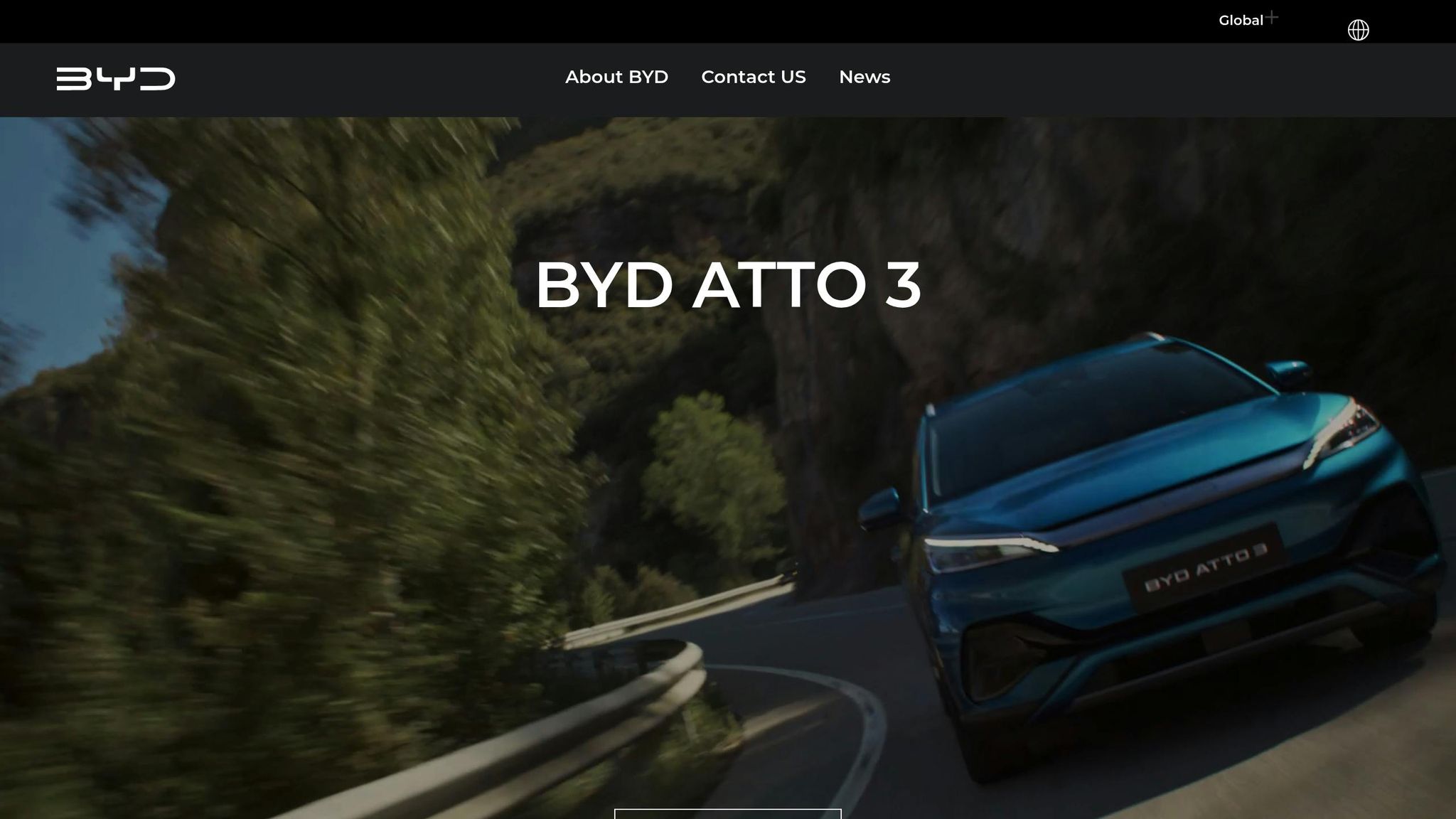
BYD has introduced its Super e-Platform, offering a charging power of 1,000 kW – double Tesla’s 500 kW output. According to founder Wang Chuanfu, achieving megawatt-level charging is a milestone for the industry. This system can add 400 kilometres of range in just 5 minutes, which translates to approximately 2 kilometres per second. BYD is deploying 4,000 ultra-fast charging stations across China to support this advancement.
Tesla, on the other hand, had established over 2,000 stations with 11,500 Superchargers in China by September 2024. Its V4 Superchargers can deliver around 275 kilometres of range in 15 minutes. Tesla has also opened its charging network to non-Tesla vehicles, aiming to accelerate EV adoption. However, challenges like limited charging station density in regions such as Japan, South Korea, and Southeast Asia, along with high costs for advanced liquid-cooled systems and grid integration issues, continue to hinder broader adoption.
These advancements highlight Asia’s focus on creating EV solutions that cater to both urban and highway travel needs.
2026 Outlook and Recommendations for Asian EV Users
When it comes to electric vehicles (EVs) in 2026, choosing the right charging solution depends heavily on your driving habits and needs. Here’s a breakdown of the best options for different types of users across Asia:
Battery Swapping for Commercial Fleets
If you’re a delivery rider, taxi driver, or operate two- or three-wheelers for services like Bykea or Foodpanda in cities like Karachi or Lahore, battery swapping is a game-changer. It eliminates downtime, allowing you to keep working without waiting hours for a charge. This can boost daily earnings by about 30%. With monthly battery rental subscriptions priced around Rs 13,000 (RMB 399/$55.9), you can avoid the hefty upfront costs of purchasing a battery. For commercial users, this means more hours on the road and less time spent charging.
Fast Charging for Personal EVs
For private car owners, ultra-fast charging is the way to go. BYD’s cutting-edge 1,000 kW flash-charging system can deliver an impressive 400 kilometres of range in just 5 minutes. That’s almost as quick as refuelling a petrol car. If you’re considering an EV in 2026, look for models with 800V architectures and access to ultra-fast charging networks. For instance, BYD plans to roll out 4,000 ultra-fast charging stations across China. This is particularly useful for long-distance commuters who need reliable and universally compatible charging options.
Cost-Saving Ownership Models
For those keeping an eye on their budget, alternative ownership models like Battery-as-a-Service (BaaS) can make EVs more affordable. A good example is the GAC Aion UT Super, which is sold without a battery for around Rs 1.6 million (RMB 49,900/$6,986), reducing the purchase price by 30–40%. Instead of paying a large lump sum upfront, middle-class families can opt for a manageable monthly fee, making EV ownership more accessible.
Infrastructure and Regional Considerations
Charging infrastructure varies significantly across the region. In China, millions of high-voltage fast-charging vehicles are already supported by an expanding network, and CATL’s Choco-Swap network is expected to operate 3,000 stations. India is also making strides, with over 26,000 public charging stations installed under the PM E-Drive Initiative. However, in countries like Indonesia and the Philippines, charging options are still limited, with only pilot swapping networks and sparse charging stations available. It’s essential to check local availability before making a decision.
"Battery swapping, home charging, and public charging will each account for roughly one-third of the energy mix."
- Robin Zeng, Chairman, CATL
Ultimately, the choice between battery swapping and fast charging comes down to your usage pattern and the infrastructure available in your area. If you’re a high-mileage commercial user, battery swapping offers efficiency and cost savings. For daily personal use, fast charging provides convenience and speed. As both technologies advance, Asia in 2026 is set to cater to nearly every type of EV user.
FAQs
Which option is better for my daily driving in Pakistan – swap or fast charging?
Fast charging is a more practical option for daily driving in Pakistan compared to battery swapping. Charging stations are easier to find and offer flexibility, allowing drivers to recharge their vehicles at multiple locations without much hassle. While battery swapping might save time with quicker refuelling, it depends on specialised setups that are not only less common but also more expensive to establish. Given the existing infrastructure in Pakistan, fast charging stands out as the more convenient and economical solution for everyday needs.
Will frequent fast charging reduce my EV battery life?
Frequent use of high-power DC chargers, particularly those exceeding 100 kW, can lead to a slightly faster decline in battery health. This might result in an annual capacity loss of around 3.0%. That said, modern electric vehicle (EV) batteries are engineered to deliver strong performance throughout their lifespan when handled with care and used responsibly.
What should I check before buying an EV for swap or ultra-fast charging support?
Before you buy an EV with battery swapping or ultra-fast charging features, make sure it’s compatible with the local swapping stations or fast chargers in your area. Not all vehicles work seamlessly with both options. Look into the availability of infrastructure nearby – how many stations or chargers are accessible to you?
Also, think about the overall expenses, including the purchase price, running costs, and how much time you’ll save on charging. This way, you can ensure the EV aligns with your daily routine and the facilities available in your region.