
 Arka Pratama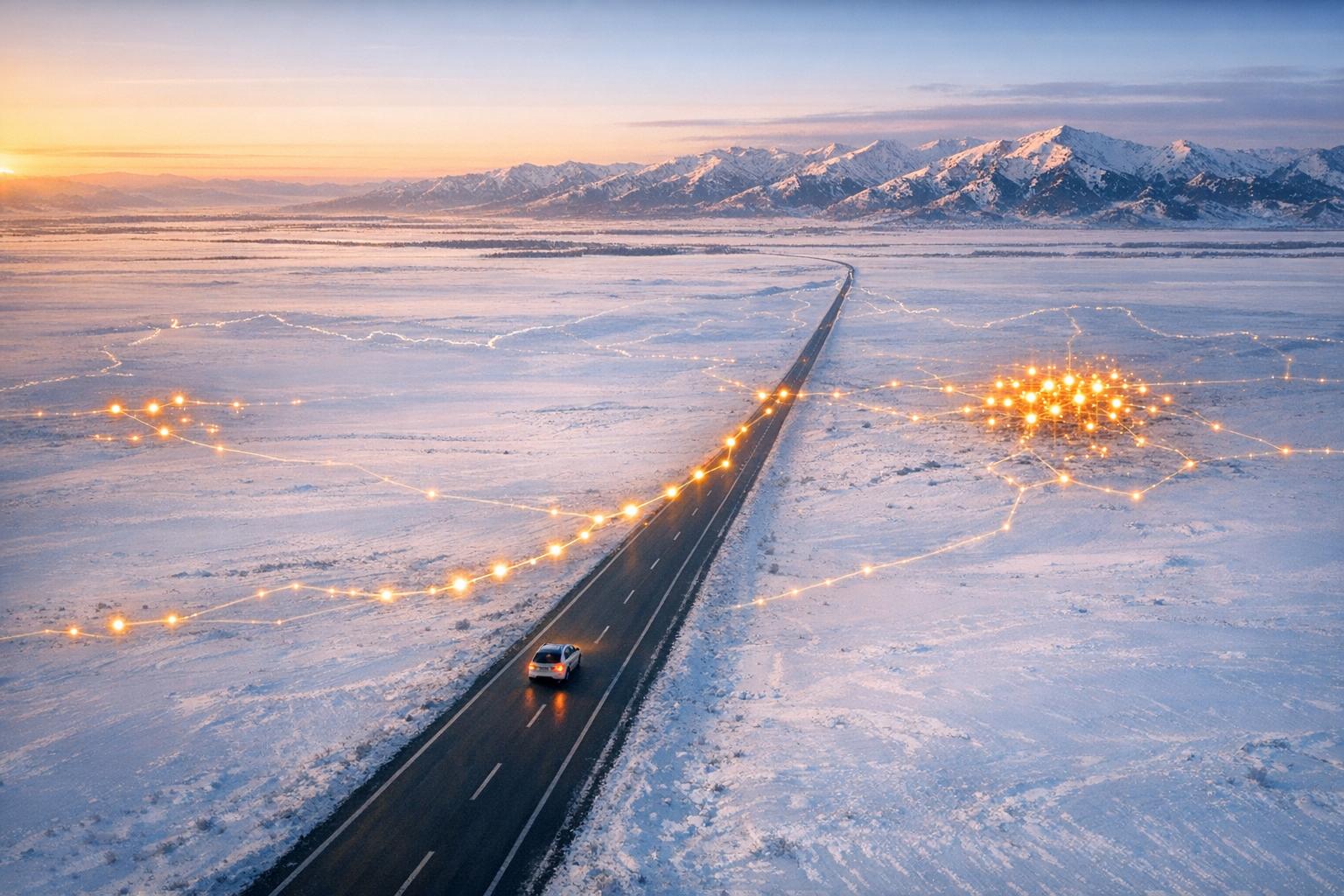
Kazakhstan’s electric vehicle market is growing fast, with EV registrations jumping from 7,680 in late 2023 to over 19,000 by mid-2025. However, harsh winters and limited charging infrastructure remain challenges. Here’s what you need to know:
- Top EVs for Cold Weather: Models like Tesla Model Y, BYD Atto 3, and XPeng G9 handle extreme cold well, thanks to advanced thermal management systems and efficient heating features.
- Winter Challenges: EV range drops by 20–30% in freezing temperatures. Features like heat pumps, battery preconditioning, and AWD systems improve performance.
- Charging Network: Kazakhstan is expanding its EV infrastructure, aiming for 4,000–8,000 charging points by 2030. Currently, most stations are in cities like Almaty and Astana, with only 23 highway stations operational by late 2025.
- Cost Changes: A 16% VAT starting in 2026 may increase EV prices by 30–40%. Despite this, government subsidies of up to $7,000 are available for buyers.
For long winters and limited charging options, EVs with energy-efficient heating and reliable range retention are the best choice. Meanwhile, the country’s charging network is improving but still requires careful planning for intercity travel.
Как китайские электромобили переносят казахстанские морозы
sbb-itb-5f05a6f
How Cold Weather Affects Electric Vehicles in Kazakhstan
Kazakhstan’s harsh winters bring unique challenges for electric vehicles (EVs). With temperatures dropping as low as −30°C, the performance of lithium-ion batteries takes a hit. These batteries struggle in extreme cold, as chemical reactions slow down, reducing both power output and charge retention. Additionally, the internal resistance of the battery increases, making it less efficient at releasing energy. However, it’s important to note that this temporary performance dip doesn’t harm the battery’s long-term health.
Battery Performance in Freezing Temperatures
Freezing temperatures can significantly impact the efficiency of EV batteries. For instance, in February 2026, auto expert Timur Mustafayev tested the BYD Song Plus on the Astana–Borovoe–Pavlodar route in −30°C conditions. Despite its 602 km range under ideal conditions, the vehicle managed only 460–480 km in winter, consuming 27 kWh per 100 km. Additionally, cold weather slows down DC fast-charging because battery management systems delay charging until the cells warm up.
It’s not just the battery that drains energy in winter. On short urban trips at around −10°C, heating systems for the cabin and battery can consume 35–55% of the total energy. This means a considerable amount of power is used for maintaining temperature rather than driving.
Heating Systems and Cabin Comfort
Heating systems play a major role in energy consumption during winter. Traditional resistive heaters are notorious for quickly draining the battery. However, heat pumps offer a more efficient solution, cutting heating-related energy use by up to 50% compared to standard heaters. Many newer models, such as the 2026 Polestar 3, Polestar 4, and Kia EV4, come equipped with heat pumps, which reduce overall winter energy consumption by about 10–15%.
"What separates good winter EVs from bad ones isn’t just the size of the battery, it’s having proper thermal management that keeps everything at the right temperature." – Expert, eCarsTrade
Drivers in Kazakhstan’s colder regions often rely on targeted heating features like heated seats and steering wheels. These options use far less energy than heating the entire cabin, making them a practical choice for staying warm without overburdening the battery.
Cold Weather Driving Features
Modern EVs are increasingly equipped with features designed for extreme winters. For example, battery preconditioning allows the battery and cabin to warm up while the car is still plugged into a charger. This can be activated remotely via mobile apps, especially useful when connected to a Level 2 charger overnight.
During Norway’s El Prix Winter Test in February 2026, the Kia EV4 Earth model proved its winter resilience. Operating at −31°C, it covered 390 km – retaining 65% of its WLTP range – and recharged from 10% to 80% in just 33 minutes. This performance was made possible by Kia’s Gen4 battery platform, which uses advanced coolant distribution to keep cell temperatures stable during both discharge and high-power charging.
Regenerative braking systems also adapt to icy conditions. Many EVs are programmed to adjust regenerative braking on slippery surfaces to maintain stability while still recovering energy. However, in extreme cold, some models reduce or disable this feature to protect frozen battery cells from the risks of high-current charging.
These innovations highlight how EVs are evolving to meet the demands of Kazakhstan’s unforgiving winters.
Best Electric Vehicles for Kazakhstan’s Cold Weather in 2026
Kazakhstan’s harsh winters demand electric vehicles (EVs) that can withstand extreme cold while maintaining reliable performance. Below are some top EV models designed to handle the country’s challenging conditions.
Tesla Model Y Long Range
The Tesla Model Y is well-suited for Kazakhstan’s winters, retaining around 82–88% of its range in temperatures between –12°C and 2°C (10°F to 35°F). This translates to a real-world range of approximately 435–467 km (270–290 miles). Its heat pump system reduces energy consumption by up to 50%, and the app-controlled preconditioning feature warms both the cabin and the battery while charging.
However, winter testing has highlighted a few quirks. The NomadCars Winter Test Report noted:
"Tesla still heats up extremely fast, but the precision of its climate control raised questions: the system often ‘overheats’ the cabin… without fine regulation".
Despite this, the fast heating system makes the Model Y convenient for cold mornings. Globally, the starting price is about US$45,000, but local costs may vary due to import fees and a 16% VAT introduced in 2026.
BYD Atto 3
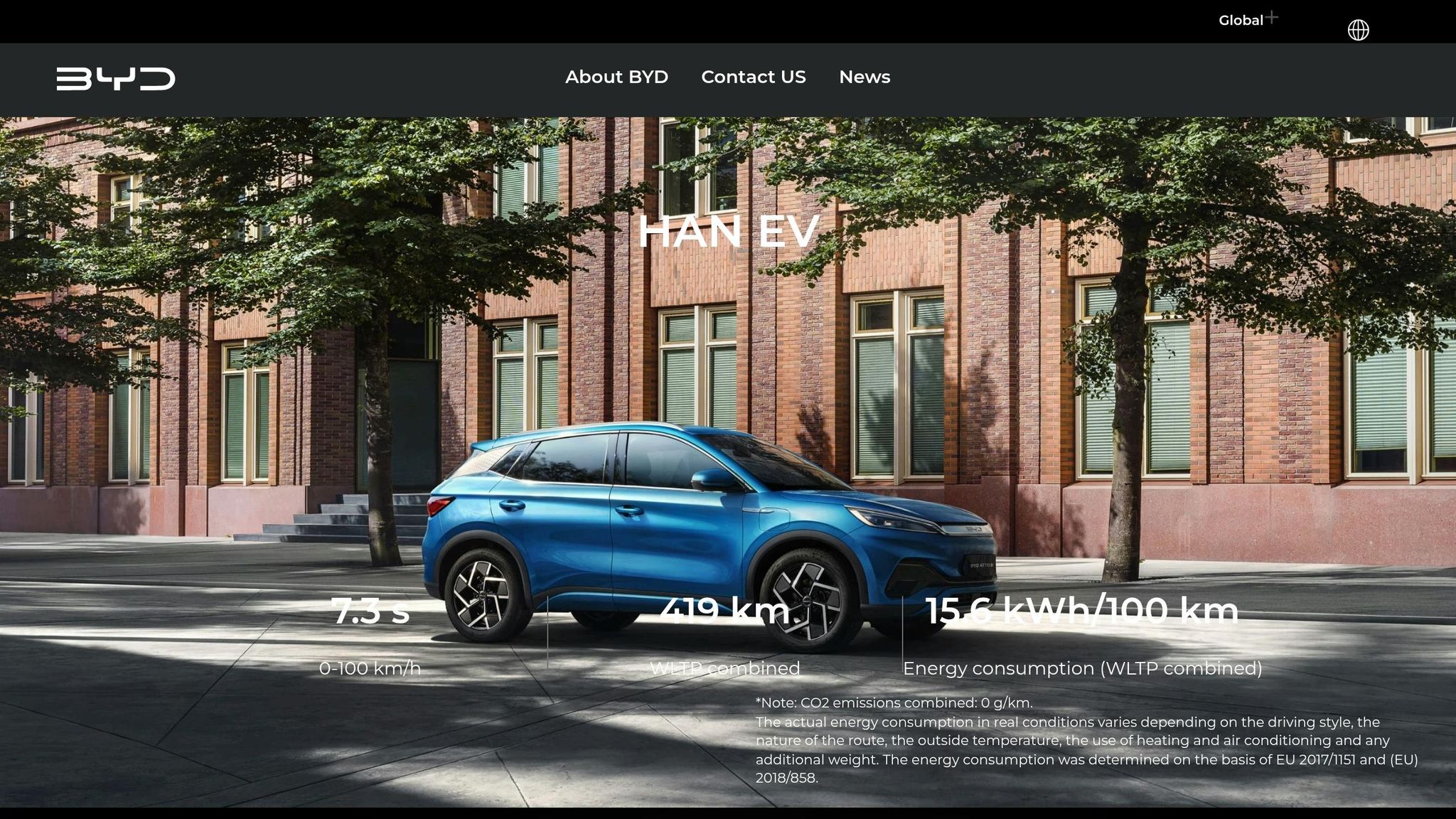
The BYD Atto 3, also known as Yuan Plus, has become a favourite in Kazakhstan, where Chinese EVs dominate 70% of the market as of late 2025. It uses Blade Battery technology with Lithium Iron Phosphate (LFP) chemistry, which enhances safety and durability. Its integrated 8-in-1 heat pump system can warm the cabin from –25°C to +20°C in just 10–15 minutes.
The 2026 Atto 3 Evo version offers several upgrades, including an 800-volt system that charges the battery from 10% to 80% in about 25 minutes, even in cold weather. With an increased battery capacity of 74.8 kWh, it now boasts a 510 km CLTC range – up from 418 km – and features a rear-wheel drivetrain, with an optional all-wheel-drive dual-motor setup for better traction on icy roads. Priced at around PKR 89 lakh in Pakistan’s market, the Atto 3 has earned 5-star safety ratings in both Euro NCAP and Latin NCAP tests.
XPeng G9
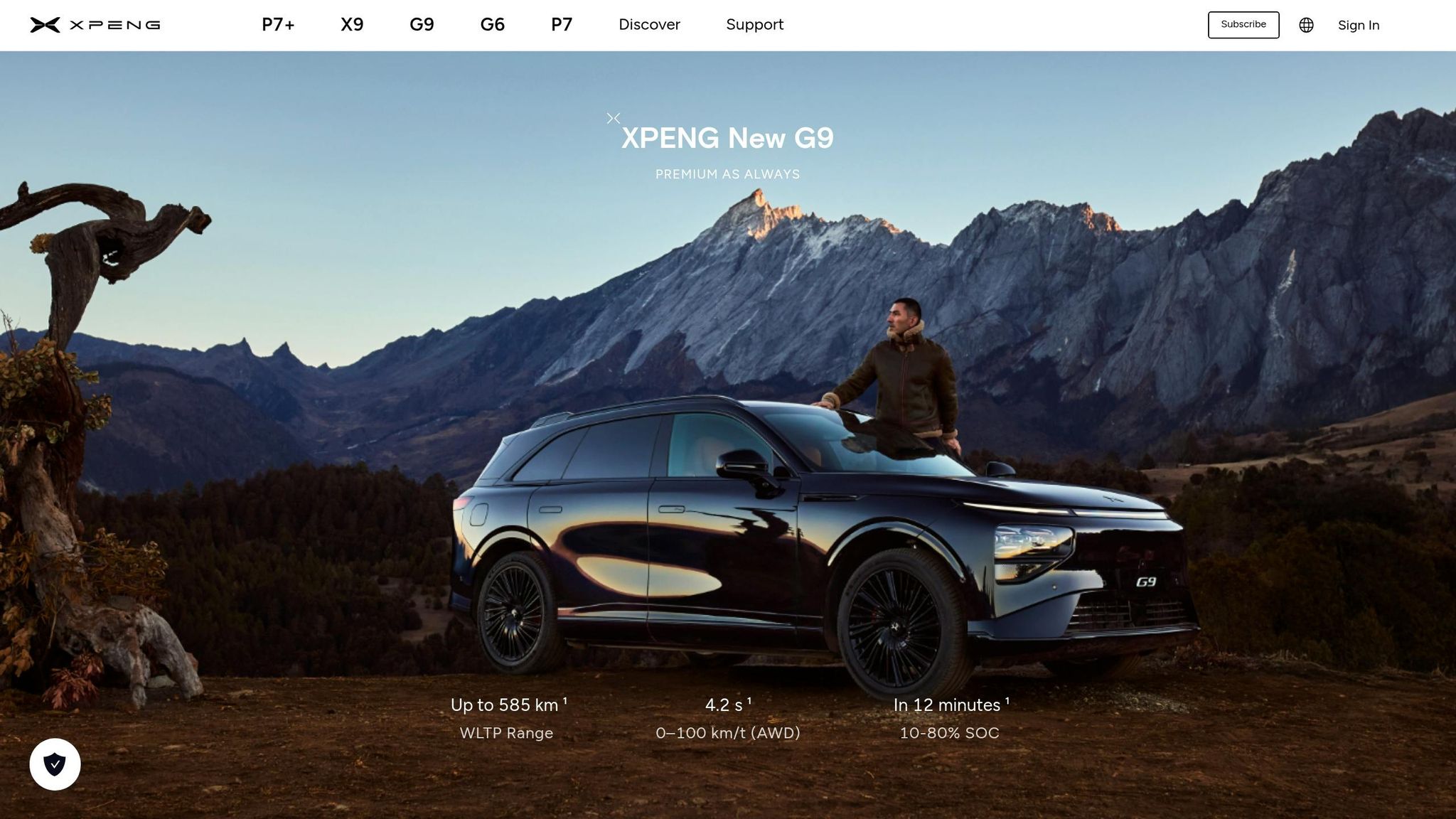
The XPeng G9 excels in cold conditions, thanks to advanced battery management that ensures stable charging even at –30°C. As highlighted in the NomadCars Winter Test Report:
Chinese manufacturers like XPeng are "no longer merely ‘catching up’ – they are setting the standards for low-temperature performance".
Equipped with LiDAR-based safety systems, the G9 offers precise obstacle detection on snowy roads. Its cabin heating system quickly reaches comfortable levels within 10–15 minutes, while its thermal management system helps maintain range during prolonged cold spells.
Volkswagen ID.4
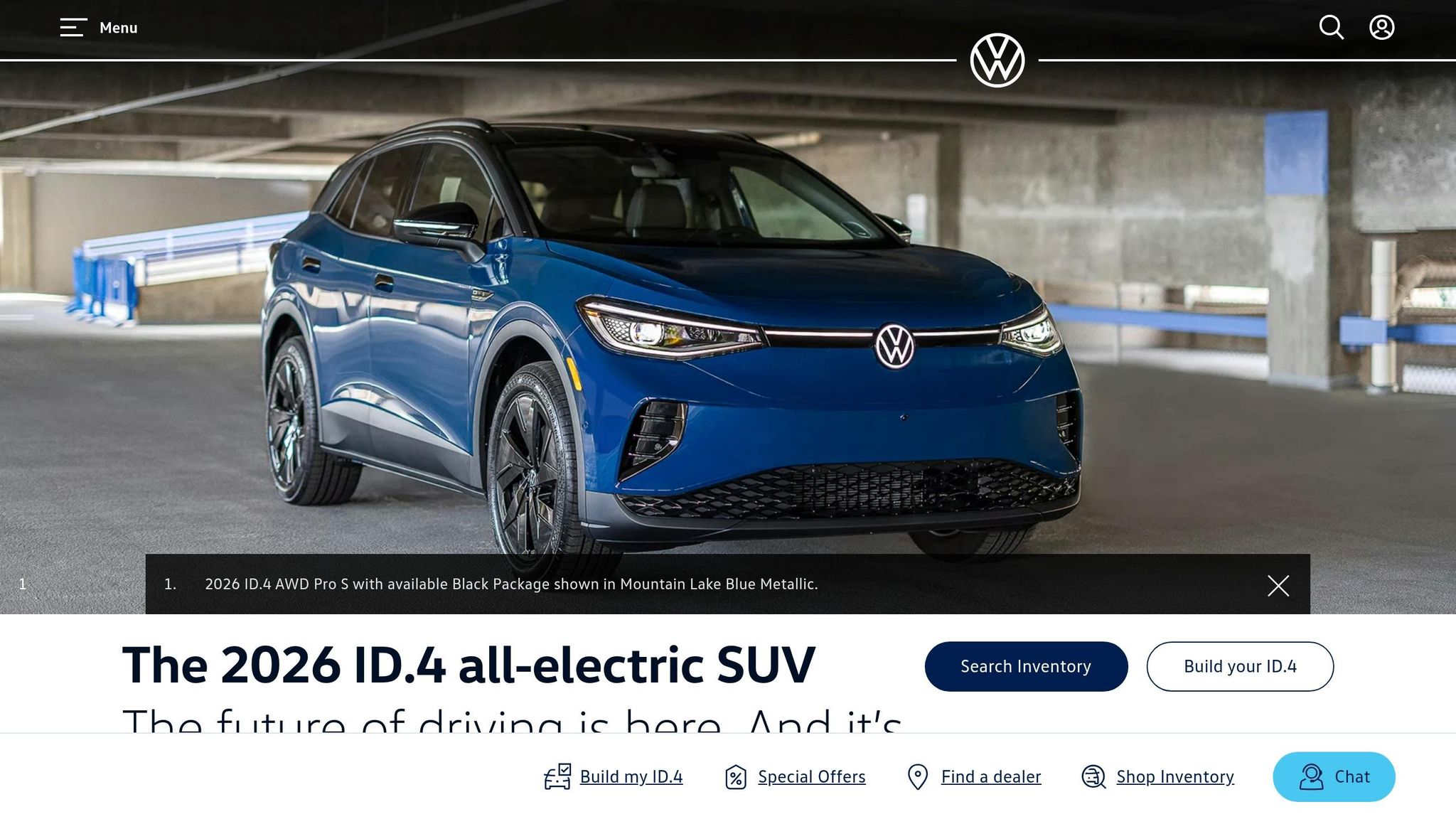
The Volkswagen ID.4 is a reliable choice for Kazakhstan’s winters, offering a mix of efficiency, decent range, and a spacious interior – perfect for carrying winter gear or accommodating families. While specific cold-weather test data for Kazakhstan isn’t available, the ID.4 is comparable to the BYD Atto 3 in terms of thermal management and heat pump technology. Its predictable performance and Volkswagen’s established service network make it a practical option, especially in cities like Almaty, Astana, and Shymkent where charging infrastructure is more developed.
Li L6 Hybrid SUV
For regions with limited charging infrastructure, the Li L6 Hybrid SUV provides a practical alternative. Hybrid models are especially useful in areas outside major cities, reducing range anxiety during extreme cold when charging stations are sparse. The Li L6’s hybrid powertrain ensures consistent performance and effective heating even in sub-zero temperatures. With Kazakhstan’s EV fleet expected to grow tenfold by 2030 – currently averaging 25 EVs per charging station – the Li L6 is a smart choice for bridging the gap in infrastructure development.
Cold-Weather EV Features Comparison
Best EVs for Kazakhstan Winter 2026: Cold Weather Performance Comparison
Feature Comparison Table
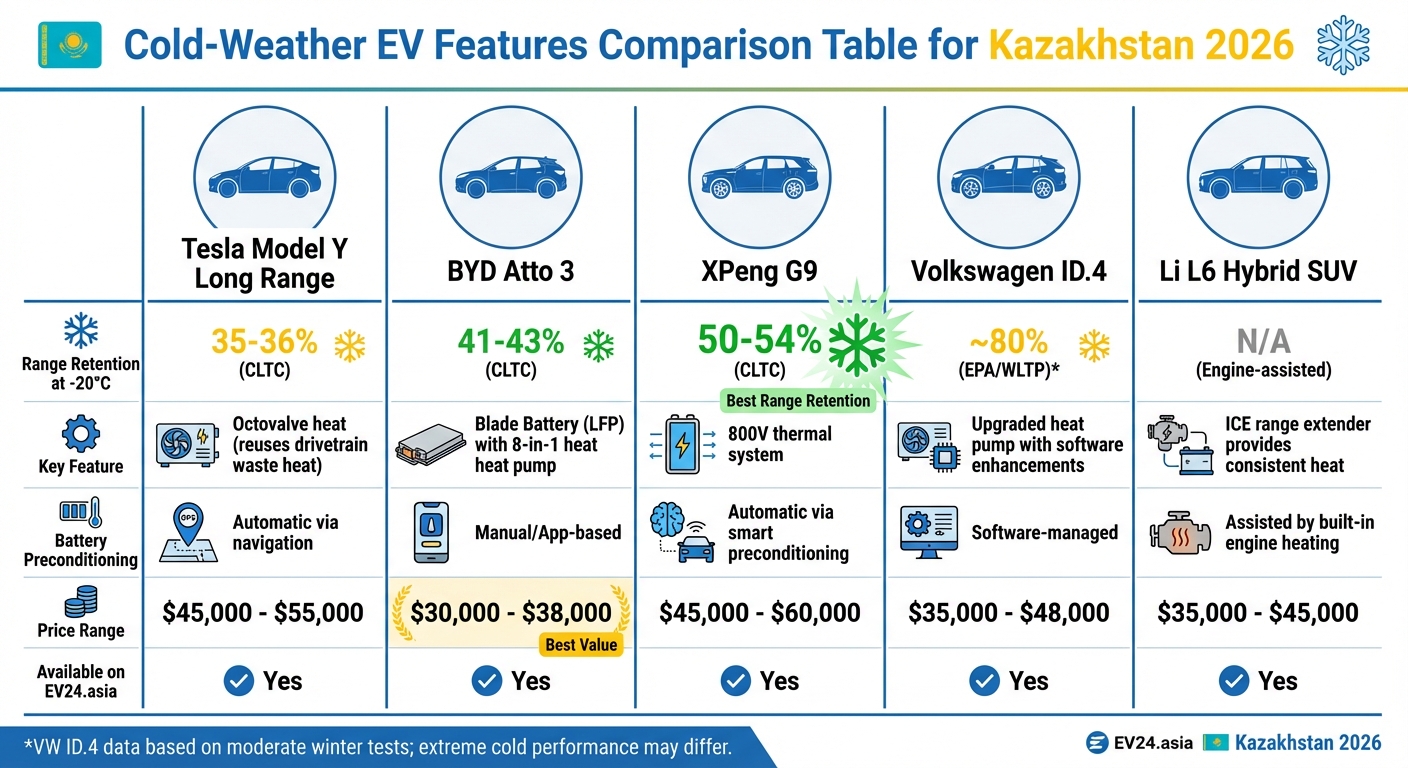
If you’re choosing an EV for Kazakhstan’s tough winters, it’s essential to focus on features like battery retention and thermal management. The table below summarises key cold-weather features based on detailed reviews of popular models.
| Model | Range Retention at –20°C | Key Cold-Weather Feature | Battery Preconditioning | Price Range (USD) | Availability on EV24.asia |
|---|---|---|---|---|---|
| Tesla Model Y Long Range | ~35–36% (CLTC) | Octovalve heat pump that reuses drivetrain waste heat | Automatic (via navigation) | $45,000 – $55,000 | Yes |
| BYD Atto 3 | ~41–43% (CLTC) | Blade Battery (LFP) with 8-in-1 heat pump | Manual/App-based | $30,000 – $38,000 | Yes |
| XPeng G9 | ~50–54% (CLTC) | 800V thermal system | Automatic via smart preconditioning | $45,000 – $60,000 | Yes |
| Volkswagen ID.4 | ~80% (EPA/WLTP)* | Upgraded heat pump with software enhancements | Software-managed | $35,000 – $48,000 | Yes |
| Li L6 Hybrid SUV | N/A (Engine-assisted) | ICE range extender provides consistent heat | Assisted by its built-in engine heating | $35,000 – $45,000 | Yes |
Note: Volkswagen ID.4 data is based on moderate winter tests; performance at extreme temperatures (-25°C) may differ.
This breakdown highlights each model’s strengths for winter conditions. For instance, the XPeng G9 stands out with its impressive range retention relative to its CLTC rating, making it ideal for long winter drives. The BYD Atto 3 offers a reliable choice with its thermally stable Blade Battery, while the Tesla Model Y excels in efficiency with its Octovalve system that reuses heat from the motor and battery.
Dr. Lena Park sheds light on why these features matter:
"Cold weather reduces battery output whilst increasing energy demand, causing significant range drops".
For budget-conscious buyers, the BYD Atto 3 delivers excellent value without compromising safety. Meanwhile, the Li L6 Hybrid is perfect for rural areas where charging stations are scarce, thanks to its petrol engine that eliminates range anxiety.
Kazakhstan’s EV Charging Network Progress in 2026
As Kazakhstan’s electric vehicle (EV) market continues to grow, the development of a reliable charging network is becoming increasingly important – especially given the challenges of operating EVs in cold climates. Alongside the rise in EV adoption, the country is making strides in expanding its charging infrastructure.
Charging Station Expansion Across Regions
Kazakhstan has made significant progress in building its EV charging network, though much of it remains concentrated in major cities. Almaty leads the way, housing around 60% of the country’s EVs. By April 2025, the city had over 8,400 registered EVs, marking a 50% increase compared to the previous year. To keep up with this growth, Almaty doubled its charging capacity in 2025, increasing from 300 to over 600 charging spaces, thanks to a large-scale land allocation initiative.
In May 2025, the Almaty Social Entrepreneurial Corporation allocated 311 land plots to local investors for new charging stations. Each station is required to provide at least 60 kW of power and accommodate two vehicles simultaneously, with pricing capped at 100 tenge per kWh. Meanwhile, Astana has also stepped up, upgrading 14 stations with advanced monitoring systems to improve efficiency.
However, intercity travel remains a hurdle for EV owners. By the end of 2025, only 23 charging stations were operational along national highways, making long-distance journeys challenging. Despite these issues, both government and private sector efforts are driving rapid expansion.
Government and Private Sector Projects
To guide the development of EV infrastructure, the government introduced the National Infrastructure Roadmap (2023–2029), which outlines key regulatory and technical requirements for cities. Partnerships with private companies are also playing a crucial role. For instance, in October 2023, Astana Motors teamed up with China’s TELD New Energy Co., Ltd. to build a nationwide charging network.
Beknur Nesipbaev, CEO of Astana Motors, highlighted the importance of this initiative:
"Our goal is, through the development of the electric vehicle charging infrastructure, to make Kazakhstan transition to new energy vehicles to improve the environmental situation."
Projections suggest that Kazakhstan will need between 4,000 and 8,000 charging points by 2030 to support its growing EV market. The International Finance Corporation (IFC) is also contributing by drafting a roadmap for 2025–2035, focusing on pilot projects and financial incentives to encourage further expansion.
New Charging Technologies
Kazakhstan is not just expanding the number of charging stations but also improving their technology. Many of the latest stations incorporate intelligent monitoring systems that communicate with a vehicle’s Battery Management System (BMS). In February 2025, Adele Energy Qazaqstan LLP, backed by the Science Foundation, upgraded 16 stations – 14 in Astana and 2 in Almaty – with LTE, Wi-Fi, and Ethernet capabilities. These upgrades allow for remote software updates and real-time voltage monitoring, making the charging process more efficient.
The Ministry of Science and Higher Education noted:
"New technologies will increase the efficiency of chargers and make the charging process more convenient and safer."
Additionally, a partnership with TELD has introduced energy storage solutions using retired EV batteries. These systems help stabilise the grid while addressing the issue of battery disposal. Since around 70% of Kazakhstan’s EVs are manufactured in China, the charging infrastructure is aligned with the GB/T format commonly used in the region.
Future Outlook for EV Adoption and Infrastructure Development
Expected EV Adoption Rates in Kazakhstan
Kazakhstan’s electric vehicle (EV) market is on a fast track to expansion. By August 2025, the country had registered 19,100 EVs – a sharp 79% rise from the previous year. Looking ahead to 2030, experts predict three possible scenarios: an optimistic estimate of 120,000 EVs, a realistic projection of 78,000 (about 12% of the national fleet), and a conservative forecast of 42,000 if policy support diminishes. This growth is especially noteworthy given the challenges posed by Kazakhstan’s harsh winters, which demand EVs equipped to handle extreme cold.
From 1 January 2026, policy adjustments like a 16% VAT could push EV prices up by 30–40%. Despite this, government subsidies of up to US$7,000 for personal battery electric vehicle purchases remain available. The push for electrification extends to commercial vehicles too. Under the "Clean Air Initiative", by 2025, half of all new buses in major cities must be electric, with subsidies of US$15,000 per vehicle supporting this shift. This growing demand underscores the need for a long-term strategy to expand the charging infrastructure.
Long-Term Charging Network Expansion Plans
To support the increasing number of EVs, Kazakhstan will require between 4,000 and 8,000 charging points by 2030, according to Seydulla Abdullaev, Head of the School of Transport Engineering and Logistics at Satbayev University. The expansion plan prioritises 10 secondary cities, such as Aktau and Karaganda, aiming to boost regional coverage from under 10% to 30%. Additionally, the national strategy includes establishing 78 charging stations along state-maintained highways by 2029. These measures are designed to enhance capacity while addressing the unique challenges of operating EVs in freezing temperatures, ensuring reliable charging solutions.
To meet the rising electricity demand driven by EV adoption, the government plans to add 26 GW of new power capacity by 2035. Roman Sklyar, Kazakhstan’s First Deputy Prime Minister, highlighted the importance of this expansion:
"This [new capacity] will compensate for the growing demand, including that caused by the rise in EV adoption".
Impact on Regional Environmental Goals
The expansion of EV infrastructure aligns closely with Kazakhstan’s environmental objectives. Increasing EV adoption supports the "Green Transport 2030" initiative and broader sustainability goals. The economic advantages are also evident – while petrol prices surged by 18% in 2023, EV charging costs rose by just 5%. For businesses, electric light trucks operating on routes like Almaty to Shymkent can cut daily energy costs to a third of diesel alternatives, with payback periods as short as two years.
Beyond reducing emissions, innovative solutions like photovoltaic-storage-charging stations are making a difference. For example, the "Zero-Carbon Charging Station" launched in Almaty by Huawei and Samruk Energy in 2025 uses rooftop solar panels to meet 100% of its daytime energy needs. These advancements reflect Kazakhstan’s commitment to achieving zero harmful emissions. However, experts caution that regulations for battery disposal and fire safety must evolve to keep up with the growing EV fleet.
Conclusion: Key Takeaways for EV Buyers in Kazakhstan
Kazakhstan’s evolving EV market in 2026 presents a mix of promising opportunities and practical challenges, especially for those navigating the country’s harsh winters and changing infrastructure landscape.
Cold-Weather Performance: With temperatures plummeting to extreme lows, selecting EVs with advanced thermal management systems is crucial. Models like the Polestar 3 and Zeekr 007 have demonstrated reliability in such conditions, while real-world tests highlight the importance of maintaining optimal speeds to conserve battery range in freezing weather. It’s also worth noting that winter driving can reduce EV range by 20–30%, so features like efficient heat pumps, battery preconditioning, and all-wheel drive (AWD) systems are essential. For those seeking affordable options, the Kia EV2, tested at −31°C with a maintained range of 310 km, offers a practical solution.
Charging Infrastructure: The charging network in Kazakhstan is expanding rapidly, with high-power stations (160 kW+) now capable of adding 40% charge in just 15 minutes. By 2030, the country aims to have between 4,000 and 8,000 charging points, but until then, careful route planning remains critical for long-distance travel.
Cost Considerations: Starting 1 January 2026, a 16% VAT has increased EV prices by 30–40%. However, government subsidies of up to US$7,000 help make EVs more accessible. Buyers should weigh these costs against the long-term savings and environmental benefits of going electric.
Simplified Import Process: Platforms like EV24.asia make importing EVs into Kazakhstan more straightforward. From navigating VAT regulations to selecting models suited for local climates, EV24.asia provides transparent pricing, flexible payment plans, and support with customs clearance and registration. Whether you’re eyeing a Tesla Model Y Long Range or a BYD Atto 3, their expert guidance ensures you can confidently navigate this growing market.
FAQs
How can I reduce winter range loss in Kazakhstan?
Winter in Kazakhstan can be harsh, and electric vehicles (EVs) often face challenges in extreme cold. Here are some practical ways to get the most out of your EV during the colder months:
- Precondition While Plugged In: Warm up your car while it’s still connected to the charger. This ensures the battery and cabin are ready without drawing power from the battery once you start driving.
- Opt for Heat Pumps: Heat pumps are more energy-efficient compared to traditional heating systems. If your EV supports them, they can significantly improve efficiency in cold weather.
- Avoid Prolonged Idling: Keeping the car running while stationary wastes energy. Instead, try to limit idling to conserve battery power.
- Drive at Moderate Speeds: High-speed driving in freezing conditions drains the battery faster. Maintain a steady, moderate pace to preserve range.
- Choose Models with Thermal Management Systems: EVs equipped with features like battery insulation and heat pumps perform better in cold climates. These systems help maintain the battery’s optimal temperature, improving efficiency.
- Plan Your Routes Carefully: Map out your journey to include charging stops. This not only prevents range anxiety but also ensures your battery stays charged and warm during long trips.
By following these steps, you can make your EV more reliable and efficient during Kazakhstan’s frosty winters.
Which EV features matter most for −30°C driving?
In conditions as harsh as −30°C, certain features in electric vehicles (EVs) become absolutely essential. Efficient battery performance is critical to ensure the car maintains its range despite the biting cold. Equally important are reliable heating systems, which not only keep passengers comfortable but also help the vehicle function smoothly.
Another key factor is fast charging capabilities. Since extreme cold can slow down charging speeds, having the ability to recharge quickly becomes a game-changer for convenience and practicality. Together, these features make EVs far more dependable and user-friendly during brutal winter weather.
How do I plan highway trips with limited chargers?
Travelling across Kazakhstan in an EV requires careful planning due to the limited charging infrastructure, especially in rural areas. Start by mapping out charging stations along your route, prioritising major cities like Astana and Almaty, where the network is relatively better developed.
To make your journey smoother:
- Use EV navigation tools for real-time updates on charging station availability.
- For remote areas, consider carrying portable chargers as a backup option.
- Stay updated on the progress of new charging station projects, as the network is gradually expanding.
By planning ahead and keeping these strategies in mind, you can navigate Kazakhstan’s highways more confidently.