
 sysadmin
 The United Arab Emirates (UAE), a federation of seven emirates with Abu Dhabi as its capital, is home to a diverse and growing population of approximately 9.44 million people. The official currency is the UAE Dirham (AED), and while Arabic is the official language, English is widely spoken, reflecting the nation’s status as a global hub for business and tourism. The UAE follows a right-hand traffic system, and its strategic location is supported by major maritime gateways such as Jebel Ali Port in Dubai and Khalifa Port in Abu Dhabi, which are the primary hubs for vehicle importation.
Importing electric vehicles (EVs) into the UAE involves a set of regulations and financial considerations that potential importers must navigate. Generally, a 5% customs duty and a 5% Value Added Tax (VAT) are levied on imported vehicles. However, there are indications that fully electric vehicles may be eligible for exemptions from customs duties as part of the government’s push towards sustainable transportation, though this is subject to confirmation. To encourage the adoption of electric mobility, the UAE government, particularly in Dubai, has introduced a range of incentives for EV owners. These include benefits such as complimentary public parking in designated areas, free Salik road toll tags, and access to free charging at public stations provided by the Dubai Electricity and Water Authority (DEWA). In terms of import restrictions, there is a general rule that prohibits the importation of vehicles older than ten years. However, classic cars, typically those over 30 years old, may be exempt from this regulation, subject to specific conditions.
The electric vehicle market in the United Arab Emirates is experiencing significant growth, reflecting a strong consumer and governmental shift towards sustainable transport. In 2023, electric vehicles accounted for a notable 13% of the total car sales in the country, a clear indicator of the rising popularity of EVs. While specific annual sales volumes are yet to be confirmed, the market share figure underscores a robust and expanding segment. Among the most popular choices for consumers are models from leading global brands. Tesla’s Model 3 and Model Y have established a strong presence, alongside offerings from Chinese manufacturers like the BYD Atto 3 and the MG ZS EV. Other sought-after models include the Hyundai IONIQ 5 and the luxury Lucid Air. The demand is spread across various vehicle types, with a clear preference for both sedans and SUVs, catering to a wide range of consumer needs and lifestyles.
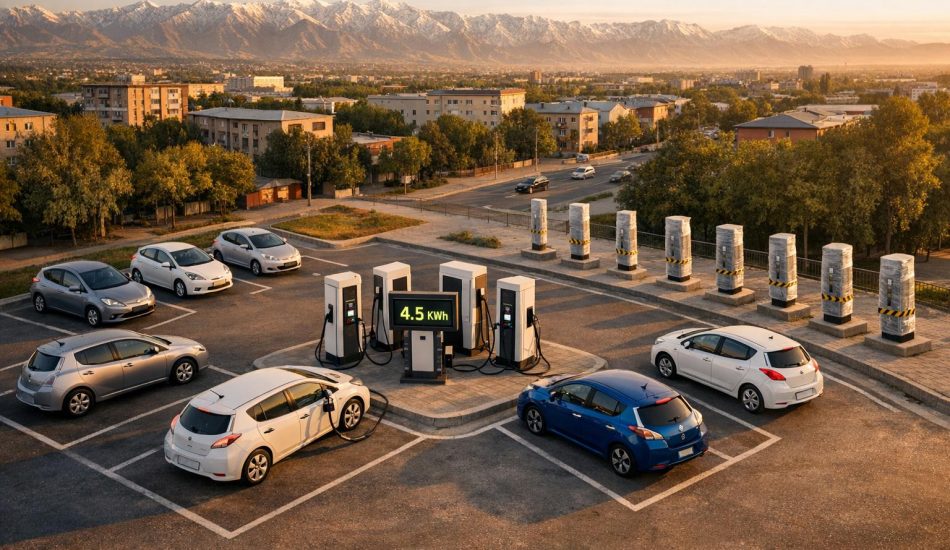
To support the growing fleet of electric vehicles, the UAE has been proactively developing its charging infrastructure. As of the latest reports, there are approximately 2,000 public charging stations available across the country. While the precise breakdown between AC (alternating current) and DC (direct current) fast-charging stations is to be confirmed, the network is designed to accommodate a variety of charging needs, from slower overnight charging to rapid on-the-go top-ups. The development of this infrastructure is led by a mix of public and private entities. The Dubai Electricity and Water Authority (DEWA) has been a key player with its ‘EV Green Charger’ initiative. Additionally, a joint venture between ADNOC and TAQA, named E2GO, is set to further expand the network. Several private companies, including Regeny and ChargerUAE, are also contributing to the build-out of a comprehensive and reliable charging ecosystem.
The UAE is not only a consumer market for electric vehicles but is also fostering a local manufacturing and assembly industry. The country is home to emerging domestic EV manufacturers such as Al Damani, a brand under M Glory Holding, as well as W Motors and SANDSTORM, which are developing their own electric vehicle models. The local ecosystem is further supported by a growing number of companies specializing in charging equipment, including CITA EV, PowerDrive, Newmont, and Legend Energy Solutions, who are contributing to the availability of locally produced charging hardware. In a significant move to boost local production, Indian manufacturer Omega Seiki Mobility has announced plans to establish an assembly plant in the Jebel Ali Free Zone (Jafza) for electric two and three-wheelers. Furthermore, US-based Faraday Future is exploring the possibility of setting up a regional assembly plant in Ras Al Khaimah. These developments are supported by the UAE’s ‘National Electric Vehicles Policy,’ which aims to create a favorable environment for local EV production and innovation.
In conclusion, the electric vehicle market in the United Arab Emirates presents a landscape of significant potential and promising opportunities. The combination of strong government support, a growing charging infrastructure, and increasing consumer awareness is driving the transition to electric mobility at a rapid pace. For EV importers, the market offers a wealth of opportunities, particularly for introducing a diverse range of models that cater to different price points and consumer preferences. The continued investment in local manufacturing and assembly will further strengthen the UAE’s position as a leading hub for electric mobility in the Middle East, making it an attractive and dynamic market for the foreseeable future.