
 sysadmin
 Turkmenistan, a country located in the heart of Central Asia, is gradually opening its doors to the electric vehicle revolution. With a unique economic and political landscape, the nation presents both opportunities and challenges for the burgeoning EV market. This article provides a comprehensive overview of the current state of electric mobility in Turkmenistan, covering everything from import regulations to the nascent charging infrastructure and future market potential.
An introduction to Turkmenistan reveals a country with a rich cultural heritage and a developing economy. The capital city, Ashgabat, is known for its striking marble architecture and serves as the nation’s political and economic hub. The population of Turkmenistan is approximately 5.6 million people, and the official currency is the Turkmen new manat (TMT). The official language is Turkmen, although Russian is also widely spoken in business and urban areas. For those looking to import vehicles, it is important to note that Turkmenistan follows a right-hand traffic system. The primary gateway for vehicle importation is the Turkmenbashi International Seaport, strategically located on the Caspian Sea, which serves as a critical logistics hub for the region.
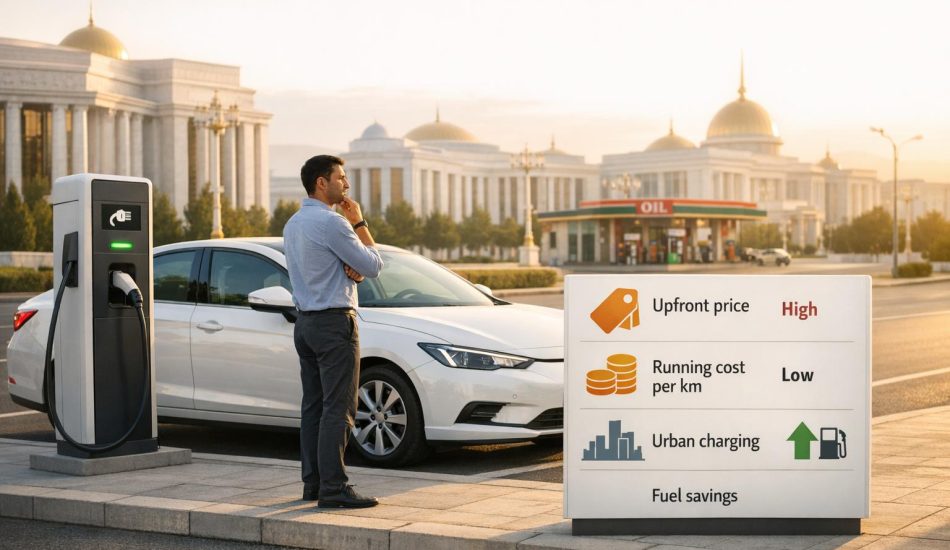
The regulatory framework for importing electric vehicles into Turkmenistan is a key consideration for any prospective importer. In a move to encourage the adoption of cleaner transportation, the Turkmen government has exempted electric vehicles from customs duties. This is a significant incentive that makes importing EVs more financially attractive compared to traditional internal combustion engine vehicles. However, importers should be aware that a Value Added Tax (VAT) of 15% is still applicable to imported EVs, in addition to other potential administrative fees. Furthermore, Turkmenistan enforces a strict vehicle age restriction, permitting only the importation of cars that are less than five years old. This regulation aims to ensure that the vehicles on the country’s roads are modern, safe, and environmentally friendly.
The electric vehicle market in Turkmenistan is still in its nascent stages, and as a result, detailed market data is not yet widely available. The total annual sales volume of EVs and the overall EV market share are currently listed as “Data to be confirmed.” Similarly, specific information on the top-selling EV brands and models, as well as the most popular EV categories such as sedans or SUVs, is also pending confirmation. Despite the lack of concrete data, there are indications of growing interest in the EV sector. The presence of Chinese EV brands is noted in the region, and there have been reports of Turkey’s national car brand, Togg, entering the Turkmen market. This suggests that the landscape of available EV models is likely to expand in the coming years.
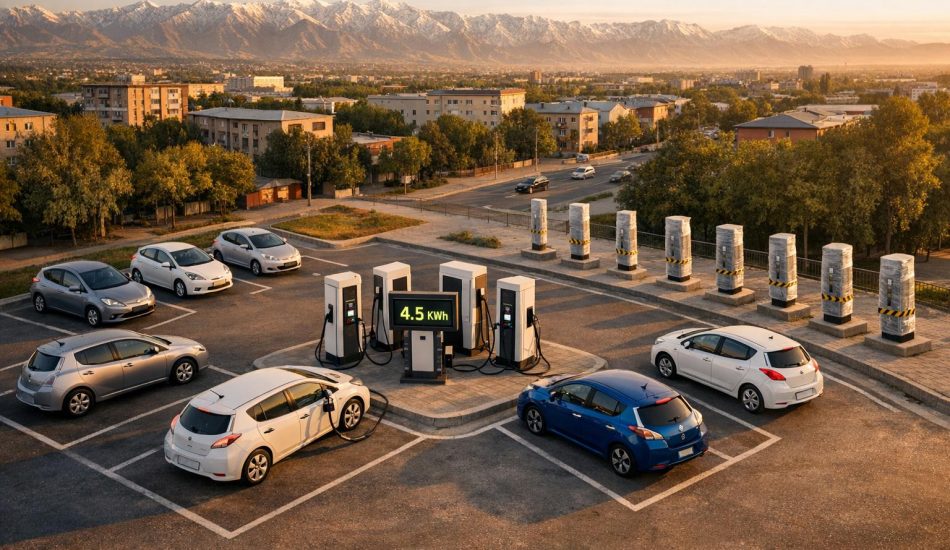
The development of a robust charging infrastructure is a critical prerequisite for the widespread adoption of electric vehicles. In Turkmenistan, the public EV charging network is still in the early phases of development. The total number of public charging stations, as well as the specific breakdown of AC charging stations and DC fast chargers, is currently “Data to be confirmed.” However, the new “smart city” of Arkadag is being developed with modern infrastructure, including some of the country’s first public EV charging points. The major charging network operators in the country are also yet to be established, indicating that this is an area with significant potential for future investment and development as the EV market grows.
Regarding the local electric vehicle industry, Turkmenistan does not currently have any domestic manufacturing of electric cars, two-wheelers, or three-wheelers. The local production of charging equipment is also an area where data is to be confirmed. While there have been discussions about the potential for establishing local assembly plants, possibly in partnership with international automotive companies, there are no confirmed operational EV assembly facilities at present. The government’s focus on modernizing the country’s infrastructure and its interest in decarbonization may lead to future initiatives aimed at encouraging local EV production, but for now, the country remains reliant on imports.
In conclusion, the electric vehicle market in Turkmenistan is at a very early stage of development but holds considerable potential for the future. The government’s decision to exempt EVs from customs duties is a positive step that is likely to stimulate interest and investment in the sector. For EV importers, the key opportunities lie in introducing a diverse range of modern electric vehicle models to the Turkmen market, particularly from markets like China and Turkey that have already established a presence in the region. Furthermore, the undeveloped state of the charging infrastructure presents a significant business opportunity for companies specializing in the installation and operation of charging networks. As Turkmenistan continues on its path of modernization and economic development, the shift towards electric mobility is poised to become an increasingly important part of its national strategy, offering a promising outlook for the growth of the EV market.