
 Arka Pratama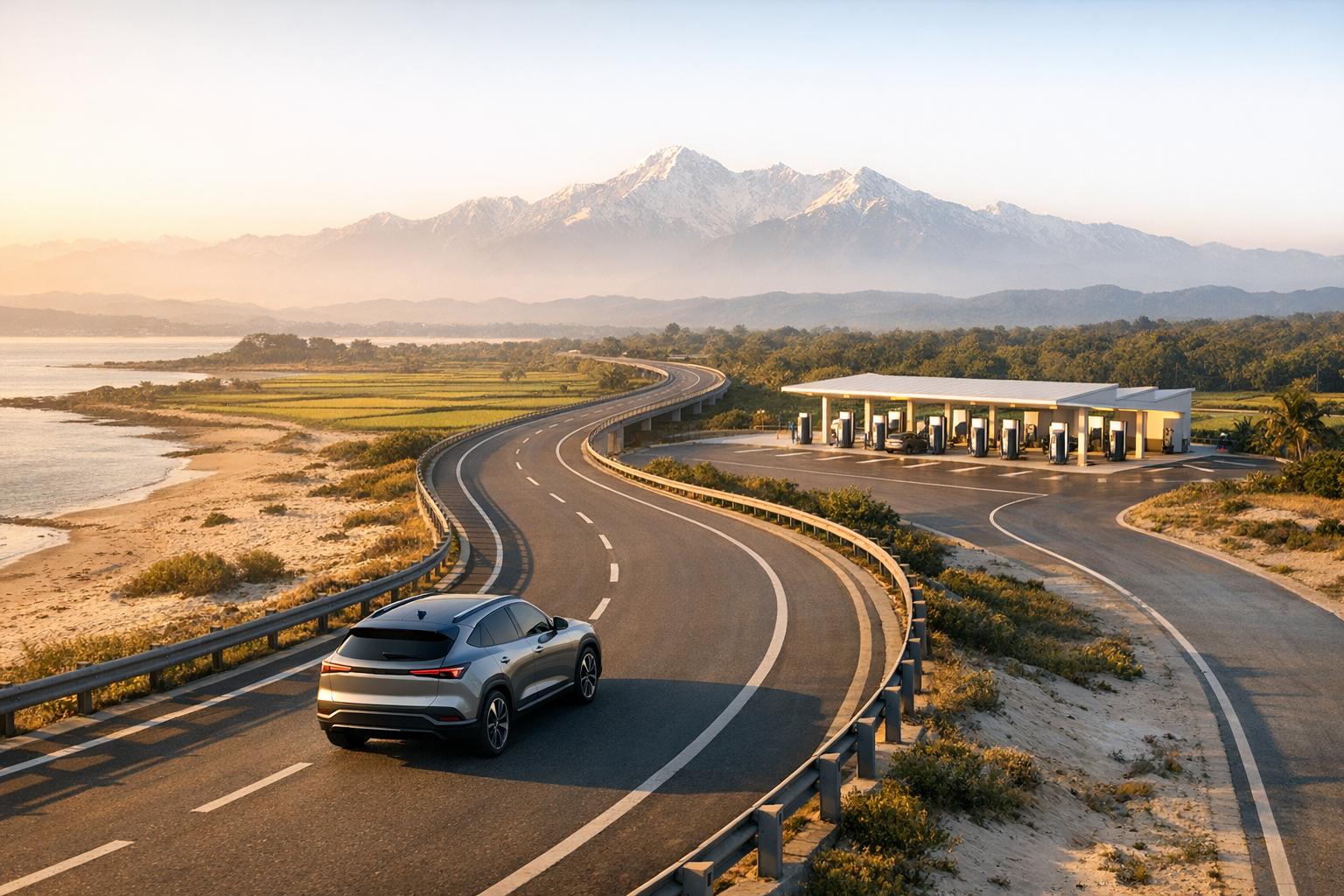
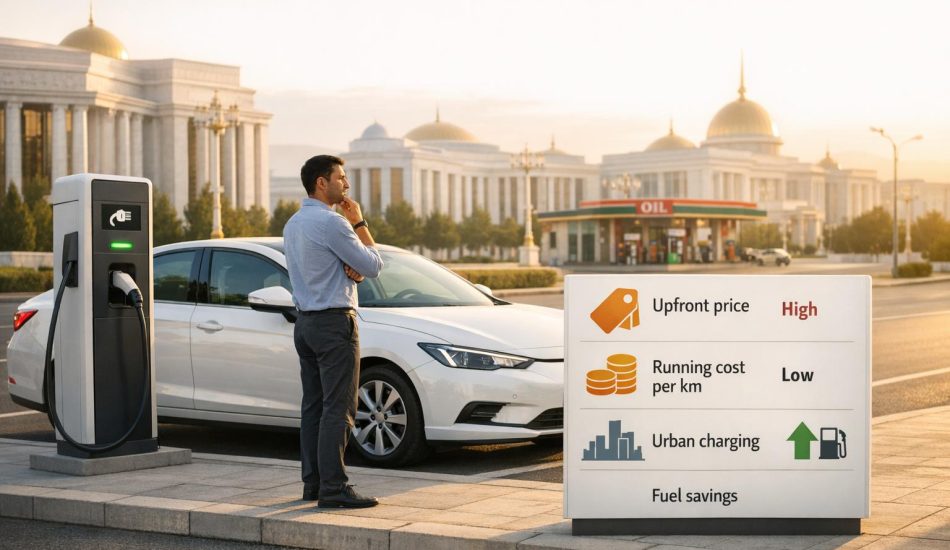
Planning a long road trip across Asia in 2026? Choosing the right electric vehicle (EV) is key to tackling challenges like limited charging infrastructure, diverse terrains, and extreme weather. This guide compares five EVs – BYD Seal, XPeng G6, Hyundai Ioniq 5, Kia EV6, and Nissan Ariya – based on range, charging speed, terrain handling, and pricing in PKR. Here’s a quick summary:
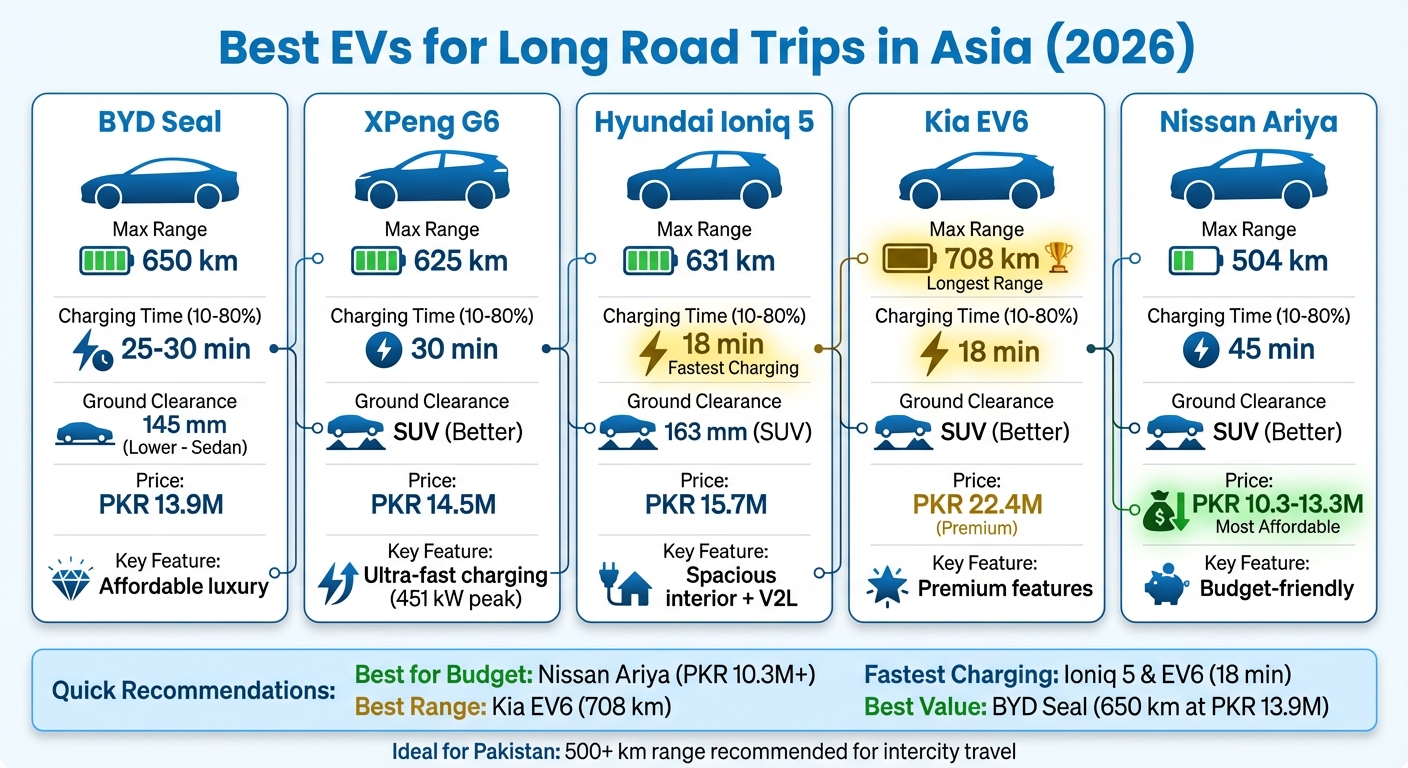
- BYD Seal: Up to 650 km range, priced around PKR 13.9 million, but lower ground clearance limits its off-road usability.
- XPeng G6: 570–625 km range, ultra-fast charging, priced near PKR 14.5 million, great for mixed roads.
- Hyundai Ioniq 5: 627–631 km range, charges in 18 minutes, spacious interior, priced at PKR 15.7 million.
- Kia EV6: 663–708 km range, fastest charging, premium features, but costs PKR 22.4 million.
- Nissan Ariya: 385–504 km range, solid handling, affordable starting at PKR 10.3 million.
Quick Comparison
| Model | Max Range (km) | Charging (10-80%) | Terrain Handling | Price (PKR) |
|---|---|---|---|---|
| BYD Seal | 510–650 | ~25–30 min | Sedan (Lower clearance) | ~13.9 Million |
| XPeng G6 | 570–625 | ~30 min | SUV (Better clearance) | ~14.5 Million |
| Hyundai Ioniq 5 | 627–631 | 18 min | SUV (Better clearance) | ~15.7 Million |
| Kia EV6 | 663–708 | 18 min | SUV (Better clearance) | ~22.4 Million |
| Nissan Ariya | 385–504 | ~45 min | SUV (Better clearance) | ~10.3–13.3 Million |
For long road trips in Pakistan, EVs with a range of at least 500 km and fast charging capabilities are ideal. The Hyundai Ioniq 5 and Kia EV6 excel in charging speed and comfort, while the BYD Seal and XPeng G6 balance affordability and performance. The Nissan Ariya offers a budget-friendly option, though with a shorter range. Choose based on your budget, route, and terrain needs.
Best EVs for Long Road Trips in Asia 2026: Range, Charging Speed, and Price Comparison
The Best New Electric Cars Arriving In 2026!
sbb-itb-5f05a6f
1. BYD Seal
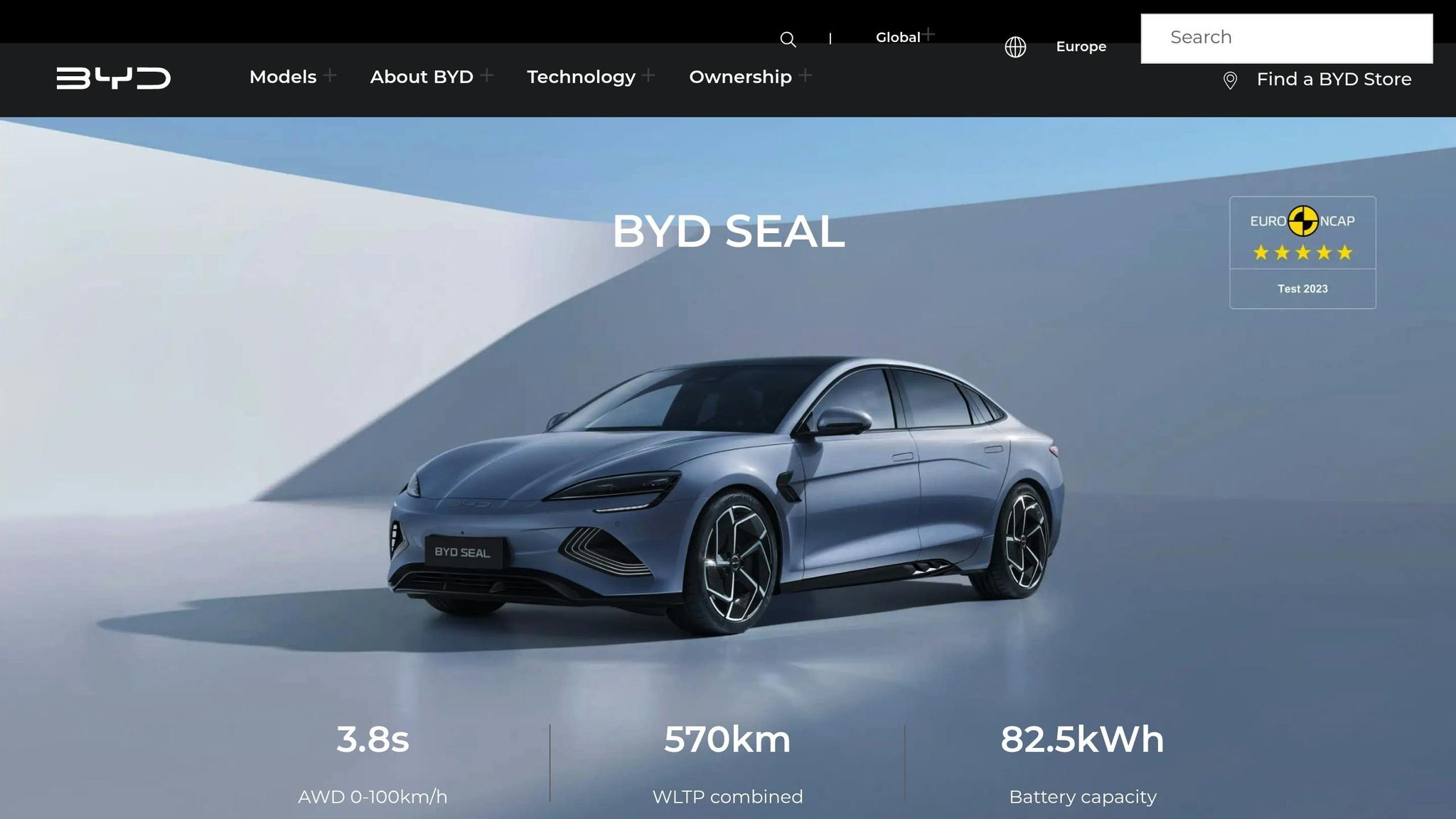
The BYD Seal stands out with its long driving range and a high-end interior, making it a solid choice for extended road trips. Its sleek design and advanced battery technology are well-suited for intercity travel across Asia’s diverse terrains.
Range (km)
The Seal’s Premium variant offers an impressive range of 650 km (ARAI) on an 82.56 kWh battery. Other configurations include the Dynamic and Performance AWD models, delivering ranges of 510 km and 580 km, respectively, with alpine tests averaging between 375–430 km. These figures put the Seal in direct competition with the Hyundai Ioniq 5 (631 km) and Kia EV6 (663 km). The upcoming 2026 Seal 06 series takes efficiency a step further, boasting energy consumption as low as 10.7–11.4 kWh/100 km, thanks to its next-generation blade battery technology.
Charging Speed (kW)
The BYD Seal supports DC fast charging up to 150 kW, enabling a 10% to 80% charge in about 37 minutes. While this is efficient, it falls short of the charging speeds offered by 800V systems in competitors like the Ioniq 5 and EV6, which can reach up to 350 kW.
Comfort Features
The Seal’s interior delivers a premium experience with thoughtful design elements. Alcantara accents on the doors and dashboard, quilted seat fabrics, and a 15.6-inch rotatable touchscreen (switching between landscape and portrait modes) cater to comfort and convenience – perfect for long drives. Double-glazed front windows and advanced soundproofing ensure a quiet cabin, even at speeds of 130 km/h. The 12-speaker Dynaudio Premium Sound system enhances the audio experience, while the intelligent fan system adjusts to reduce noise during phone calls. Automotive journalist Mircea Mester praised the Seal during the EUROCHARGE tour:
The BYD Seal is, to me, the revelation of the EUROCHARGE tour… the car runs so well, that there are extremely few things to criticise.
Terrain Handling
Built with CTB technology, the Seal achieves torsional rigidity of 40,500 N·m/°, rivalling luxury vehicles. Its balanced 50/50 weight distribution and double-wishbone front suspension ensure a smooth ride on highways and winding mountain roads. The iTAC (Intelligence Torque Adaption Control) system adds stability by redistributing torque to prevent skidding on slippery or curved roads. However, its 145 mm ground clearance may require caution on speed bumps and unpaved routes, which are common in rural areas of Asia.
Price (PKR)
The BYD Seal has been introduced in Pakistan as part of the company’s six-nameplate lineup, though pricing for the 2026 models in PKR is yet to be confirmed. For reference, the Seal is priced between £43,896 and £48,695 in the UK and approximately €45,000 in Europe. It comes with a 6-year or 150,000 km standard warranty, while the battery is covered for 8 years or 160,000 km. Autocar India rated the Seal 9/10, highlighting its luxury, comfort, and strong value for the price.
Next, we’ll take a closer look at how the XPeng G6 performs on long-distance roads.
2. XPeng G6
The XPeng G6 is designed to handle Asia’s diverse roads and charging infrastructure, making it a solid choice for long-distance travel. With its 800V architecture and 5C Supercharging capability, the G6 is tailored for road trips that demand both range and efficiency.
Range (km)
The G6 offers a WLTP range between 435 km and 570 km, depending on the battery configuration. The Standard Range model comes with a 66 kWh LFP battery, while the Long Range and AWD Performance variants are equipped with 80.8–87.5 kWh NMC or LFP batteries. Its aerodynamic design, with a 0.248 Cd drag coefficient, enhances energy efficiency during highway travel.
Charging Speed (kW)
One of the standout features of the G6 is its ability to handle 451 kW peak DC charging, allowing a 10% to 80% charge in just 12 minutes. A quick 10-minute charge can add up to 450 km of range. The vehicle uses the CCS2 fast-charging connector, widely available in regions like Singapore, Malaysia, Thailand, Indonesia, and Hong Kong. For home setups, it supports 11 kW AC charging. The built-in Xmart OS navigation system can even precondition the battery before reaching a fast charger, ensuring optimal charging speeds.
"This exceptionally fast charging capability makes the Xpeng G6 RWD Long Range one of the most efficient and convenient EVs for long-distance travel." – EVKX.net
Comfort Features
The G6 facelift focuses on enhancing ride comfort. Its softer suspension system absorbs road imperfections while maintaining a calm ride at high speeds. The front seats offer up to 12-way adjustments and include heating, ventilation, and massage functions. Rear seats are equally luxurious, with an "Executive-Class" recline range of 27°–38.4°, deep side bolsters, and heating.
Other standout features include a 2.12 m² panoramic skylight that blocks 99.99% of UV rays (SPF100+), an XfreeBreath air purification system with PM2.5 filters, and the Xopera 2.0 audio system, which boasts 18 premium speakers for an immersive sound experience.
Terrain Handling
The G6 is built to tackle a variety of road conditions with its front double-wishbone and rear multi-link independent suspension system. SACHS multi-valve shock absorbers further enhance stability on both highways and rural routes. However, some reviews, like AsiaOne, noted that the steering could feel "a bit lifeless", which may impact driver engagement on winding roads.
Safety-wise, the G6 earned a 5-star Euro NCAP rating, scoring 88% for adult occupant protection. It also comes equipped with advanced tech, including the "Turing" AI chip for driver assistance (ADAS) and the Tianji AIOS 6.0 software for improved voice commands and cabin intelligence.
Price (PKR)
The XPeng G6 offers a competitive price point for its features. The Standard Range starts at approximately PKR 9,702,000 (converted from $34,900 USD), the Long Range at around PKR 10,980,000 (converted from $39,500 USD), and the AWD Performance at roughly PKR 11,787,000 (converted from $42,400 USD). This pricing places it below competitors like the Tesla Model Y, which starts near $45,000, while still offering advanced 800V architecture.
Next, we’ll take a closer look at the Hyundai Ioniq 5 and its capabilities for extended trips across Asia.
3. Hyundai Ioniq 5
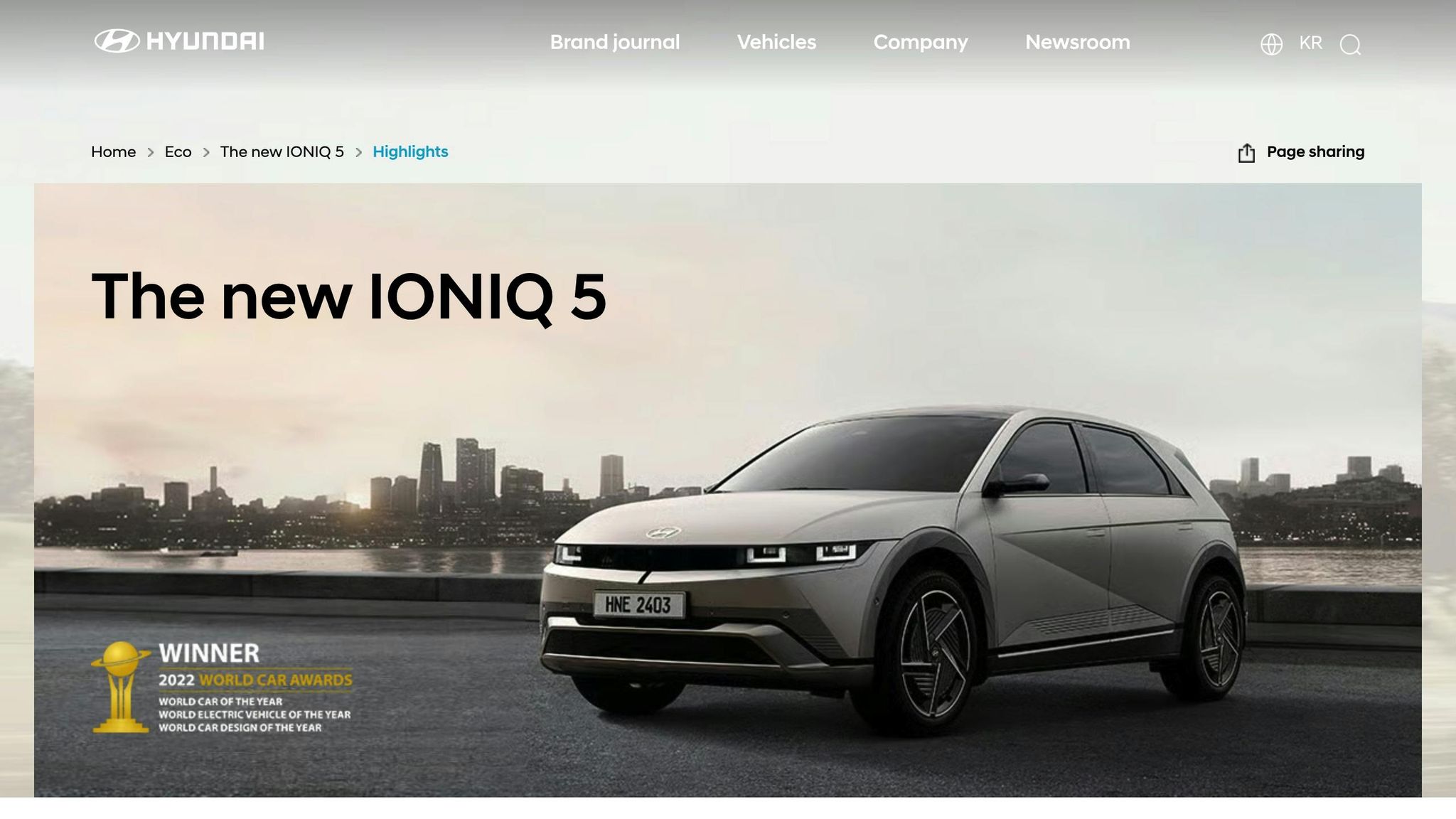
When it comes to long journeys across Asia, the Hyundai Ioniq 5 stands out with its impressive range, fast charging capabilities, and a focus on comfort. Built on the Electric-Global Modular Platform (E-GMP) with an 800V architecture, this EV is designed to handle the demands of extended trips across the region.
Range (km)
The Ioniq 5 is powered by a 72.6 kWh battery pack, offering an ARAI-certified range of 631 km. However, real-world results tend to differ slightly, with combined cycle tests showing about 457 km. In urban settings, it can exceed 500 km, while highway driving typically delivers around 400 km. During testing in Mumbai traffic, the Ioniq 5 consistently achieved between 440 km and 460 km on a full charge.
A notable demonstration of its capabilities occurred during the November 2023 "Go Far with Zero Worries" ASEAN Tour. In this event, five Ioniq 5 units covered 3,197 km across Singapore, Malaysia, Thailand, Cambodia, and Vietnam over 11 days. The total charging cost? Just US$116 per car. Reflecting on the journey, Fitra Eri, Indonesia’s first Ioniq 5 owner, shared:
"This journey emphatically validates the tour’s slogan, ‘Go Far With Zero Worries’."
The car’s range performance is further complemented by its rapid charging capabilities, making it a practical choice for long-distance travel.
Charging Speed (kW)
The Ioniq 5 supports ultra-fast charging, allowing its battery to charge from 10% to 80% in just 18 minutes when connected to a 350 kW DC ultra-fast charger. Its multi-charging system is compatible with both 400V and 800V charging infrastructures, eliminating the need for additional adapters. This ensures seamless use across public charging networks in Asia. On a 500-mile trip, the Ioniq 5 is estimated to save about 45 minutes of charging time compared to the VW ID.4, showcasing its superior performance in this area.
Comfort Features
The Ioniq 5 redefines what an EV cabin can feel like. The interior is more like a lounge, with front seats that recline into a "zero-gravity" position and include integrated leg rests. A sliding "Universal Island" console that moves up to 140 mm, combined with a flat floor and a spacious 3,000 mm wheelbase, provides ample legroom.
The Vehicle-to-Load (V2L) feature adds convenience by allowing the car to power external devices with up to 3.6 kW of output. Other standout features include heated and ventilated front seats, heated rear seats, dual-zone climate control, and "Sounds of Nature" ambient audio. Excellent sound insulation ensures a quiet and relaxing ride.
Terrain Handling
Designed with Asian roads in mind, the Ioniq 5 prioritises comfort over sporty handling. The suspension is tuned to absorb bumps and imperfections, delivering a smooth and stable ride. With a ground clearance of 163 mm, it can handle a variety of road conditions commonly found in the region. The car accelerates from 0 to 100 kph in 7.74 seconds, reaches a top speed of 190 kph, and boasts a 5-star Euro NCAP crash test rating. It was also named the 2024 Car of the Year by Autocar India.
Price (PKR)
In India, the Ioniq 5 is priced at approximately PKR 16,300,000, based on an on-road cost of ₹49.00 lakh. Its introductory ex-showroom price of ₹44.95 lakh makes it a more budget-friendly premium EV compared to the fully-imported Kia EV6.
Next, we’ll take a closer look at the Kia EV6 and see how it compares for long-distance travel in Asia.
4. Kia EV6
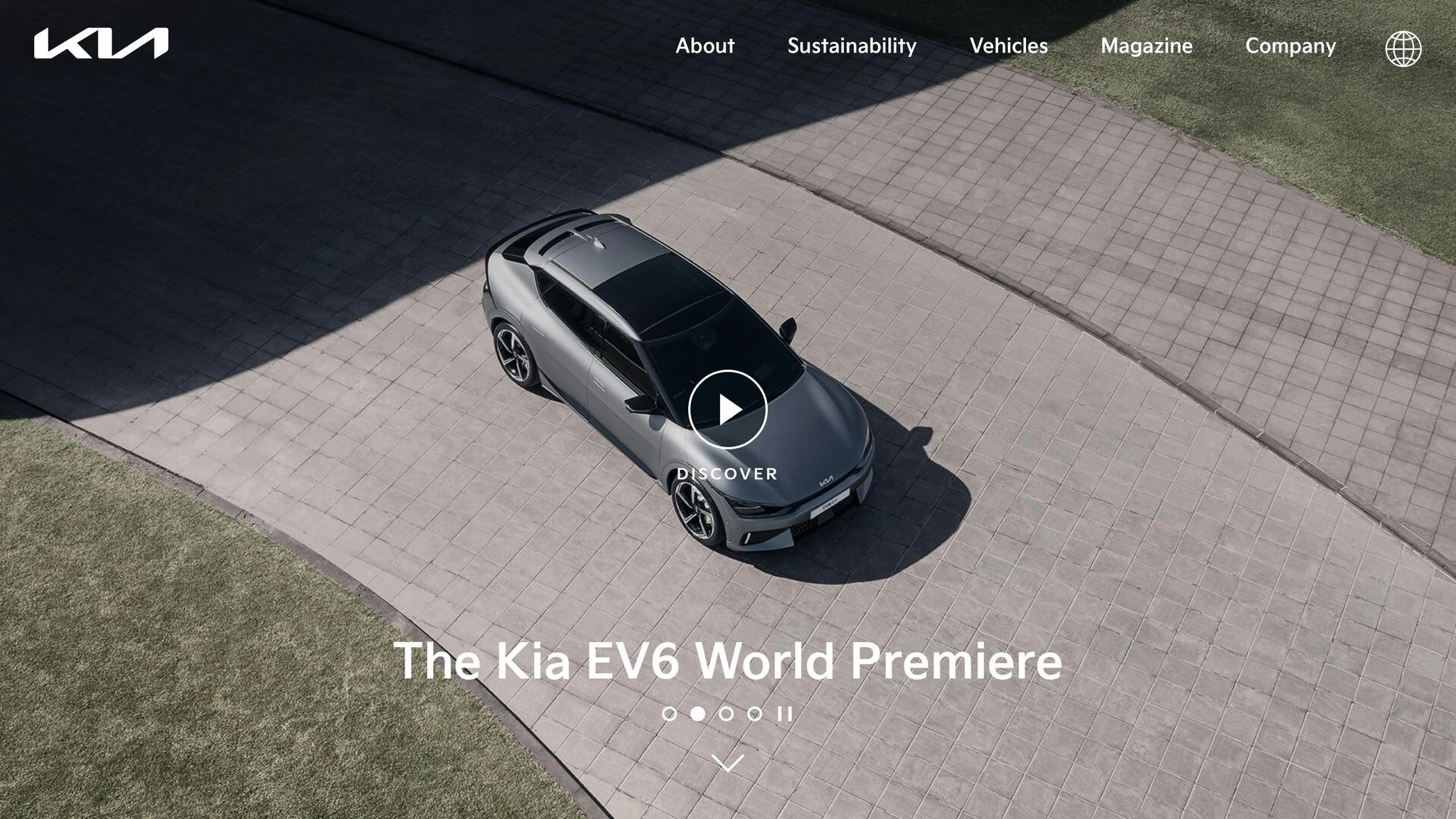
The Kia EV6, built on the same E-GMP platform as the Ioniq 5, offers a sportier take on long-distance electric travel. With its 2026 facelift, the EV6 now features a larger and lighter 84 kWh NMC battery, which is 8% more energy-dense than the previous 77.4 kWh version. This upgrade enhances its performance on extended journeys.
Range (km)
The EV6 boasts an ARAI-certified range of 663 km, while WLTP testing shows a range of 581 km – an improvement of 53 km compared to the earlier model. In everyday use, the real-world range averages around 498 km, with up to 550 km achievable in mixed driving conditions. Its smart All-Wheel Drive system further optimises motor efficiency on long trips [41,43,44].
Charging Speed (kW)
Equipped with an 800V electrical system, the EV6 supports ultra-fast DC charging of up to 350 kW. This enables a 10%–80% charge in just 18 minutes at 350 kW, adding about 100 km of range in only 5 minutes. However, as many highway chargers in Asia operate between 60 kW and 150 kW, charging from 10% to 80% on a 50 kW charger can take approximately 73 minutes [41,42,43,44,45,46].
Comfort Features
The EV6 prioritises comfort with front seats that recline nearly flat and offer both heating and ventilation – ideal for those charging breaks. Its flat-floor E-GMP design ensures ample rear legroom, comparable to larger SUVs. The Vehicle-to-Load (V2L) system provides up to 3.6 kW of portable power, making it easy to run camping gear or work devices during road trips. Inside, a curved panoramic display combines a 12.3-inch digital cluster with an infotainment screen, while an optional 14-speaker Meridian sound system delivers a premium audio experience [41,47].
Terrain Handling
The EV6’s suspension is fine-tuned to handle uneven roads, potholes, and older highways with ease. Dual motors provide a combined output of 325 hp and 605 Nm, allowing the EV6 to accelerate from 0–100 km/h in just 5.3 seconds. It achieves an efficiency of 6.2 km/kWh on expressways. Recognised by Car and Driver with a 9.5/10 rating and an "Editors’ Choice" award, Andrew Wendler praised the EV6, stating:
The EV6 is a well-rounded EV that’s fun to drive, fast to charge, and plenty spacious inside [41,42,44,46].
Price (PKR)
In India, the EV6 GT-Line AWD variant is priced at Rs 65.9 lakh (ex-showroom), which roughly converts to PKR 23,700,000.
Next, we’ll take a closer look at the Nissan Ariya to complete our comparison of long-distance EVs in Asia.
5. Nissan Ariya
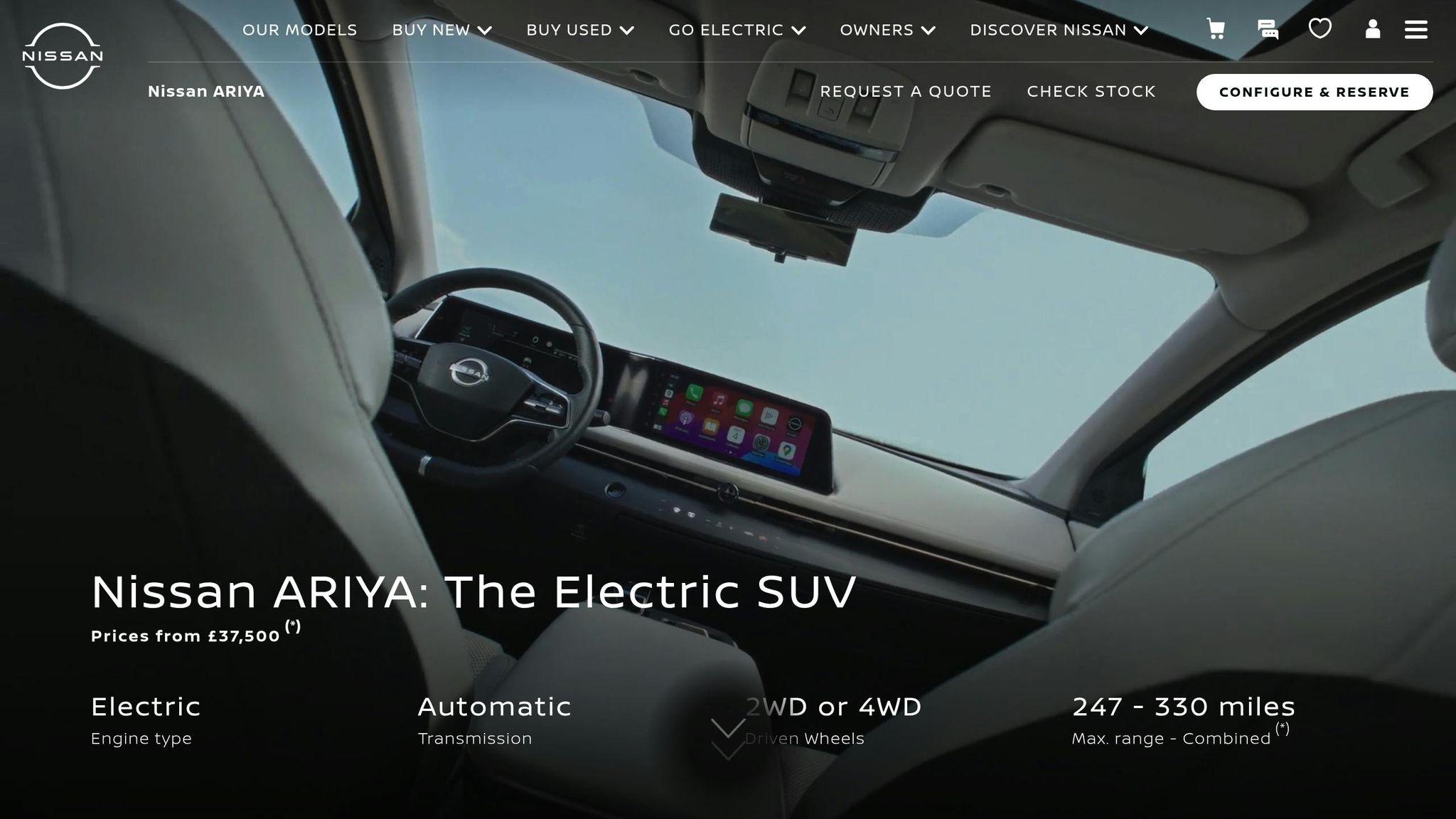
The Nissan Ariya takes a refined approach to long-distance electric travel. The 2026 facelift introduced a fresh grille-less front design, headlights inspired by the third-generation Leaf, and a new infotainment system powered by Google. Built on a dedicated EV platform with a flat floor, the Ariya offers two battery options: a 63 kWh pack for city commutes and an 87 kWh pack for longer trips [50, 52, 53].
Range (km)
The 87 kWh model delivers a WLTP range of approximately 504 km in its front-wheel-drive (FWD) version and 487 km in the all-wheel-drive (AWD) version. Real-world efficiency hovers around 5.15 km/kWh, translating to roughly 466 km. Meanwhile, the 63 kWh version provides a range of up to 385 km [50, 51, 53].
Charging Speed (kW)
The Ariya supports DC fast charging at speeds of up to 130 kW, allowing the 87 kWh battery to charge from 10% to 80% in about 45 minutes. For home or destination charging, higher-spec models include a 22 kW three-phase AC charger, while base variants come with a 7.4 kW unit. It uses standard Type 2 (AC) and CCS-2 (DC) plugs, ensuring compatibility with charging networks across Asia [50, 55].
Comfort Features
The Ariya prioritises comfort alongside performance. Inspired by the "Timeless Japanese Futurism" design philosophy, the cabin features Zero Gravity seats to reduce fatigue during long journeys. The interior includes dual 12.3-inch displays, a power-sliding centre console, and a motorised hidden compartment that doubles as a table. ProPILOT 2.0 enables hands-off driving on single-lane highways, and the NissanConnect app lets users pre-condition the cabin while charging. According to Autocar, the interior feels "surprisingly traditional and luxurious", though the haptic buttons require firm pressure [51, 53].
Terrain Handling
The e-4ORCE AWD system generates 290 kW (389 HP) and 600 Nm of torque, accelerating the car from 0–100 km/h in just 5.6 seconds. This system independently manages power and braking for each wheel, reducing vehicle pitch on winding roads. A dedicated "Snow" mode improves traction on slippery surfaces. However, reviewers have pointed out that the car’s high centre of gravity makes it feel heavy during sharp cornering, and the rear suspension can feel stiff when the vehicle is fully loaded on bumpy roads [50, 51, 53].
Price (PKR)
In Australia, the Nissan Ariya starts at 55,840 AUD (around PKR 10,300,000) for the Engage trim, with the Evolve e-4ORCE trim priced at 71,840 AUD (approximately PKR 13,300,000). In Hong Kong, the Ariya B6 Prestige starts from 348,800 HKD (roughly PKR 12,500,000) under local replacement schemes [49, 53].
Pros and Cons
Each electric vehicle (EV) brings its own strengths and challenges when it comes to long road trips across Asia. The Hyundai Ioniq 5 and Kia EV6 stand out with their ultra-fast 800V charging systems, allowing a 10% to 80% charge in just 18 minutes. However, the Kia EV6’s advanced features come at a cost, with a price tag of around PKR 22.4 million, making it the priciest option in this lineup.
The BYD Seal strikes a balance between affordability and range, offering up to 650 km for approximately PKR 13.9 million. That said, its sedan design and lower ground clearance might make it less suitable for uneven terrain. On the other hand, the XPeng G6 and Nissan Ariya provide solid mid-range options. However, their 400V systems mean longer charging stops, typically around 30 to 45 minutes.
Given the diverse terrains across Asia, vehicles with SUV-like ground clearance have a clear advantage for tackling rural roads and mountainous areas. Models like the Ioniq 5, EV6, and Ariya handle mixed road conditions better than sedans, making them ideal for adventurous routes. It’s also worth noting that real-world conditions, such as highway driving and colder temperatures, can reduce an EV’s range by as much as 30–40%.
Here’s a quick overview of how these models compare:
| Model | Max Range (km) | Charging (10-80%) | Terrain Handling | Est. Price (PKR) |
|---|---|---|---|---|
| BYD Seal | 510–650 | ~25–30 min | Sedan (Lower clearance) | ~13.9 Million |
| XPeng G6 | 570–625 | ~30 min | SUV (Better clearance) | ~14.5 Million |
| Hyundai Ioniq 5 | 627–631 | 18 min | SUV (Better clearance) | ~15.7 Million |
| Kia EV6 | 663–708 | 18 min | SUV (Better clearance) | ~22.4 Million |
| Nissan Ariya | 385–504 | ~45 min | SUV (Better clearance) | ~10.3–13.3 Million |
Fast charging is a crucial factor for reducing downtime during long trips. The Ioniq 5 and EV6 excel here with their 800V systems, significantly cutting charging times. Meanwhile, the BYD Seal’s affordability makes it a strong contender for budget-conscious travellers who don’t mind slightly longer charging intervals. These details can help guide your choice for a smooth and efficient long-distance journey.
Conclusion
Choosing the right EV for extended travel across Asia involves carefully balancing range, charging speed, comfort, and terrain-handling capabilities. With infrastructure challenges and extreme weather conditions in mind, your decision will ultimately depend on your travel needs and budget.
For families prioritising comfort, the Hyundai Ioniq 5 and Kia EV6 stand out. Both offer spacious interiors and strong performance, with the Kia EV6 positioned as a premium option priced at approximately PKR 22.4 million. These vehicles also deliver fast charging capabilities, making them suitable for long-distance trips.
If your route includes mountainous areas or rough terrain, consider models like the XPeng G6 and Nissan Ariya, which feature higher ground clearance and adjustable regenerative braking. These attributes make them well-suited for mixed road conditions. On the other hand, if affordability is your priority, there’s a compelling choice for highway travel.
The BYD Seal, priced around PKR 13.9 million, offers a solid range of up to 650 km, thanks to its Blade Battery technology. Additionally, BYD’s local presence in Pakistan, including the assembly of models like the Atto 3, ensures better access to parts and service in major cities like Karachi, Lahore, and Islamabad. This makes it a practical choice for budget-conscious motorway travellers.
When importing an EV through EV24.asia, ensure your Active ATL filer status to avoid extra registration taxes under the PAVE Scheme. Also, check that your selected model uses CCS charging connectors, which align with Pakistan’s growing fast-charging infrastructure.
Maintenance for EVs is generally simpler than for petrol vehicles, though regular tyre checks are essential due to the added weight of the battery. To extend battery life, follow the "80-20 rule" – charge to 80% and avoid dropping below 20%. Preconditioning the battery can also help optimise its temperature and improve range.
Keep in mind that highway performance may deliver only 70–80% of the rated range, which can drop further to about 60% under extreme conditions. For drivers in Pakistan, a range of 500 km or more is often considered the sweet spot for reducing range anxiety during intercity travel. Plan your routes carefully and make use of the expanding fast-charging network to ensure smooth, predictable long-distance journeys in your EV.
FAQs
How do I plan charging stops on a long EV road trip in Pakistan?
When embarking on a long EV road trip in Pakistan, careful planning is key to a hassle-free journey. Start by using EV charging apps to locate nearby stations, check their availability, and map out your route. These apps are incredibly helpful in identifying where and when you’ll need to recharge.
Keep in mind your EV’s real-world range. Factors like speed, hilly terrain, and weather conditions can affect how far your car can go on a single charge. To avoid unexpected delays, identify charging stations ahead of time, especially if you’re travelling through remote areas where charging points might be scarce.
By combining the insights from apps with your vehicle’s range capabilities, you can ensure a smoother, more efficient trip without the worry of running out of charge.
Which EV is best for rough roads and high ground clearance on northern routes?
The Mercedes-Benz G580 with EQ Technology stands out as a strong contender among electric off-roaders. With impressive ground clearance and the ability to handle tough northern routes, it proves to be a dependable option for navigating challenging terrains.
How much range should I expect on motorways vs the rated range?
On motorways, you can generally expect 10-30% less range than the official WLTP or EPA figures. This drop is mainly due to higher speeds and the steady nature of motorway driving. In most cases, real-world motorway driving achieves about 70-80% of the rated range, though factors like terrain and temperature can influence this. Keep this in mind when planning long trips to avoid unplanned stops.