
 Arka Pratama
 Israel, a nation at the crossroads of Europe, Asia, and Africa, is increasingly embracing the global shift towards electric mobility. With its tech-savvy population and a government that has historically supported green initiatives, the country presents a dynamic and evolving market for electric vehicles. The capital of Israel is Jerusalem, and the nation is home to approximately 9.5 million people. The official currency is the New Israeli Shekel (NIS), and the official languages are Hebrew and Arabic. For those looking to import vehicles, it is important to note that Israel drives on the right-hand side of the road. The primary maritime gateways for vehicle importation are the major ports of Haifa and Ashdod on the Mediterranean coast, and the port of Eilat on the Red Sea.
The regulatory landscape for importing electric vehicles into Israel is a key factor for potential importers. The Israeli government has utilized a purchase tax as a tool to influence the automotive market. For electric vehicles, the purchase tax was 35% in 2024. However, there is a plan to increase this tax to 52% by the year 2026, a move that could impact the market’s growth trajectory. To offset this, the government has offered some incentives, including a modest tax subsidy for the purchase of battery electric vehicles. Regarding import regulations, there are restrictions on the age of vehicles that can be brought into the country. Generally, passenger vehicles up to 48 months from their date of manufacture are eligible for personal import, although some exceptions apply.
The Israeli electric vehicle market has experienced significant growth in recent years. The market share for electric vehicles has been steadily increasing, reaching approximately 18% of new car sales in 2023. While the total annual EV sales volume for the most recent year is a figure that fluctuates with market dynamics, it is clear that consumer appetite for electric cars is strong. This is evidenced by the success of various brands in the market. Chinese manufacturers have made a particularly strong impact, with brands like BYD and Geely performing very well. The BYD Atto 3, a subcompact crossover, was a top-selling model in 2023, indicating a preference for versatile and affordable electric SUVs and sedans among Israeli consumers.
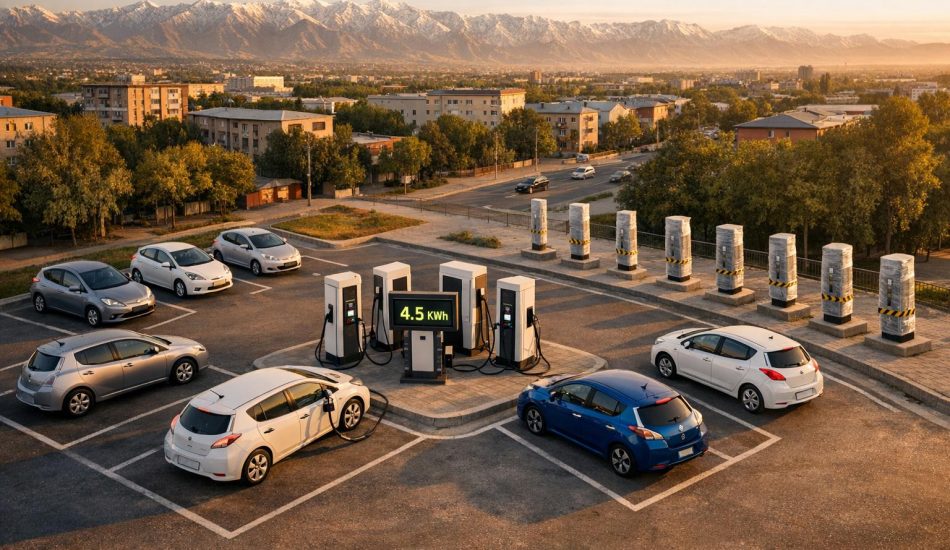
To support the growing fleet of electric vehicles, Israel has been developing its charging infrastructure. As of mid-2022, there were approximately 1,000 public AC charging stations and around 120 public DC fast-charging stations across the country. These numbers are continuously growing as the government and private sector invest in expanding the network. Several major charging network operators are active in the Israeli market, including Afcon Electric Mobility, which operates one of the largest networks. Another significant player is ‘ON’ Charging, a joint venture between Afcon and Dor Alon. Nofar Energy, through its subsidiary Enova, is also a key contributor to the expanding charging landscape.
While Israel is a hub of automotive technology and innovation, particularly in the areas of autonomous driving and cybersecurity, information on local electric vehicle manufacturing is not widely available. Specific data on local EV car manufacturers, as well as assembly plants or manufacturing facilities for electric cars, two-wheelers, or three-wheelers, is to be confirmed. However, the country is home to several prominent companies in the charging equipment sector. Firms like Zooz Power, known for its flywheel-based power boosting technology, and SolarEdge, a leader in smart energy solutions, are contributing to the global EV charging industry. Government initiatives to specifically promote local EV production are currently an area for which more data is needed.
In conclusion, the Israeli EV market holds considerable potential, driven by consumer interest and a growing charging network. The outlook remains positive, although the planned tax hikes could present a challenge to sustained rapid growth. For EV importers, the key opportunities lie in providing a diverse range of models that cater to the popular sedan and SUV segments. The success of Chinese brands highlights a demand for competitively priced and well-equipped electric vehicles. As the market matures, there will likely be further opportunities in the areas of after-sales service, battery technology, and innovative charging solutions, making Israel a key market to watch in the evolving landscape of electric mobility.