
 Arka Pratama
 Nepal, a landlocked nation nestled in the Himalayas, is experiencing a significant shift in its automotive landscape. With a population of over 31 million, the country is rapidly embracing electric mobility, driven by favorable government policies and growing environmental awareness. The capital city, Kathmandu, is at the heart of this transition, with a burgeoning market for electric vehicles. The official currency is the Nepalese Rupee (NPR), and the official language is Nepali. As a country with left-hand traffic, all vehicles are right-hand drive. Given its landlocked status, Nepal relies on neighboring India for its port access, with the port of Kolkata serving as the primary gateway for vehicle imports. From there, vehicles are transported to inland dry ports such as Birgunj, the country’s first and largest dry port, as well as Chobhar and Bhairahawa for customs clearance.
The Nepalese government has been a key driver of the EV boom, implementing a range of policies to encourage the adoption of electric vehicles. Unlike the high import duties levied on internal combustion engine (ICE) vehicles, which can exceed 300%, EVs benefit from a significantly lower and more favorable tax structure. The import duties and excise taxes for EVs are tiered based on their motor capacity. For instance, EVs with a motor power of up to 50 kW are subject to a 15% customs duty and a 5% excise duty. For vehicles with a motor capacity between 51 kW and 100 kW, the customs duty is 20% and the excise duty is 10%. In addition to the favorable tax regime, the government also provides various incentives, including tax exemptions and subsidies, to further promote EV adoption. To ensure the quality and safety of imported vehicles, the government has also put in place a vehicle age restriction, allowing the import of cars that are 10 years old or newer.
The impact of these policies is evident in the country’s impressive EV market data. In the first nine months of the fiscal year 2024-2025 alone, Nepal imported over 10,000 electric vehicles, a figure that is nearly triple the number of imports in the previous fiscal year. This surge in demand has resulted in electric vehicles accounting for a remarkable 76% of all passenger vehicles sold in the past year. The market is dominated by a mix of international and local brands, with Chinese and Indian manufacturers leading the way. Brands such as BYD, Tata, MG, and Hyundai have established a strong presence, with popular models like the BYD Atto 3, Tata Nexon EV, and MG ZS EV becoming common sights on Nepalese roads. The SUV and crossover segments have proven to be particularly popular among consumers, reflecting a global trend.
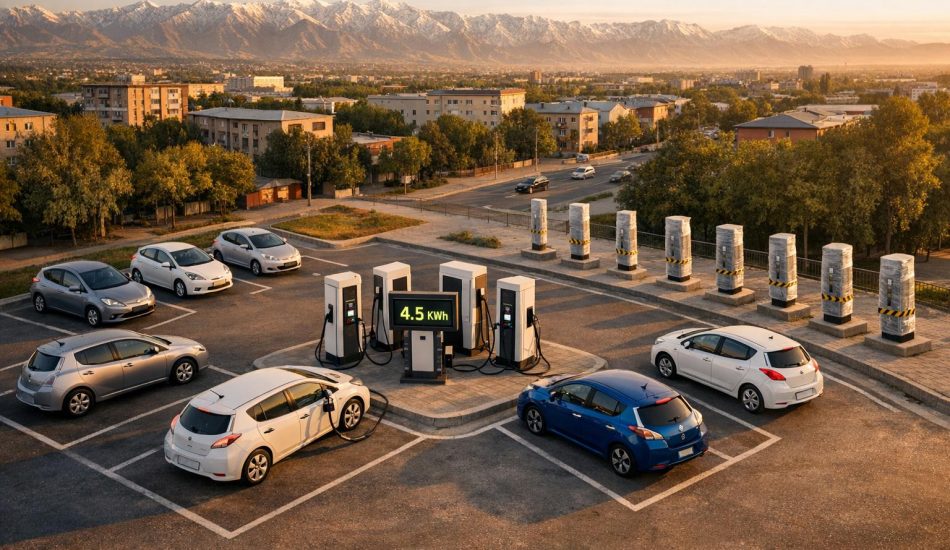
To support the growing fleet of electric vehicles, Nepal has been actively developing its charging infrastructure. There are now over 500 public charging stations across the country, with a mix of AC and DC fast-charging options. Major charging network operators such as Aircharge, chargeMOD, and ElectriVa Nepal are expanding their networks, ensuring that EV owners have access to reliable charging facilities. The Nepal Electricity Authority (NEA) is also playing a crucial role in this expansion, with plans to install more charging stations along major highways and in key urban centers. While the exact number of AC and DC fast-charging stations is yet to be confirmed, the rapid growth of the charging network is a clear indication of the country’s commitment to electric mobility.
The local EV industry is also beginning to take shape, with several companies investing in assembly plants and manufacturing facilities. Sundar Auto has established an assembly plant in Rupandehi, and other companies are following suit, with new plants being set up in locations such as Chitwan. The government is actively encouraging local production through various incentives, aiming to create a self-sustaining EV ecosystem. In addition to vehicle assembly, there is also a growing number of local companies manufacturing charging equipment, such as EV Charger Suppliers Pvt. Ltd., further strengthening the domestic EV industry.
In conclusion, Nepal’s electric vehicle market is poised for continued growth, driven by a combination of strong government support, increasing consumer demand, and a rapidly expanding charging infrastructure. The country’s commitment to sustainable transportation presents significant opportunities for EV importers and manufacturers. As the market matures, there will be a growing demand for a wider range of EV models, as well as for advanced charging solutions and after-sales services. With its progressive policies and a clear vision for the future, Nepal is well on its way to becoming a leading EV market in the South Asian region.