
 Arka Pratama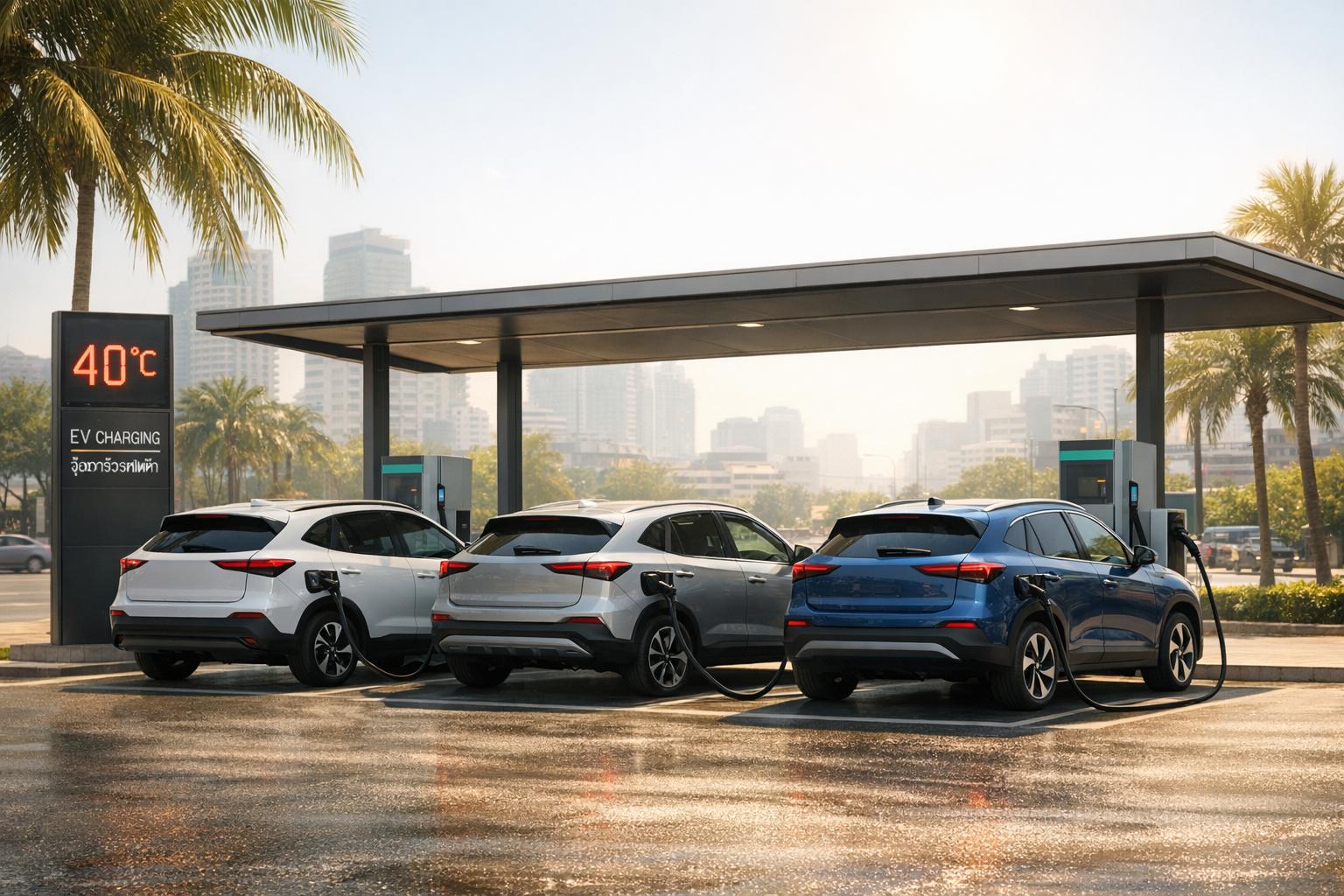
Summers in Asia, especially in Pakistan, can exceed 40°C, affecting EV performance and battery life. Extreme heat increases energy consumption for cooling systems, reduces driving range, and accelerates battery degradation. This article reviews three EVs that handle high temperatures effectively: Tesla Model Y, BYD Atto 3, and XPeng G6.
Key Highlights:
- Tesla Model Y: Advanced liquid cooling, 93% range retention at 40°C, preconditioning features, but air conditioning may underperform.
- BYD Atto 3: LFP Blade Battery, 77% range retention at 40°C, quieter cooling, resistant to sand and dust, but lower range with air conditioning.
- XPeng G6: 800V architecture, 78% range retention at 40°C, heat pump, UV-protected glass roof, but limited local performance data.
Quick Comparison:
| EV Model | Battery Type | Range Retention (~40°C) | Cooling System | Approx. Range (~40°C) |
|---|---|---|---|---|
| Tesla Model Y | Lithium-ion | 93% | Liquid cooling, preconditioning | ~494 km |
| BYD Atto 3 | LFP Blade Battery | 77% | Direct liquid cooling, heat pump | ~369 km |
| XPeng G6 | LFP/NCM (varies by model) | 78% | Heat pump, UV-blocking roof | ~409 km |
Tips for Battery Health in Hot Weather:
- Avoid frequent fast charging; it increases battery wear.
- Park in shaded areas to reduce cabin and battery heat.
- Maintain battery charge between 20%-80% for long-term performance.
These EVs offer solutions for Pakistan’s extreme heat, but proper care is essential to preserve battery life and ensure consistent performance.
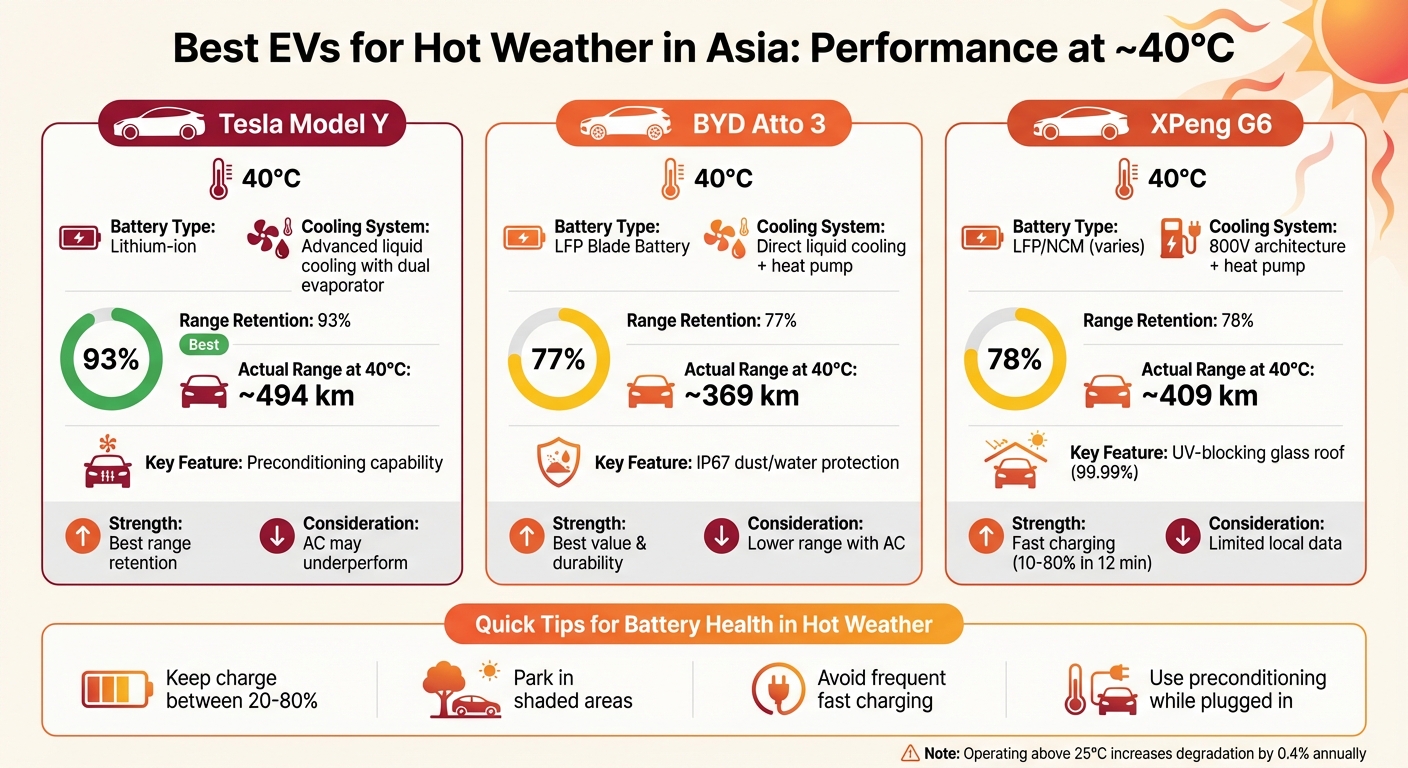
Best EVs for Hot Weather: Performance Comparison at 40°C in Asia
1. Tesla Model Y
Battery Health in Heat
The Tesla Model Y’s advanced liquid-cooling system is designed to keep the battery operating within a safe temperature range of 15°C–35°C, effectively reducing the risk of thermal degradation. Unlike older electric vehicles (EVs) that relied on passive air-cooling systems – which often struggled in extreme climates like Arizona – the Model Y uses a dual evaporator vapor compression cycle with a dedicated coolant loop. This system ensures optimal battery temperatures, even in sustained high heat. For regions like Karachi and Lahore, where temperatures frequently exceed 35°C, the cooling system redirects energy to protect the battery’s health. While this approach safeguards long-term performance, it does lead to a temporary reduction in driving range.
Range Retention in High Temperatures
Maintaining efficient battery cooling plays a critical role in preserving the Model Y’s driving range. At an ambient temperature of 35°C, the Model Y experiences an 8% range reduction due to the combined energy demands of air conditioning and battery cooling. This is a better performance compared to competitors like the Chevrolet Bolt (9%) and the Nissan Leaf Plus (13%) under similar conditions. However, in extreme heat conditions (46–50°C), energy consumption can rise by around 28%, causing a range drop of approximately 16%. For instance, during a 2026 road test, the Model Y Long Range AWD managed 331 miles (533 kilometres) on the highway at a steady 70 mph, slightly surpassing its EPA estimate of 327 miles.
Cooling Technology
Tesla’s cooling technology draws energy from the battery to maintain optimal performance. Drivers can precondition both the cabin and battery while the vehicle is plugged in, ensuring stable temperatures before a trip and reducing energy use during the drive. The refreshed 2026 Model Y also introduces ventilated front seats in Premium trims and higher, which not only enhance passenger comfort but also improve overall climate control efficiency. Additionally, Tesla’s Supercharger network is optimised to prepare the battery for fast charging, even in high ambient temperatures.
Performance in Asian Conditions
These cooling innovations make the Model Y well-suited for the challenging summer conditions typical in many Asian countries. Interestingly, testing reveals that warm days around 29°C (85°F) can actually deliver the Model Y’s longest driving range – even with air conditioning in use. The vehicle’s lighter weight helps lower energy demands and reduces heat generation during operation. However, not all aspects of the cooling system have been universally praised. Consumer Reports highlighted some shortcomings, particularly with the air conditioning, describing it as "wimpy." One tester remarked:
"Stiff ride, abrupt regenerative braking at low speeds, too much reliance on the screen, wimpy air conditioning – these could be deal breakers"
For drivers in Pakistan, parking in shaded areas remains a practical way to conserve energy and maintain range during the sweltering summer months.
2. BYD Atto 3
Battery Health in Heat
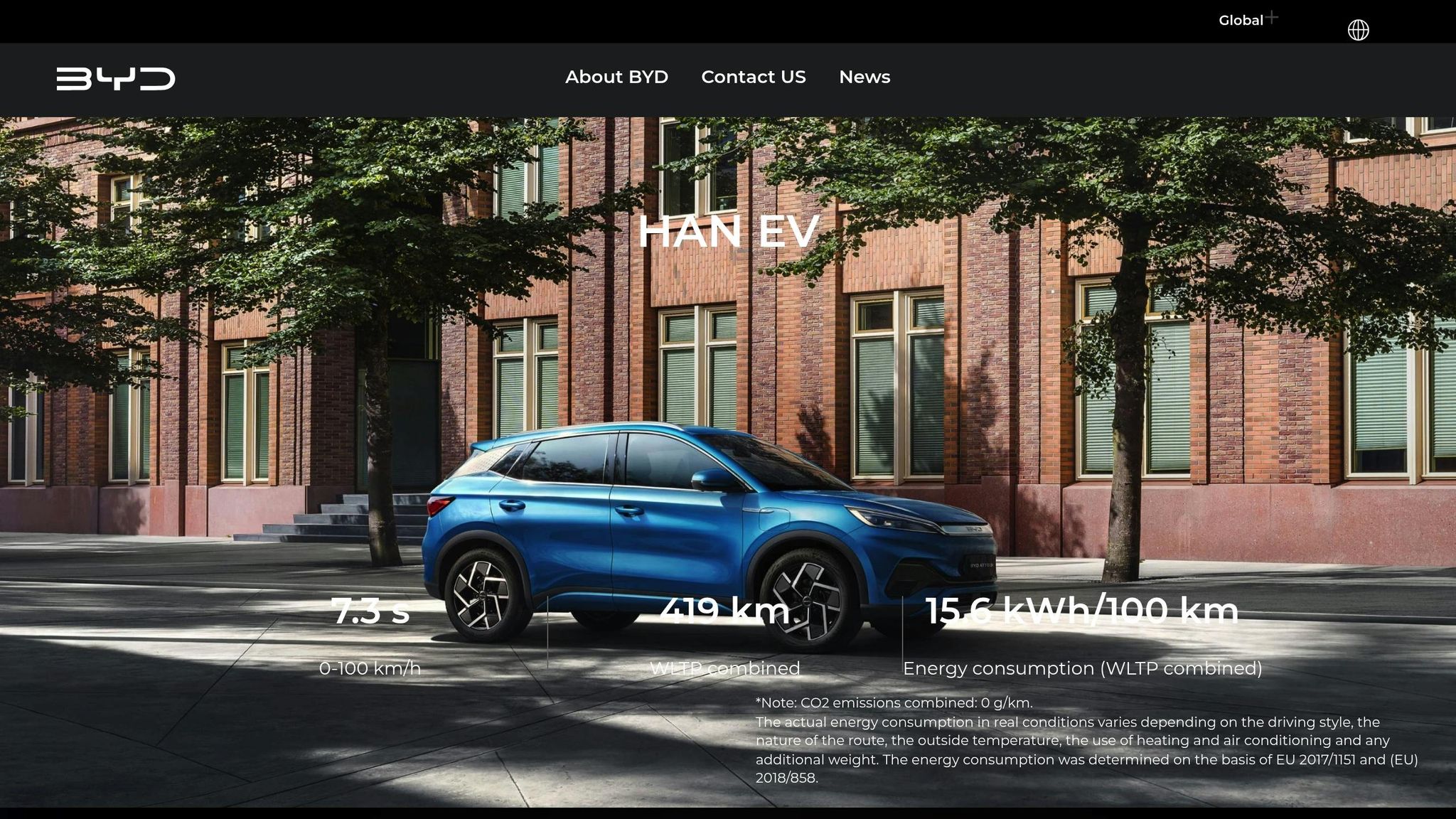
In the intense heat of Asia, ensuring battery stability is a top priority. The BYD Atto 3 stands out with its Blade Battery technology, which uses LFP chemistry to deliver excellent thermal stability. Unlike traditional lithium-ion batteries, the Blade Battery is designed to resist catching fire and maintains steady performance across a broader temperature range. The vehicle employs a direct cooling system, where the coolant directly contacts the battery cells. This system proved its effectiveness after two hours in temperatures exceeding 50°C, keeping the battery temperature steady at 43°C. For comparison, the Hyundai Kona Electric‘s battery temperature rose to 51°C under the same conditions.
Range Retention in High Temperatures
From October 2024 to April 2025, Dubai-based logistics entrepreneur Ahmed Al-Mansoori put the Atto 3 through a rigorous 15,000-kilometre durability test in the UAE. Despite summer temperatures exceeding 50°C and enduring three major sandstorms, the vehicle only experienced a 12% range reduction, dropping from 380 km to 334 km. This was a better performance compared to the Hyundai Kona Electric, which saw an 18% range loss under similar conditions. In more moderate weather, around 25°C, the Atto 3 even surpassed its official WLTP rating of 420 kilometres, achieving up to 445 kilometres. However, using the 2-kilowatt air conditioning system reduces the WLTP range by about 23.8%, bringing it down to 320 kilometres.
Cooling Technology
The Atto 3 also excels in cooling technology, contributing to its strong performance in extreme conditions. The cooling system operates at a quieter 58 decibels, compared to the Kona’s 67 decibels. Additionally, the car features a high-efficiency heat pump system that repurposes residual heat from the surroundings, powertrain, and batteries to regulate thermal loads. Its battery pack boasts an IP67 rating, offering robust protection against dust and water – essential for Pakistan’s dusty summers. During Al-Mansoori’s test, the Atto 3 showed no cabin dust ingress, thanks to the IP67-rated battery and triple door seals. In contrast, the Kona’s dashboard vents collected visible dust. Al-Mansoori summed up his experience:
"I used to think all EVs were fragile in deserts. The Atto 3 changed my mind – it’s built like a camel with tech upgrades."
Performance in Asian Conditions
The Atto 3’s thermal management system proved well-suited for Pakistan’s challenging climate. During Al-Mansoori’s six-month test, the vehicle needed just one air filter replacement and had 40% lower maintenance costs compared to the Kona. BYD also offers an 8-year battery warranty that includes coverage for damage from environmental factors such as sand, providing extra reassurance for owners in arid areas. Moreover, the multi-link rear suspension handles uneven terrain more effectively than the torsion beam setups used by some competitors.
3. XPeng G6
Battery Health in Heat
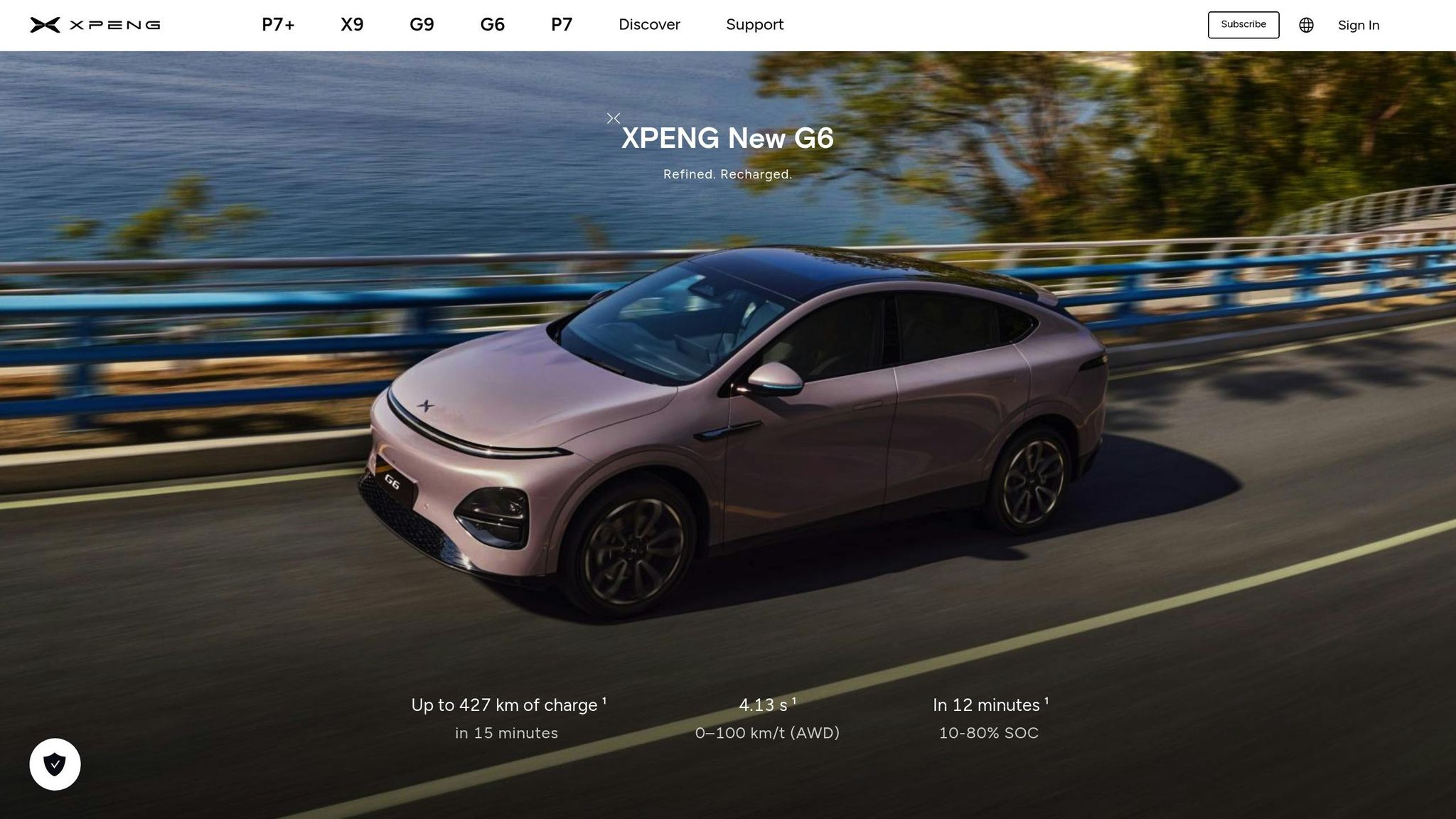
The XPeng G6 is built to handle Pakistan’s scorching temperatures while maintaining reliable performance. Its X-HP3.0 Intelligent Thermal Management System, which includes a standard heat pump, ensures the battery stays stable even in extreme heat conditions. The car’s 800V High-Voltage SiC platform minimizes heat generation during rapid charging and high-speed driving, adding another layer of efficiency.
The battery is protected by a "4-3-4" triple-layer safety shield, designed to resist impacts, fires, and thermal runaway. Impressively, the top layer can withstand temperatures as high as 1,000°C. The Standard Range models use Lithium Iron Phosphate (LFP) batteries, known for their durability in hot climates. Meanwhile, the Long Range and Performance versions rely on Nickel Cobalt Manganese (NCM) cells, which offer higher energy density but require more advanced thermal management. This thoughtful battery design not only boosts safety but also ensures the vehicle performs efficiently in challenging conditions.
Range Retention in High Temperatures
Thanks to its advanced thermal management, the G6 maintains an impressive driving range even in hot weather. Tests reveal that the G6 RWD Long Range achieves 525 kilometres on the WLTP cycle, though this drops to 409 kilometres when the air conditioning system (drawing 2 kilowatts) is in use – a 22.1% reduction. At a steady speed of 90 km/h, the energy consumption stands at 16 kWh/100km, increasing slightly to 18.2 kWh/100km with climate control. Industry findings show that EVs equipped with heat pumps typically lose around 7% of their range at 32°C and up to 15% at 38°C, as these systems are generally optimised for colder climates.
The vehicle’s panoramic glass roof, coated with a silver-plated layer (SPF100+), blocks 99.99% of UV rays, reducing heat buildup inside the cabin and helping conserve battery power. Additionally, the 800V architecture allows for "5C" supercharging, enabling the battery to go from 10% to 80% in just 12 minutes under ideal thermal conditions.
Cooling Technology
The G6 doesn’t just focus on battery cooling – it also prioritises passenger comfort. Features like ventilated front seats, an active grille shutter, and air-cooled wireless phone chargers collectively enhance the driving experience. The cabin air quality is further improved by the XfreeBreath® intelligent air purification system, which includes filters for pollen and PM2.5 particles. These thoughtful additions ensure both efficiency and comfort, making the G6 a well-rounded choice for hot climates.
sbb-itb-5f05a6f
How far can electric cars REALLY go in EXTREME heat? | What Car?
Strengths and Weaknesses
Examining the individual reviews, here’s a closer look at how each EV performs under Pakistan’s scorching summer conditions, highlighting their strengths and compromises.
Each electric vehicle (EV) comes with its own set of advantages and challenges when tested in intense heat. The Tesla Model Y stands out for its thermal management capabilities, maintaining about 93% of its EPA-rated range at temperatures around 32°C. However, it still falls short of achieving its full claimed range. The BYD Atto 3 offers excellent value with its durable LFP battery and a heat pump system, but real-world tests reveal a 23% gap between its laboratory range (480 km) and its actual driving range (369 km). On the other hand, the XPeng G6 impresses with its advanced 800V architecture and efficient cooling, retaining around 78% of its claimed range in high-temperature conditions.
Despite these advanced cooling technologies, prolonged exposure to high temperatures continues to accelerate battery wear. Operating consistently above 25°C increases battery degradation by 0.4% annually. As Geotab explains:
"Heat increases chemical activity and stress inside the cell. While EVs are built to accommodate for this, the battery pack has to work that much harder to regulate battery temperatures, leading to increased degradation".
Additionally, frequent use of DC fast chargers – if it accounts for over 12% of total charging – can raise annual degradation rates from around 1.5% to 2.5%. This directly impacts both the lifespan of the battery and the daily driving range, which are critical considerations for EV owners in Pakistan.
Performance Metrics at ~40°C
The table below summarises how these EVs perform when exposed to ~40°C heat:
| EV Model | Battery Health Technology | Range Retention at ~40°C | Cooling Technology | Actual km/Charge (40°C Heat) |
|---|---|---|---|---|
| Tesla Model Y | Active liquid cooling with a dual evaporator system | ~93% of EPA rating | Advanced thermal management with a coolant loop | ~494 km (from a 330-mile EPA rating) |
| BYD Atto 3 | LFP battery with integrated heat pump and active management | ~77% of claimed range | Liquid cooling with software-managed thermal control | ~369 km (from 480 km claimed) |
| XPeng G6 | X-HP3.0 system with 800V architecture and safety layers | ~78% with AC running | Heat pump with active grille shutter and ventilated seats | ~409 km (from a 525 km WLTP rating) |
Tips to Reduce Degradation
To help maintain battery health in Pakistan’s hot climate:
- Avoid letting the battery drop to extremely low charge levels, as cooling systems require sufficient power to operate effectively.
- Keeping the battery at 100% charge for long periods can increase degradation to about 2% annually.
- Opt for overnight low-power charging, which reduces heat build-up and helps extend the battery’s lifespan.
These strategies can go a long way in preserving your EV’s performance and ensuring a smoother driving experience, even in challenging weather.
Conclusion
Choosing an EV that can handle Pakistan’s intense heat requires careful consideration of thermal management systems and accurate range capabilities. The Tesla Model Y stands out with its advanced liquid cooling system, ensuring consistent performance even in temperatures exceeding 40°C. For those prioritising reliability in extreme conditions, it’s a compelling choice.
The BYD Atto 3, on the other hand, offers solid value with its durable LFP battery and integrated heat pump system. While its real-world range might not always match the claimed figures in high heat, it remains a practical option for urban driving. However, buyers should verify details about its thermal management system, as some entry-level BYD models reportedly lack a direct liquid coolant circuit.
The XPeng G6 provides a well-rounded option, incorporating modern thermal management features. While local performance data is still limited, its design suggests it can handle Pakistan’s challenging climate effectively. Together, these models showcase a range of solutions for managing extreme heat.
Ultimately, the decision comes down to individual priorities. The Tesla Model Y offers top-level reliability and performance, while the BYD Atto 3 appeals to budget-conscious buyers. Regardless of the model, adopting practices like preconditioning the cabin while plugged in, parking in shaded areas, and keeping battery charge levels between 20% and 80% can significantly extend battery life in Pakistan’s harsh climate. With proper care, these EVs can retain around 80% battery capacity over 8 to 12 years, even in extreme conditions.
FAQs
How does hot weather affect the battery life and range of EVs in Asia?
Hot weather can take a toll on electric vehicles (EVs), especially in places like Asia, where temperatures regularly climb above 37°C. The intense heat speeds up the chemical aging process in lithium-ion batteries, causing them to degrade faster and lose capacity over time. This, in turn, shortens the battery’s overall lifespan.
Extreme heat doesn’t just affect the battery’s longevity – it can also reduce an EV’s range. In some cases, the range may drop by as much as 17-18%. Why? Because the battery management system has to work overtime to keep the battery cool while also powering the air conditioning. Over time, continuous exposure to such high temperatures can make the battery degrade even faster year after year.
For EV owners in hot climates like Pakistan, proper thermal management and regular maintenance are crucial to keeping their vehicles running efficiently despite the heat.
How can I keep my EV battery healthy in Pakistan’s hot climate?
Keeping your EV battery in good shape during Pakistan’s scorching summers doesn’t have to be complicated. A few smart habits can make a big difference.
Park Smart: Always try to park in shaded areas or use a car cover to shield your vehicle from direct sunlight. If you have access to underground or covered parking, that’s even better – it keeps your car cooler and reduces the risk of battery overheating.
Time Your Charging: Avoid charging your EV during the hottest parts of the day, like midday. Instead, aim to charge early in the morning or late at night when temperatures are lower. This reduces thermal stress on the battery and helps prevent faster wear and tear.
Leverage Built-in Features: Most EVs come equipped with thermal management systems, but you can go a step further by preconditioning the cabin and battery before hitting the road. If your car has features like Cabin Overheat Protection, use them to maintain a safer temperature inside the vehicle.
By following these steps, you can help extend your EV battery’s life and keep your car running smoothly, even in Pakistan’s intense heat.
Which electric vehicle offers the best range performance in hot climates?
The Audi e-tron stands out for its impressive ability to retain range even in scorching temperatures. With less than 5% range loss in extreme heat – ranging between 32°C and 37°C (90–100°F) – it outperforms many other EVs, including some well-known models that struggle under similar conditions.
For drivers navigating Pakistan’s hot weather, this feature makes the e-tron a reliable option. Its advanced battery management system is built to tackle these challenges, ensuring steady performance and efficiency when it’s needed most.