
 Arka Pratama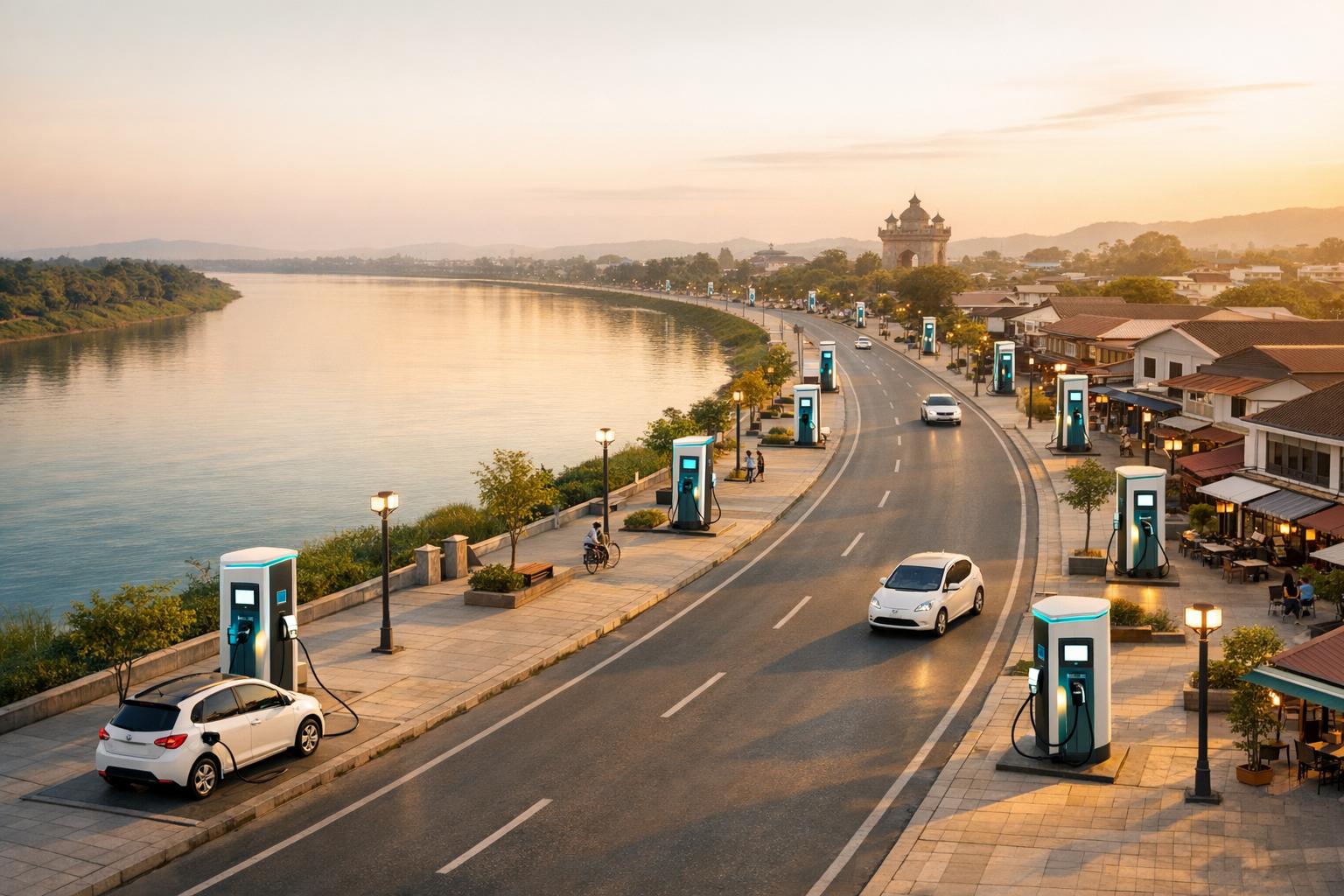
Laos is quickly transitioning to electric vehicles (EVs), with a focus on reducing fuel imports and utilizing renewable energy. By 2026, EVs are becoming a major part of the country’s transport sector, supported by government incentives, expanding charging networks, and changing consumer preferences. Here’s what you need to know:
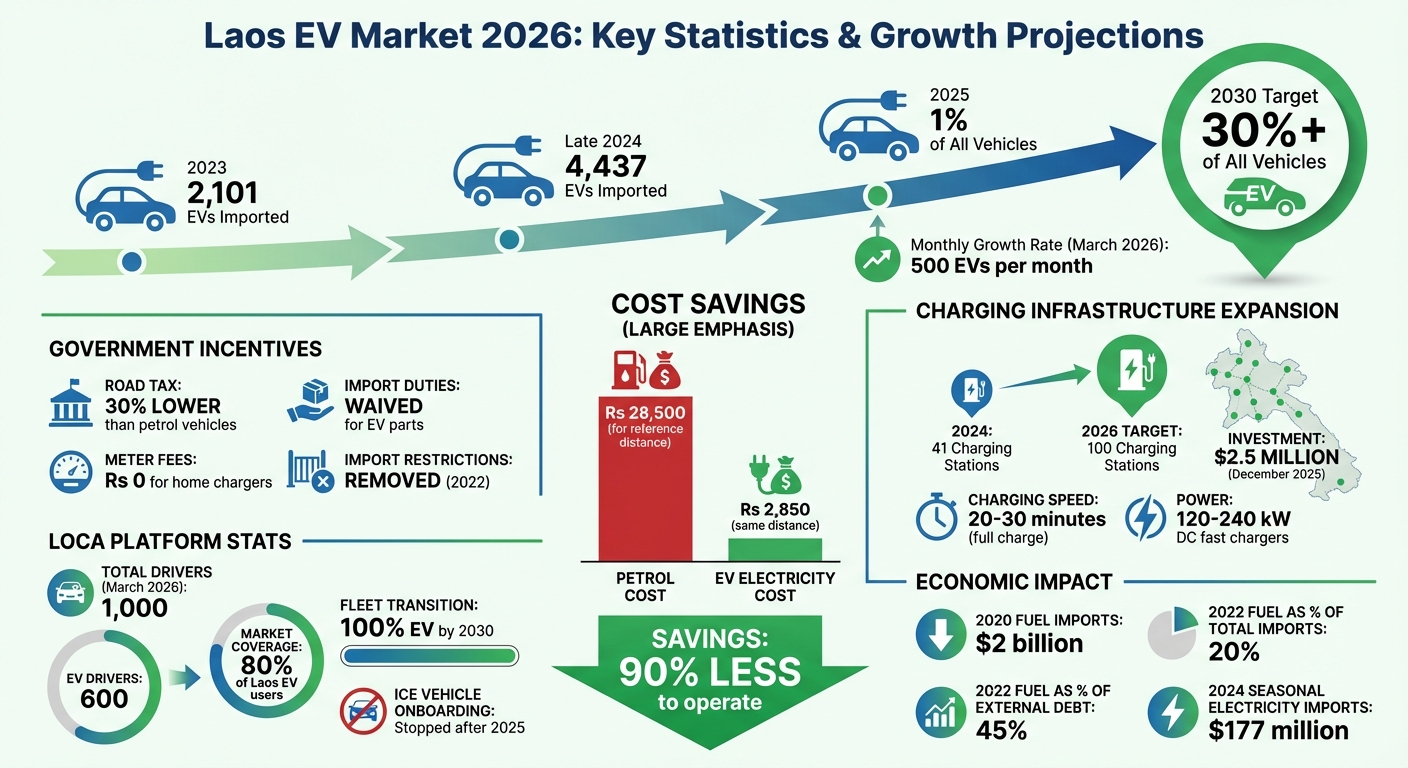
- EV Growth: From 2,101 EVs imported in 2023 to 4,437 by late 2024, the market is growing fast. EVs are expected to exceed 30% of all vehicles by 2030.
- Government Support: Lower road taxes (30% less than petrol vehicles), waived import duties for EV parts, and no meter fees for home chargers.
- Charging Access: LOCA aims to expand charging stations from 41 in 2024 to 100 by 2026, with fast chargers covering key routes.
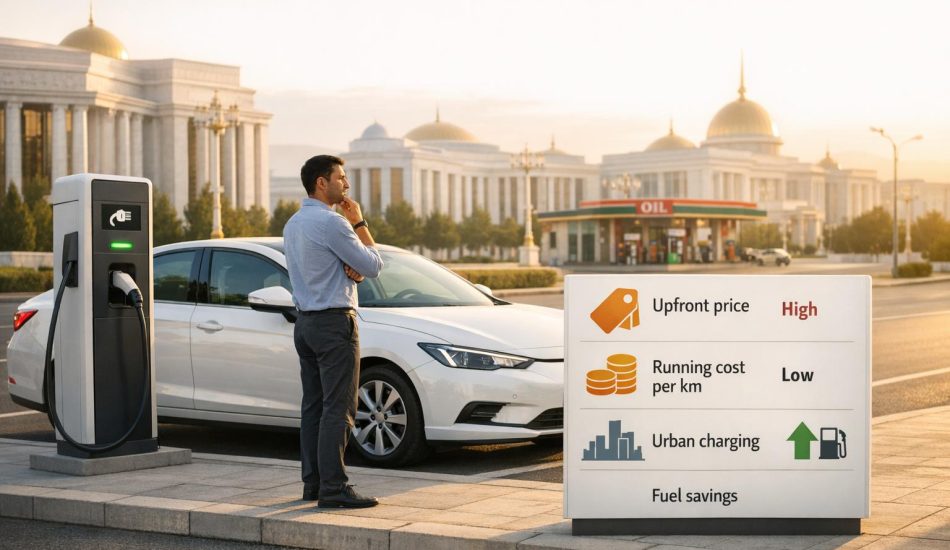
- Cost Savings: EVs cost 90% less to run compared to petrol vehicles, with Rs 2,850 spent on electricity for the same distance as Rs 28,500 on petrol.
- Challenges: Limited charging stations, seasonal electricity imports, and infrastructure issues remain hurdles.
- Top EV Models: Options range from budget-friendly BYD Dolphin (PKR 5,600,000) to premium Tesla Model 3 (PKR 10,816,000) and GMC Hummer EV (PKR 27,576,360).
Laos is betting on EVs to cut fuel dependency, lower CO₂ emissions, and leverage its renewable energy resources. Keep reading for a detailed look at policies, infrastructure, and the best EVs suited for the country.
Laos EV Market Growth Statistics 2023-2030: Adoption Rates, Cost Savings & Infrastructure Expansion
Electric Vehicle Shine Spotlight on Lao Market
sbb-itb-5f05a6f
What’s Driving EV Adoption in Laos
Laos is seeing a surge in electric vehicle (EV) adoption, fuelled by a mix of government initiatives, economic benefits, and shifting consumer habits.
Government Policies and Incentives
The Lao government has introduced a range of measures to make EVs more appealing financially. For instance, annual road taxes for EVs are 30% lower than those for petrol-powered vehicles with the same engine power. In 2022, the country eliminated all import restrictions on EVs, as long as they meet international safety and quality standards.
Tax incentives extend to EV production as well. Imported equipment used for manufacturing EVs and setting up charging stations benefits from reduced or waived import duties. Additionally, Electricite du Laos (EdL) is prohibited from charging metre fees for homes or businesses installing EV charging stations.
Other perks include priority parking for EV owners at charging stations and designated public areas. The government is also leading by example, integrating EVs into public transportation and state administration fleets. The Vientiane Times highlighted the broader goal of these policies:
The policy is part of efforts to fulfil the national agenda on addressing the country’s economic and financial difficulties, mainly through austerity measures aimed at reducing the import of fuel-inefficient cars
| Policy/Incentive | Description |
|---|---|
| Road Tax | 30% lower than equivalent petrol vehicles |
| Import Limits | Removed for EVs meeting safety standards |
| Charging Fees | No metre fees for home/business charging installations |
| Parking | Priority access at public and charging locations |
| Import Duties | Reductions or exemptions for EV parts and equipment |
These measures are setting the stage for broader EV adoption across the country.
Economic and Environmental Factors
Economic realities and environmental concerns are also accelerating the transition. The cost difference is striking: for every Rs 28,500 spent on petrol, EV owners in Laos spend just Rs 2,850 on electricity to cover the same distance. This 90% savings was highlighted during LOCA’s ZEEKR launch event in April 2024.
Reducing reliance on fuel imports is another critical factor. Laos spent nearly $2 billion on fuel imports in 2020 alone. By switching to domestically produced electricity – much of it from renewable sources – the country can significantly cut this expense while addressing its trade deficit.
Laos also has an abundance of untapped renewable energy resources. EVs provide a practical way to utilise this clean energy, aligning economic savings with environmental benefits.
Changing Consumer Preferences
Consumer attitudes toward EVs are evolving, thanks to visible success stories. For example, in November 2023, Green and Smart Mobility JSC launched the "Xanh SM" electric taxi service in Vientiane with 150 VinFast electric cars. This gave thousands of residents their first hands-on experience with EV technology. By March 2026, LOCA, the country’s top ride-hailing platform, had 1,000 drivers, including 600 EV drivers, serving over 80% of Laos’ EV users. LOCA has announced plans to stop accepting internal combustion engine vehicles after 2025.
Frequent exposure to EVs is helping normalise their use. Apps like "LOCA EV" are addressing practical concerns by showing real-time charging station availability and offering navigation for long trips. The growth is evident: the EV fleet is expanding by about 500 units each month as of March 2026. This rapid adoption reflects growing consumer confidence, supported by improving infrastructure and technology.
Charging Infrastructure: Current State and Challenges
Current Charging Network in Laos
Laos has made noticeable strides in building its EV charging infrastructure, but challenges remain as the country works to keep up with increasing EV adoption. As of early 2024, there were 41 charging stations spread across the nation. LOCA, a key player in this sector, is working to expand its fast-charging network from 40 stations to a target of 100 by 2026 [1,12]. These stations are strategically located in major cities and along vital routes, making it possible to drive from the northernmost to the southernmost parts of the country [1,2].
Most of these stations feature DC fast chargers with power levels ranging from 120 to 240 kW. This allows EVs to achieve a full charge in just 20–30 minutes, with support for multiple charging standards like CCS2 and GB/T [1,9,12]. In December 2025, the Private Infrastructure Development Group (PIDG) invested $2.5 million in LOCA to help expand the network to 93 stations. Speaking about this initiative, LOCA’s Co-founder and CEO, Souliyo Vongdala, remarked:
"This expansion goes far beyond serving our taxi fleet – it will benefit all EV owners in Laos, providing wider access to reliable and fast charging infrastructure. By making long-distance travel more convenient and reducing range anxiety, this investment will further accelerate EV adoption across the country."
To make charging more accessible, mobile apps like LOCA EV help drivers locate stations, check availability, and plan long-distance trips [1,12]. However, despite these advancements, the infrastructure is struggling to keep up with the rapid influx of EVs – by October 2024, 4,437 electric cars had been imported into the country [1,2].
Barriers to Expanding Charging Access
Several factors are slowing the growth of charging infrastructure in Laos. One key issue is weak grid connectivity. Even though Laos generates a surplus of hydropower, it still imports over $177 million worth of electricity during certain seasons. Additionally, the energy distribution network is highly vulnerable to extreme weather events like rising temperatures, floods, and storms.
Financial challenges also weigh heavily on the development of EV infrastructure. The country’s climate-related initiatives, including e-mobility, are projected to require $21 billion in investment between 2025 and 2050. On top of that, fast-charging stations often face high demand charges, which account for more than 90% of their monthly electricity costs, especially at low-utilisation sites.
Technical hurdles further complicate the situation. Charging equipment in Laos must be designed to withstand the country’s tropical conditions, including high humidity and extreme heat. For example, in July 2025, SCU Power delivered 40 commercial EV charging stations to a Lao operator. These stations were equipped with industrial-grade thermal protection and anti-corrosion features to handle the local climate.
These challenges highlight the urgent need for greater investment and innovation to support the growing number of EVs on Lao roads.
Comparison with Neighbouring Countries
When it comes to charging infrastructure, Laos lags far behind its regional neighbours. The table below illustrates the disparities:
| Country | Charging Infrastructure (2024) | Key Drivers |
|---|---|---|
| Laos | ~41 stations (Target: 100 by 2026) | Private operators (LOCA), International aid (ADB/USAID) |
| Thailand | 2,222 charging locations | Government subsidies, established auto hub |
| Vietnam | 150,000 charging ports | Dominance of domestic manufacturer (VinFast) |
| Myanmar | ~150 charging pillars | Government-approved projects in cities/highways |
Thailand, for instance, boasts over 50 times more charging locations than Laos, thanks to strong government support and subsidies. Meanwhile, Vietnam leads the region with 150,000 charging ports, driven largely by the efforts of its domestic manufacturer, VinFast.
This comparison underscores the need for Laos to accelerate its efforts to develop a more robust and accessible charging network. Without significant advancements, the country risks falling further behind in the regional EV race.
Best EV Models for Laos in 2026
Laos’ electric vehicle (EV) market is growing quickly, and choosing the right model means finding one that suits the country’s rough roads, tropical weather, and limited charging infrastructure. Key factors to consider include ground clearance for bumpy roads, batteries that handle heat well, and a driving range that matches the developing charging network. Below, EV options are categorised by price to help you pick the right one for your needs.
Budget EVs (PKR 0–PKR 28,50,000)
The BYD Atto 1 is a compact city hatchback built on the e-Platform 3.0. Priced at around PKR 6,080,000, it offers a real-world range of 230–300 km (NEDC) with a 30.08 kWh battery. EV Nepal describes it as:
one of the most complete small EVs on sale… You get proven battery tech, real world range that works for daily life, and a footprint that fits our streets
. Its small size makes it perfect for city driving, and its Blade Battery ensures better thermal stability.
Another affordable pick is the BYD Dolphin, priced at approximately PKR 5,600,000. It offers a city range of around 275 km and includes a rotating touchscreen. With low running costs, it’s ideal for daily commutes. For convenience, setting up a 7 kW home wallbox charger is recommended for overnight charging.
Mid-Range EVs (PKR 28,50,000–PKR 85,50,000)
The BYD Song Plus, a family-friendly SUV priced at around PKR 6,860,000, offers 180 mm of ground clearance, making it suitable for uneven terrain and speed bumps. It has a real-world range of 280–370 km and can achieve energy costs as low as $0.018 per kilometre in ideal conditions.
For a longer range, the BYD Atto 2 delivers 345 km (WLTP) with a 51.13 kWh battery and 200 mm ground clearance. Priced between PKR 8,600,000 and PKR 9,400,000, it features advanced driver assistance systems (ADAS) and the e-Platform 3.0.
The Dongfeng Nammi Vigo offers a range of 350 km (WLTP) and fast charging that takes the battery from 30% to 80% in just 18 minutes. It also includes ventilated and heated seats along with a 360° camera.
To keep batteries healthy in tropical climates, it’s best to avoid daily use of DC fast charging and maintain the charge between 20% and 80%.
Premium EVs (PKR 85,50,000+)
The Tesla Model 3 is a standout sedan starting at around PKR 10,816,000. It has earned a 10/10 rating from Car and Driver for its performance, range, and comfort features like ventilated seats. It’s a great choice for long trips across Laos.
The BYD Han EV offers an impressive 605 km range, making it a strong option for intercity travel.
Launching in March 2026, the BMW iX3 Neue Klasse is priced at approximately PKR 21,585,000. It features a panoramic head-up display across the windscreen and supports ultra-fast 400 kW charging, with a range exceeding 800 km (WLTP).
At the high end, the GMC Hummer EV Pickup 2025 costs PKR 27,576,360. With 830 hp and acceleration from 0–100 km/h in 3.5 seconds, it can add 100 miles of range in just 10 minutes using 350 kW DC fast charging.
Model Comparison Table
| Model | Price (PKR) | Range | Ground Clearance | Key Features |
|---|---|---|---|---|
| BYD Atto 1 | 6,080,000 | 230–300 km (NEDC) | Standard | Blade Battery, rotating touchscreen |
| BYD Dolphin | 5,600,000 | ~275 km (City) | Standard | Low running costs, rotating touchscreen |
| BYD Song Plus | 6,860,000 | 280–370 km | 180 mm | Family SUV; energy cost as low as $0.018/km |
| BYD Atto 2 | 8,600,000–9,400,000 | 345 km (WLTP) | 200 mm | e-Platform 3.0, ADAS features |
| Dongfeng Nammi Vigo | ~9,000,000 | 350 km (WLTP) | Standard | 18-min fast charging, 360° camera |
| Tesla Model 3 | 10,816,000 | Long-range | Standard | 10/10 rating, ventilated seats |
| BYD Han EV | Premium | 605 km | Standard | Luxury interior, long-distance capability |
| BMW iX3 Neue Klasse | 21,585,000 | 800+ km (WLTP) | Standard | Panoramic HUD, 400 kW charging |
| GMC Hummer EV | 27,576,360 | 529 km | High | 830 hp, 350 kW charging, AWD |
These models highlight how different price ranges cater to Laos’ specific driving conditions and infrastructure. Whether you’re looking for a budget-friendly city car or a premium EV for long-distance travel, there’s something for everyone.
EV Market Outlook: Growth Projections to 2030
Laos has set its sights on a bold future for electric vehicles (EVs), aiming to increase EV presence from just 1% in 2025 to over 30% of all vehicles on the road by 2030. This ambitious vision is fueled by economic concerns – fuel imports made up 20% of the country’s total import value and roughly 45% of its external public debt in 2022. By transitioning to EVs powered by domestic renewable energy, Laos hopes to ease this heavy financial strain.
To meet these goals, the country is rapidly expanding its charging infrastructure. LOCA, the leading ride-hailing platform in Laos, plans to grow its fast-charging network from 40 stations in late 2024 to 100 stations by 2026. This expansion is supported by a December 2025 investment from PIDG, which will help establish an estimated 54 additional charging stations. By addressing range anxiety, this network expansion is expected to encourage wider EV adoption. LOCA has also committed to transitioning its fleet entirely to EVs by 2030.
The government is playing a key role by extending the electricity grid to cover 98% of households by 2030, ensuring rural areas have access to charging facilities. Alongside this, policy measures like a 30% reduction in annual road tax for EVs and the removal of import restrictions on vehicles that meet international standards are creating a supportive environment for EV growth.
Commercial fleets are also making the switch. Ride-hailing and taxi platforms are increasingly adopting EVs to counter rising fuel costs. LOCA has announced that it will stop onboarding new internal combustion engine (ICE) vehicles after 2025, reinforcing its goal of a fully electric fleet by 2030. With government incentives and expanding infrastructure, the commercial sector’s shift is expected to drive overall market adoption. As charging networks grow and affordable EV models become more accessible, the momentum for EV adoption in Laos is set to accelerate.
FAQs
Can I rely on charging outside Vientiane in 2026?
Yes, you can. Laos is working on growing its EV charging network, aiming to set up 40 fast-charging stations across the country by the end of 2024. These stations will be strategically placed along key routes and in major cities, ensuring easier access to EV charging even outside of Vientiane.
What home charger setup do I need in Laos?
To install a home EV charger in Laos, it’s essential to hire a licensed electrician. This ensures the setup complies with regulations, which are expected to change by 2026. For most users, a Level 2 charger is the best option since it can fully charge an electric vehicle overnight. The installation costs generally fall between PKR 140,000 and PKR 700,000, covering permits and inspections. Always work with a professional who understands local electrical codes to ensure a safe and compliant installation.
What EV range is sufficient for intercity trips in Laos?
An electric vehicle (EV) range of approximately 300 miles (around 480 kilometres) is usually enough for intercity travel in Laos. Since most trips are under 40 miles, modern EVs can handle these distances without any trouble. This range provides the ease and adaptability needed for everyday travel.