
 Arka Pratama
 Malaysia, a vibrant nation in Southeast Asia, is rapidly emerging as a key market for electric vehicles (EVs). With its capital in Kuala Lumpur, a population of over 34 million, and the Malaysian Ringgit (MYR) as its currency, the country presents a dynamic landscape for the automotive industry. The official language is Malay, and it’s important for importers to note that Malaysia follows a left-hand traffic system. The main gateways for vehicle importation are Port Klang and the Port of Tanjung Pelepas, two of the busiest ports in the region.
Navigating the import regulations is crucial for success in the Malaysian market. The government has implemented attractive policies to spur EV adoption. Currently, completely built-up (CBU) electric vehicles benefit from a full exemption on both import and excise duties, a policy that is set to expire on December 31, 2025. This creates a significant, time-sensitive opportunity for importers. For locally assembled (CKD) EVs, the incentives are even more generous, with exemptions from excise duty and sales tax extending until December 31, 2027. Additionally, to encourage the ecosystem’s growth, the government offers an income tax relief of up to RM2,500 for expenses related to EV charging. As for vehicle age, Malaysia generally restricts the importation of used cars to those between one and five years of age, a standard that also applies to EVs.
The Malaysian EV market is experiencing exponential growth. After seeing sales of just over 10,000 units in 2023, the market surged to over 21,000 units in 2024. The momentum has continued, with more than 31,000 new EVs registered in the first ten months of 2025 alone. This rapid uptake has pushed the EV market share to approximately 4% of total new car sales in 2024, a significant increase from previous years. The market is currently led by a few dominant brands, with Chinese manufacturer BYD making a significant impact with its Atto 3, Dolphin, and Seal models. Tesla also holds a strong position with its popular Model 3 and Model Y. Other brands like Great Wall Motor with its Ora Good Cat are also gaining traction. In terms of vehicle types, both SUVs and sedans are proving to be popular categories among Malaysian consumers, reflecting broader automotive trends in the country.
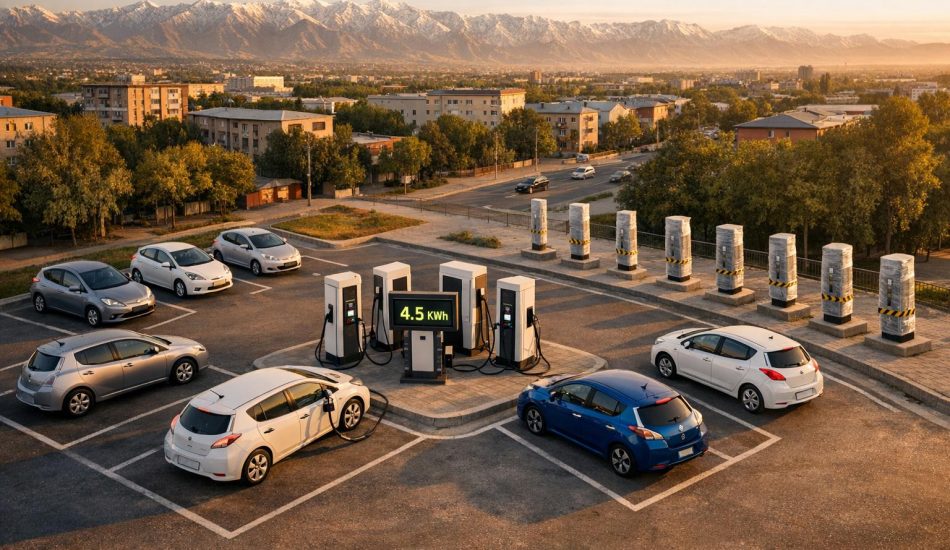
To support this growing fleet of electric vehicles, Malaysia is actively developing its charging infrastructure. As of September 2025, the nation boasts over 4,100 public charging points. The network is a mix of technologies, with data from November 2024 indicating the presence of 2,398 AC charging stations and 956 DC fast-charging stations. The government and private sector are working in tandem to expand this network, with a target of 10,000 charging stations by 2025. Several major charging network operators are driving this expansion, including ChargEV, which is the largest network, along with Gentari, ElectricBlue, and Charge+, ensuring that EV owners have increasingly reliable access to charging across the country.
The development of a local EV industry is a key priority for the Malaysian government. National carmaker Proton has entered the EV space with its new e.MAS brand, signaling a new era for the local automotive sector. While the local manufacturing of electric cars is still in its nascent stages, there is a growing ecosystem for related industries. The government is actively encouraging the local manufacturing of charging equipment through various tax incentives. Furthermore, the favorable policies for CKD vehicles are designed to attract foreign investment in local assembly plants, which will be crucial for the long-term sustainability of the EV market. These initiatives aim to position Malaysia not just as a market for EVs, but as a regional hub for EV production and technology.
In conclusion, the Malaysian EV market holds immense potential. The combination of strong government support, growing consumer awareness, and an expanding charging network creates a fertile ground for growth. For EV importers, the window of opportunity for duty-free CBU imports until the end of 2025 presents a clear and immediate call to action. Beyond this period, the focus will shift towards local assembly, offering different but equally significant opportunities. The market is dynamic and competitive, but for those who can navigate the regulations and understand the consumer landscape, Malaysia represents a key battleground in the electric revolution sweeping across Southeast Asia. The outlook is bright, and the coming years will be pivotal in shaping the future of mobility in the nation.