
 Arka Pratama
 The State of Palestine, a land of rich history and culture, is gradually embracing the global shift towards sustainable transportation. With its unique geopolitical and economic landscape, the journey to widespread electric vehicle (EV) adoption presents both distinct challenges and promising opportunities. This article provides a comprehensive overview of the burgeoning EV market in Palestine, offering key insights for consumers, importers, and investors.
Palestine, with its proclaimed capital in Jerusalem and administrative center in Ramallah, is home to a population of approximately 5.3 million people. The official language is Arabic, and the economy utilizes a multi-currency system including the Israeli New Shekel, Jordanian Dinar, and Egyptian Pound. For motorists, traffic flows on the right-hand side of the road. As a non-contiguous territory, Palestine relies on neighboring countries for international trade. The primary gateways for vehicle importation are the Israeli ports of Ashdod and Haifa, which handle the majority of goods destined for the West Bank and Gaza.
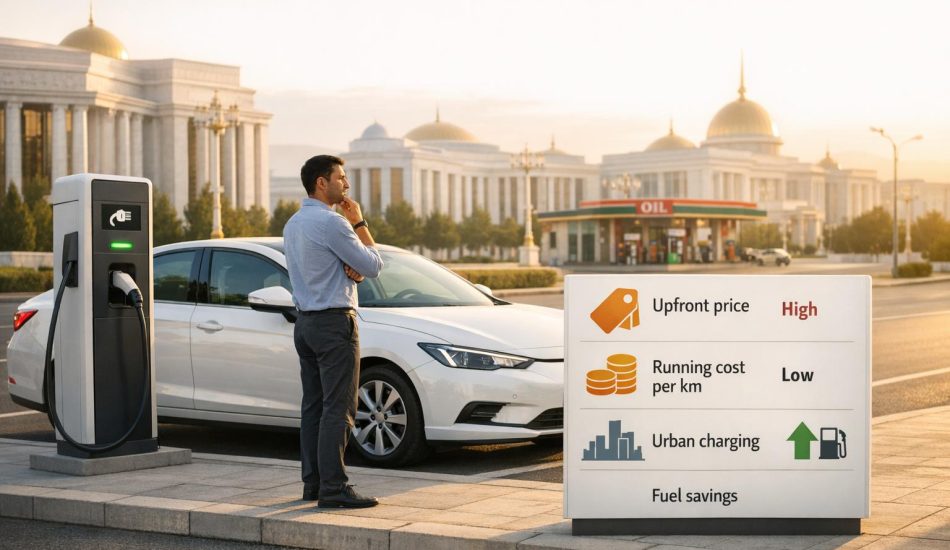
The regulatory framework for importing vehicles, including EVs, into Palestine is closely intertwined with Israeli policies. While specific import duties for electric vehicles in Palestine are to be confirmed, they are subject to a Value Added Tax (VAT) of 16%. The purchase tax on EVs in Israel has been subject to recent increases, which likely impacts the final cost for Palestinian consumers. Regarding government support, specific incentives or subsidies for EV purchases are currently to be confirmed, although there are initiatives like the SUNREF program that have supported the development of charging infrastructure. For those looking to import used vehicles, there is a restriction that passenger cars must not be older than three years from the model year.
The Palestinian EV market is still in its nascent stages, and as such, comprehensive market data is not yet widely available. The total annual sales volume of EVs, the overall market share, and the top-selling brands and models are all metrics that are currently to be confirmed. Similarly, detailed information on the most popular EV categories, whether sedans, SUVs, or other vehicle types, is also pending confirmation as the market develops. The lack of readily available data underscores the early phase of EV adoption in the region.
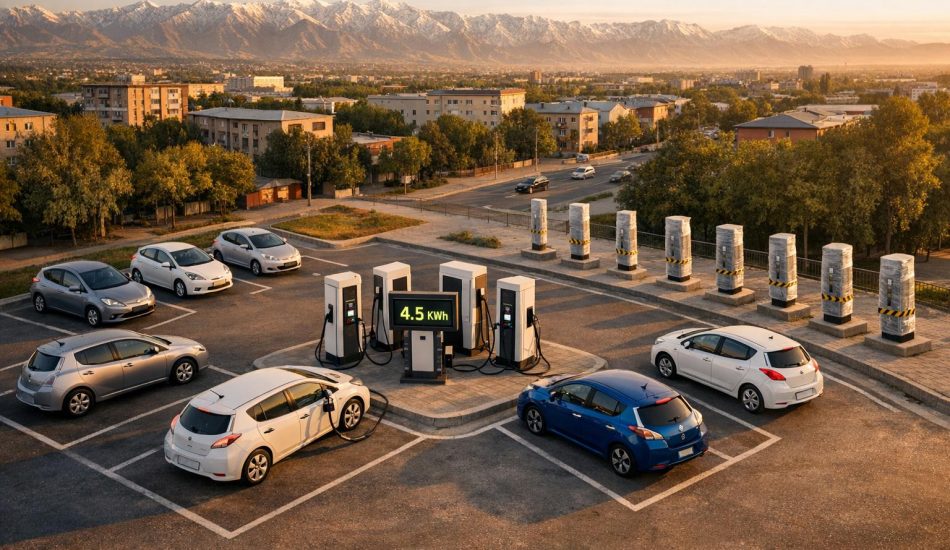
The development of a robust charging infrastructure is a critical enabler for EV adoption. In Palestine, the total number of public charging stations, as well as the specific breakdown of AC (alternating current) and DC (direct current) fast chargers, is data to be confirmed. However, there are positive signs of progress in this area. Companies like Ritz Leasing have been actively investing in creating a network of fast-charging stations, indicating a growing commercial interest in supporting the EV ecosystem. The emergence of such charging network operators is a crucial first step in building driver confidence and alleviating range anxiety.
The local EV industry in Palestine is also in its infancy. Currently, information regarding local manufacturers of electric cars, two-wheelers, or three-wheelers is to be confirmed. The same applies to the local production of charging equipment and the existence of any assembly plants or manufacturing facilities dedicated to electric mobility. Government initiatives aimed at fostering local EV production are also a data point to be confirmed, representing a potential area for future policy development to stimulate domestic industry and create green jobs.
In conclusion, the electric vehicle market in Palestine holds considerable potential for growth, despite the current data gaps and infrastructure challenges. The market’s outlook is one of cautious optimism, with opportunities for importers to introduce a wider range of EV models, particularly in more affordable segments. The key to unlocking this potential will be a concerted effort to develop a more extensive and reliable charging network, coupled with a clearer and more favorable import and tax regime. As the global automotive industry continues its rapid transition to electric power, Palestine has the opportunity to build a sustainable and modern transportation system for the future.