
 Arka Pratama
 Bangladesh, a rapidly developing nation in South Asia, is making strides towards embracing electric mobility. With its capital in Dhaka, a population of over 171 million, and the Taka as its currency, the country is gradually paving the way for a sustainable transportation future. The official language is Bengali, and the nation follows a left-hand traffic system. For vehicle importation, the main ports of entry are Chittagong, Mongla, and Payra, which are well-equipped to handle the influx of new vehicles, including electric ones.
The government of Bangladesh has established a framework of regulations to govern the importation of electric vehicles. Currently, the import duty for EVs stands at 89%, a significant figure that the government is considering reducing to 37% to encourage adoption. To further incentivize the market, a tax holiday is in place for local EV manufacturers until 2040, along with reduced registration fees and tax breaks for the establishment of solar-powered charging stations. For those looking to import used electric vehicles, there is a restriction that the vehicle can be no more than four years old, ensuring that the technology on the road remains relatively modern and efficient.
The electric vehicle market in Bangladesh is still in its nascent stages but shows promising growth. In the 2024-2025 period, the total sales volume of EVs reached 350 units. While the overall market share percentage is yet to be confirmed, the presence of leading international brands such as BYD, Mercedes-Benz, BMW, and Tesla indicates a growing interest and demand. The market is diverse, with popular categories including three-wheelers, which are a common mode of transport, as well as two-wheelers and four-wheeler passenger cars. This variety suggests that EVs are beginning to cater to a wide range of consumer needs and preferences.
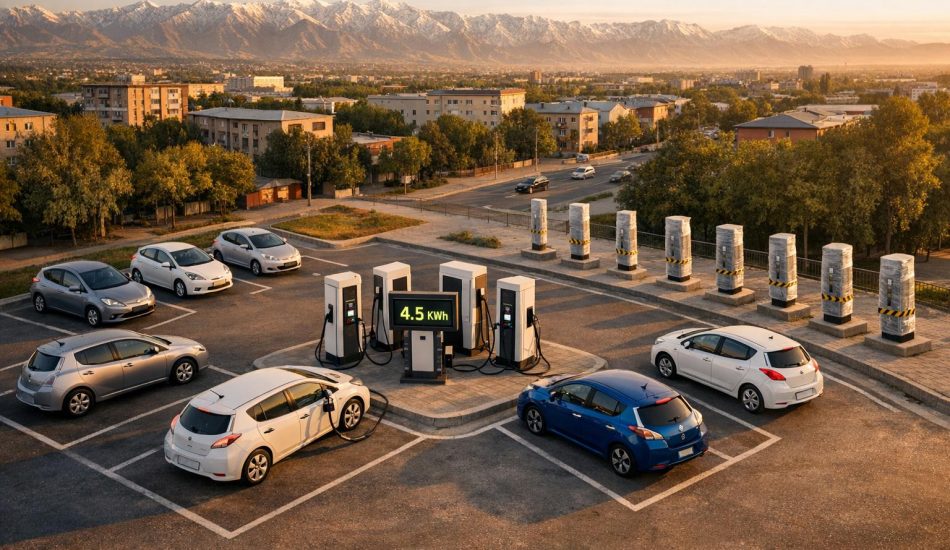
To support the growing number of electric vehicles, a network of charging stations is being developed across the country. There are currently over 23 public charging stations, with major operators like Ekhon Charge, Crack Platoon Charging Solution Limited, and Mulytic Energy leading the way. While the exact number of AC charging stations is to be confirmed, there are plans to deploy at least 10 DC fast chargers by January 2025, which will significantly reduce charging times and enhance the convenience of owning an EV. This expanding infrastructure is a critical component in building consumer confidence and encouraging the transition to electric mobility.
The local EV industry in Bangladesh is also beginning to take shape, with several companies stepping up to manufacture and assemble electric vehicles domestically. Local manufacturers such as Green Cab, DX New Energy, BANGLA CARS, Akij Motors, Palki Motors, and Mamun Workshop are pioneering the production of EVs, particularly in the popular three-wheeler segment. The charging equipment sector is also seeing growth, with companies like PuroTech Energy, Rahimafrooz, G-Gas, Walton, and Energypac producing the necessary hardware to support the charging network. Furthermore, assembly plants are being established, with Bangladesh Auto Industries Limited in Chattogram and Omega Seiki Mobility near Dhaka setting up facilities. These developments are supported by government initiatives that include a tax holiday until 2040 and reduced customs duties on machinery and parts for local production.
In conclusion, the electric vehicle market in Bangladesh holds significant potential for growth. With a combination of government incentives, a developing charging infrastructure, and a burgeoning local manufacturing industry, the country is well-positioned to accelerate its transition to sustainable transportation. For EV importers, the key opportunities lie in introducing a wider range of models to cater to different market segments and in partnering with local companies to expand the charging network. As the market matures and policies become more favorable, Bangladesh is set to become a key player in the regional EV landscape, offering a cleaner and greener future for its citizens.