
 Arka Pratama
 Bahrain, an archipelago in the Persian Gulf, is increasingly turning its attention towards sustainable transportation, with the electric vehicle (EV) market showing nascent signs of growth. The Kingdom of Bahrain, with its capital Manama, a population of approximately 1.4 million people, and the Bahraini Dinar as its currency, is strategically positioned as a potential hub for electric mobility in the region. The official language is Arabic, with English widely spoken, facilitating international trade and business. For vehicle importation, the primary gateways are the Khalifa Bin Salman Port and Mina Salman Port, both well-equipped to handle vehicle imports. As with the rest of the region, traffic in Bahrain drives on the right-hand side of the road.
The regulatory landscape for importing EVs into Bahrain is evolving. Currently, a standard customs duty of 5% and a 10% Value Added Tax (VAT) are applicable to vehicle imports. However, the government has shown a clear intent to promote EV adoption by offering incentives, which can include partial or full exemptions from import duties for new electric vehicles. Furthermore, prospective buyers may benefit from direct discounts of up to 20% on the purchase price of certain certified EV models. While specific details on vehicle age restrictions for imports are to be confirmed, these incentives signal a supportive environment for the EV market. The government is also expected to introduce further tax rebates and subsidies to encourage the transition to electric mobility.
The electric vehicle market in Bahrain is still in its early stages, with approximately 1,000 EVs currently on the roads. The market has experienced a modest growth of 0.6% in the year leading up to October 2025. While the overall EV market share percentage is yet to be solidified, there is a clear presence of leading global EV brands. Top-selling models include the BYD HAN EV and ATTO 3, alongside the Hyundai Ioniq 5 and Kia EV6, indicating a consumer preference for technologically advanced and reputable brands. The popularity of specific EV categories, such as sedans or SUVs, is a trend that will become clearer as the market matures. Data on the most popular EV categories is to be confirmed.
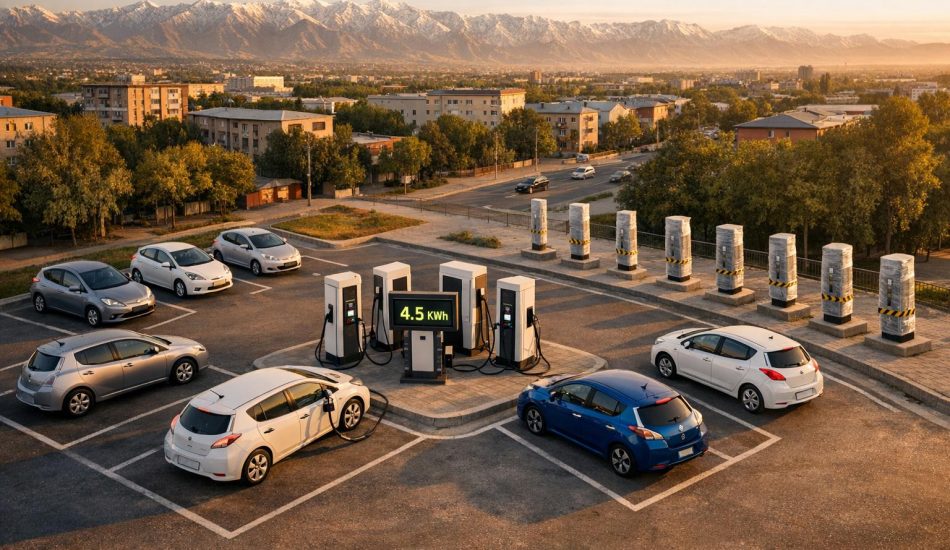
To support the growing number of EVs, Bahrain is actively developing its charging infrastructure. The kingdom now boasts over 100 public charging stations, a number that is steadily increasing. This network includes at least 10 ultra-fast DC charging stations, which significantly reduce charging times and enhance the convenience for EV owners. The development of the charging network is a collaborative effort, with entities like goEV.bh and the Electricity and Water Authority (EWA) playing a pivotal role as major charging network operators. The specific breakdown of AC versus DC charging stations is data to be confirmed, but the focus on expanding the fast-charging network is evident.
The local EV industry in Bahrain is also beginning to take shape. A significant development is the partnership between Marson Group and Gauss Auto to establish the first electric car manufacturing plant in Bahrain, located in the Salman Industrial City. This facility will cater to both the local and export markets, marking a crucial step in the country’s industrial diversification. In addition to vehicle production, there is a growing ecosystem of local charging equipment manufacturers, such as CITA EV and RBC Engineering, who are contributing to the build-out of the necessary infrastructure. The government is actively fostering this local industry through its national EV strategy and various initiatives aimed at promoting local production and assembly of electric vehicles and their components.
In conclusion, the electric vehicle market in Bahrain holds considerable potential. The combination of a supportive government, a growing charging infrastructure, and the emergence of a local manufacturing base creates a fertile ground for growth. For EV importers, the key opportunities lie in introducing a wider variety of EV models to the market, particularly in segments that are currently underserved. As the market matures and consumer awareness increases, Bahrain is poised to become a significant player in the region’s transition to electric mobility, aligning with its ambitious Vision 2030 for a more sustainable and diversified economy.
© 2025 EV24.asia. All rights reserved.