
 Arka Pratama
 The Kingdom of Bhutan, a nation renowned for its breathtaking landscapes and commitment to environmental preservation, is steadily embracing the electric vehicle (EV) revolution. Nestled in the Eastern Himalayas, with its capital at Thimphu, a population of approximately 770,000, and the Bhutanese Ngultrum as its currency, Bhutan is charting a course towards a sustainable transportation future. The official language is Dzongkha, and the country follows a left-hand traffic system. For vehicle importation, the landlocked nation primarily relies on the Phuentsholing dry port as its main gateway, with goods arriving by sea through the port of Kolkata in India.
Bhutan’s government has been proactive in creating a favorable environment for EV adoption through a series of supportive import regulations. Notably, electric vehicles are largely exempt from import duties and taxes, a significant incentive in a country where conventional vehicle import taxes can be substantial. While there are some nuances based on the motor power of the EV, the overall policy is designed to make electric cars an attractive option for consumers. The government has also introduced subsidies, particularly for the taxi sector, to encourage the transition to electric mobility. Furthermore, there are stringent vehicle age restrictions, with a general rule that only new vehicles can be imported and registered in the country, ensuring that the national fleet remains modern and efficient.
The electric vehicle market in Bhutan is still in its nascent stages but shows promising growth. As of early 2025, there were over 850 registered electric vehicles in the country, a number that is steadily increasing. While the EV market share remains below one percent of the total vehicle population, the upward trend is clear. Among the top-selling EV brands are NETA, with its V model, and Geely, which has introduced the Riddara, Bhutan’s first electric pickup truck. Tata Motors of India also has a significant presence in the Bhutanese EV market. The popular EV categories are expanding from sedans and SUVs to include utility vehicles, reflecting the diverse needs of the Bhutanese people.
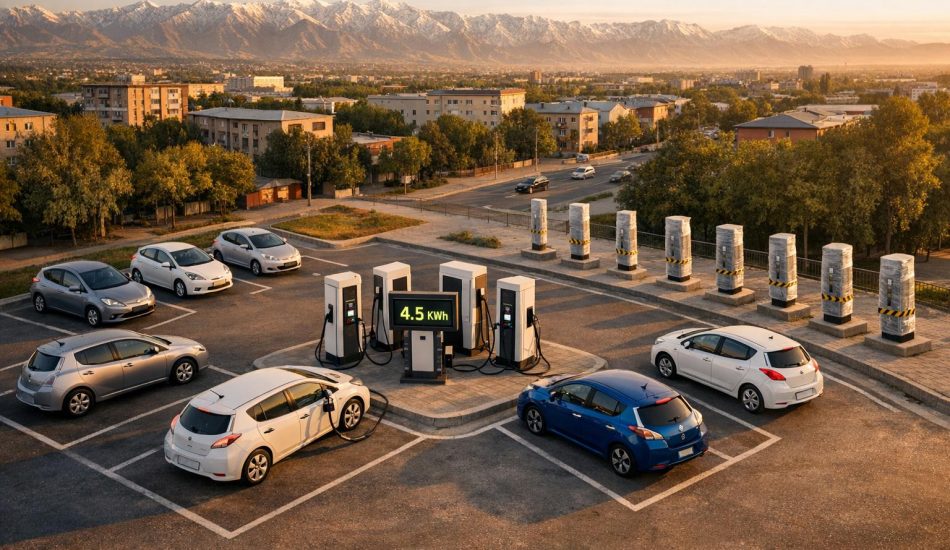
To support the growing fleet of electric vehicles, Bhutan is actively developing its charging infrastructure. There are currently around 75 public charging stations strategically located across all 20 districts of the country. These include a mix of AC and DC fast-charging stations. The government has ambitious plans to expand this network significantly, with a target of having one charging station for every 15 electric vehicles by 2030. While the government is the primary operator of the public charging network, the increasing number of EVs is expected to attract private sector investment in this area.
While Bhutan does not yet have a local EV manufacturing or assembly industry for cars, there are signs of a burgeoning local EV ecosystem. Some companies, like Elesco, are involved in the manufacturing of electric two-wheelers. The government’s ‘Low Emission Development Strategy’ and the ‘EV Roadmap 2035’ are key initiatives aimed at promoting not just the adoption of EVs but also the development of local capabilities in the EV sector. These policies are expected to create opportunities for local entrepreneurs and attract foreign investment in EV-related industries, including the local production of charging equipment.
In conclusion, the electric vehicle market in Bhutan holds significant potential. The combination of strong government support, a growing charging infrastructure, and a populace that values environmental sustainability creates a fertile ground for the growth of electric mobility. For EV importers, Bhutan presents a key opportunity to be part of a rapidly developing market. As the country continues on its path towards a greener transportation future, the demand for a wider range of electric vehicles is set to increase, making Bhutan an attractive destination for investment in the EV sector.