
 sysadmin
 Yemen, a country at the crossroads of the Middle East and Africa, is gradually opening its doors to the electric vehicle revolution. With a population of approximately 35.2 million and its capital in Sana’a, the nation’s automotive landscape is on the cusp of a significant transformation. The official currency is the Yemeni Rial (YER), and the official language is Arabic. As with most countries in the region, Yemen follows a right-hand traffic system. For vehicle importation, the main ports of entry are Aden, Al-Hudaydah, Mokha, and Mukalla, which are all equipped to handle vehicle shipments.
Importing electric vehicles into Yemen involves navigating a set of regulations and financial considerations. The current import duty structure for vehicles ranges from 5% to 25%, with an additional 10% Value Added Tax (VAT), depending on the vehicle’s type and origin. As for government incentives to encourage the adoption of electric vehicles, specific subsidies or tax exemptions are yet to be formally announced, and this information is best described as ‘Data to be confirmed’. There are also restrictions on the age of imported used vehicles, with cars typically needing to be newer than five to seven years old to be eligible for import, although some sources suggest a stricter four-year limit.
The electric vehicle market in Yemen is still in its nascent stages, and as such, comprehensive data on market trends is not yet widely available. The total annual EV sales volume and the current EV market share percentage are both ‘Data to be confirmed’. Similarly, information regarding the top-selling EV brands and models, as well as the most popular EV categories like sedans or SUVs, is also ‘Data to be confirmed’. This lack of data highlights the early stage of the market and the significant growth potential that lies ahead.
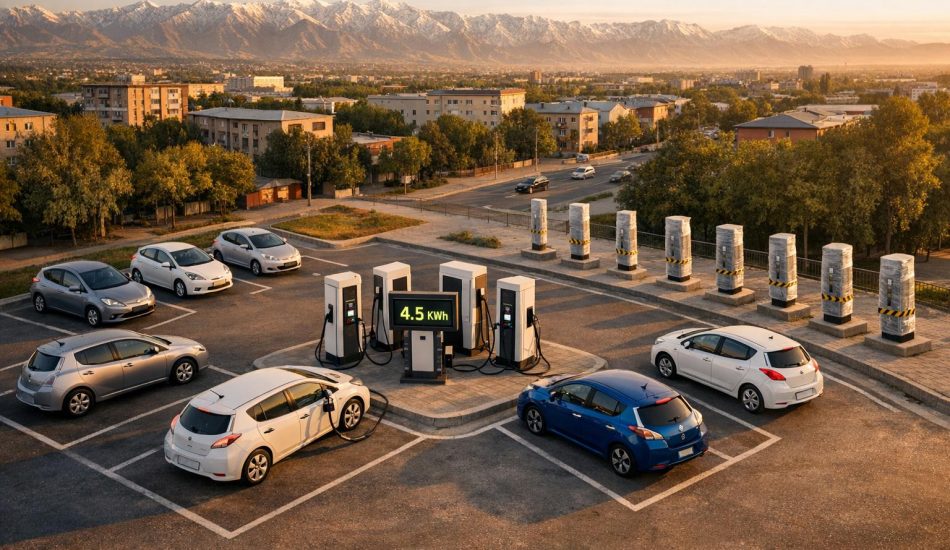
In terms of charging infrastructure, Yemen is at the very beginning of its journey. According to available data, there are currently only a handful of public charging stations in the country, with Electromaps listing just four. The breakdown between AC charging stations and DC fast charging stations is ‘Data to be confirmed’. However, there are signs of emerging local players in the charging sector. Al-Raebi Solar, for instance, is the exclusive agent for GRASEN, a manufacturer of EV charging equipment. This indicates a growing interest in developing the necessary infrastructure to support a larger EV fleet.
The local EV industry is also showing early signs of life. There is at least one local startup that has begun manufacturing two-seater electric cars, a promising development for the domestic automotive sector. In addition to vehicle manufacturing, companies like Petra Engineering Industries Co. and EnduraTech EV Solutions are listed as local manufacturers of charging equipment. However, details on large-scale assembly plants or manufacturing facilities for electric vehicles are ‘Data to be confirmed’, as are specific government initiatives aimed at promoting local EV production.
In conclusion, the electric vehicle market in Yemen presents a landscape of both challenges and opportunities. The market potential is significant, driven by the global shift towards sustainable transportation and the need for more energy-efficient vehicles. For EV importers, the current environment offers a key opportunity to introduce a wide range of electric vehicle models to a market that is not yet saturated with established players. As the charging infrastructure develops and the local industry grows, Yemen could become a promising new frontier for electric mobility in the Middle East.