
 Arka Pratama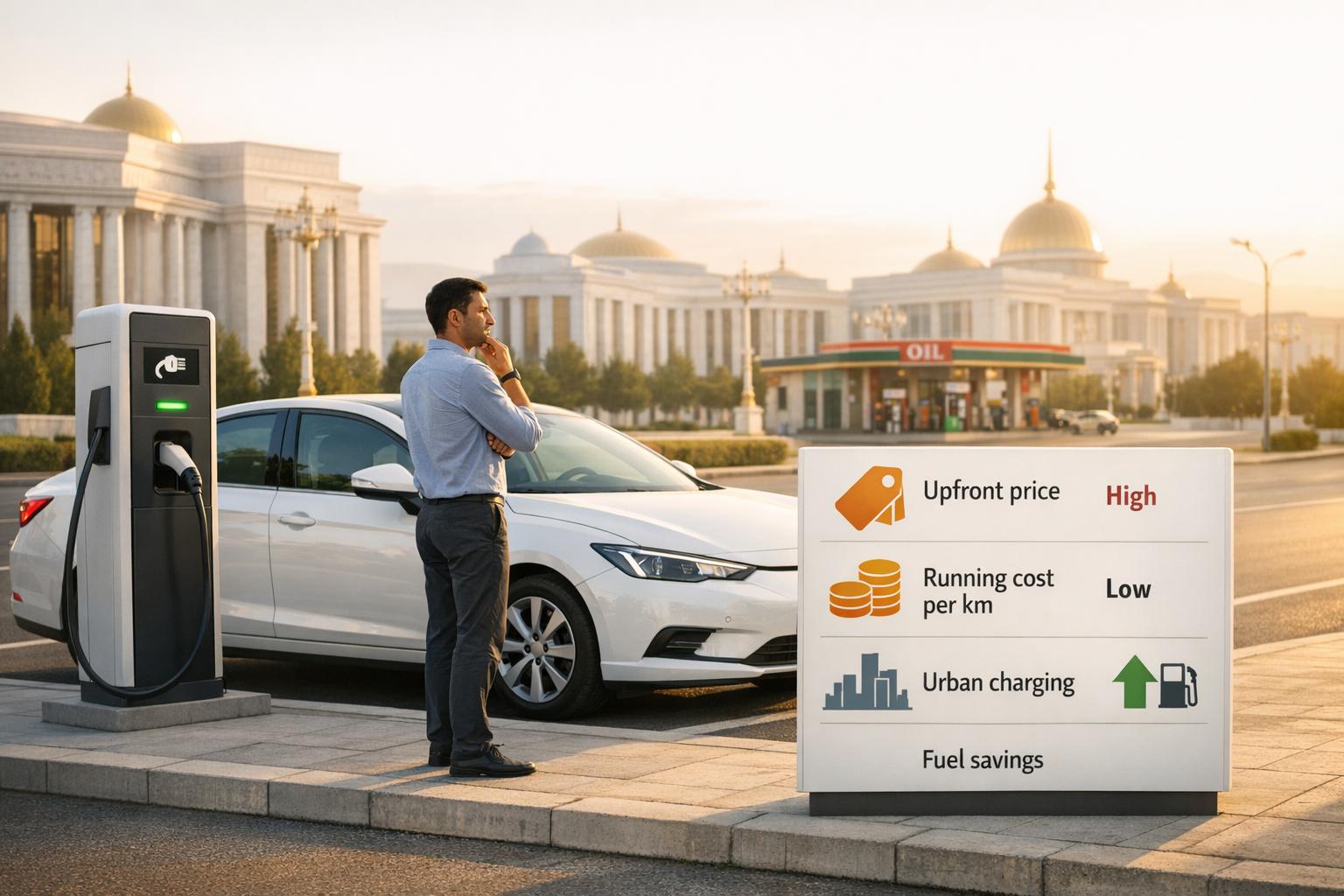
In 2026, Turkmenistan’s electric vehicle (EV) market is growing but faces challenges. While the country has abundant electricity and is expanding its EV infrastructure, adoption is still slow due to high vehicle costs, limited charging stations, and strict regulations like the white-only vehicle rule in Ashgabat.
Key takeaways:
- EV Costs: Entry-level EVs start at Rs 3,875,000 ($15,500), making them expensive for most consumers with monthly incomes of Rs 50,000–75,000.
- Fuel Savings: EVs offer lower running costs, with reduced maintenance and affordable electricity, making them cost-effective in the long term.
- Infrastructure: Charging stations are mostly in urban areas like Ashgabat and Arkadag, limiting EV usability in rural regions.
- Government Policies: No subsidies for private EV buyers; focus remains on public service vehicles.
Despite these hurdles, Turkmenistan’s growing electricity surplus and gradual infrastructure improvements indicate potential for future EV growth.
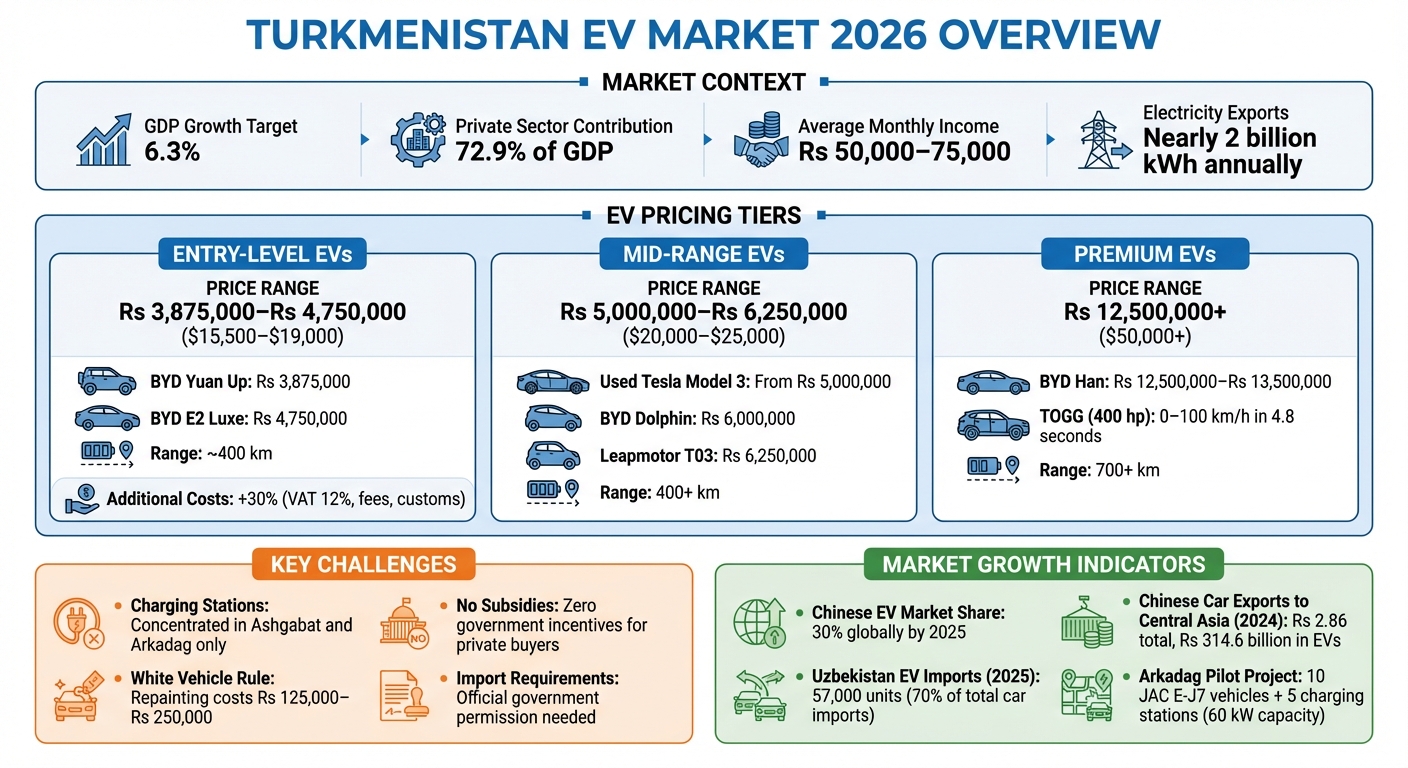
Turkmenistan EV Market 2026: Pricing Tiers and Key Statistics
Turkmenistan EV Market in 2026
Turkmenistan’s EV market in 2026 is shaped by state-driven initiatives under the "Programme of Socio-Economic Development of Turkmenistan and Investments in 2026." This programme aims for a 6.3% GDP growth, with the private sector expected to contribute 72.9% of the GDP. However, the market is largely influenced by government procurement and urban planning, with limited focus on widespread consumer adoption.
Government Policies and Incentives
The government’s EV strategy prioritises public service vehicles over consumer incentives. For instance, in 2023, Turkmenistan ordered Turkish-made TOGG electric cars in white, with Turkish Foreign Minister Mevlut Cavusoglu confirming their production timeline: "white-coloured Togg cars will be produced within a month". Additionally, Chinese-made JAC E-J7 electric vehicles have been introduced for city taxi services. Despite these advancements, there are no subsidies or tax breaks to encourage private EV purchases as of 2026.
One unique regulation impacting all EV buyers in Ashgabat is the strict mandate requiring all vehicles to be white or light-coloured. This rule, enforced since 2018, significantly influences consumer decisions. Repainting a vehicle to comply with this policy can cost between Rs 125,000 and Rs 250,000 ($500–$1,000+), a substantial burden given that average monthly incomes range between Rs 50,000 and Rs 75,000. Additionally, buyers using platforms like EV24.asia to import EVs must ensure their vehicles meet this colour requirement to avoid fines, impoundment, or costly modifications. Such policies also pave the way for introducing essential charging infrastructure in key areas.
Infrastructure Development
Infrastructure development is gaining traction, with Arkadag leading the way as a pilot city for EV integration. In June 2023, the Turkmenavtoulaglary Agency introduced the first batch of 10 JAC E-J7 electric vehicles and 5 charging stations, supplied by the official distributor "Paýhas Merkezi" ES. These stations feature a 60 kW charging capacity with 380V AC at 50Hz and can charge two vehicles simultaneously. The JAC E-J7 taxis, with a range of up to 400 km per charge, are at the forefront of these efforts.
"The first city of national importance [Arkadag] will become a model for the whole of Turkmenistan in all respects – construction, design and environmental standards, the organisation of urban space and the creation of a barrier-free environment." – Ogulgozel Rejepova
Beyond Arkadag, infrastructure development remains limited, focusing mainly on electrifying public transportation in new urban areas. For private EV owners in 2026, this means practical use is largely restricted to Ashgabat and Arkadag, with minimal support available in other regions.
sbb-itb-5f05a6f
EV Pricing and Availability in 2026
Turkmenistan’s electric vehicle (EV) market in 2026 is divided into three categories: entry-level, mid-range, and premium models. Chinese manufacturers like BYD and Geely dominate the scene, holding 30% of the global EV market share by 2025. Below is an analysis of pricing tiers, highlighting the features and costs of EVs across these categories.
Entry-Level EVs (Rs 3,875,000–Rs 4,750,000)
Achieving a price point of around Rs 2,500,000 ($10,000) without government subsidies remains unrealistic. Popular entry-level models like the BYD Yuan Up and BYD E2 Luxe are priced at Rs 3,875,000 ($15,500) and Rs 4,750,000 ($19,000), respectively. These prices include additional costs such as a 12% VAT, utilisation fees, and customs clearance, which collectively add about 30% to the base cost. These vehicles typically offer a range of 400 km and basic features aimed at city driving. However, the high costs make them less accessible for the average consumer under current policies.
Mid-Range EVs (Rs 5,000,000–Rs 6,250,000)
Mid-range models bring better features and performance to the table. For instance, the BYD Dolphin (also called the Seagull) is priced at Rs 6,000,000 ($24,000), while the Leapmotor T03 costs Rs 6,250,000 ($25,000). Both vehicles provide ranges exceeding 400 km, along with upgraded build quality and modern technology. The JAC E-J7, already in use as part of Arkadag’s taxi fleet, includes features like a panoramic sunroof and a 10.4-inch touchscreen, delivering up to 400 km of range. Additionally, used Tesla Model 3 units are making their way into the market, starting from Rs 5,000,000 ($20,000). Services like EV24.asia simplify the import process by handling customs clearance and ensuring compliance with local regulations. Despite these advancements, affordability remains a hurdle for many consumers.
Premium EVs (Rs 12,500,000+)
Premium EVs cater to government projects and high-income buyers seeking top-tier technology and performance. The BYD Han, available in all-wheel-drive and long-range variants, is priced between Rs 12,500,000 and Rs 13,500,000 ($50,000–$54,000) and offers a range exceeding 700 km. Another notable addition to the premium category is the Turkish-made TOGG, which comes in 200 hp and 400 hp variants. The 400 hp model can accelerate from 0–100 km/h in just 4.8 seconds. These high-end models primarily serve government initiatives and diplomatic purposes rather than the general public, reflecting their niche appeal in the market.
Fuel Savings Analysis: EVs vs. Petrol Vehicles
Now that we’ve looked at pricing, it’s time to dive into how fuel savings can make EVs a more appealing option.
Cost Comparison Breakdown
The total cost of owning a vehicle isn’t just about the price tag. While EVs often come with a higher upfront cost, they tend to offer lower running expenses compared to petrol-powered cars. Savings come from reduced energy costs and fewer maintenance requirements, which can make EVs more affordable in the long run. This is especially true when you factor in the relatively low cost of EV charging.
Of course, these savings can vary depending on the model and how the vehicle is used. However, studies consistently show that the operating costs of EVs – such as electricity and maintenance – can help balance out their higher purchase price over time. Plus, ongoing investments in charging infrastructure continue to make EV ownership more economically feasible.
Long-Term Financial Benefits
One of the standout advantages of EVs is their low maintenance requirements. With no need for regular oil changes and fewer brake replacements thanks to regenerative braking, EV owners often spend much less on upkeep. On top of that, advancements in domestic electricity production – like the new 1,574-megawatt combined-cycle power plant in Kiyanli – are expected to keep energy prices competitive.
When paired with the country’s ambitious economic growth target of 6.3% by 2026, these developments highlight the increasing practicality of owning an EV over the long haul.
Charging Infrastructure and Import Process
For operators considering the economic advantages of electric vehicles (EVs), having a dependable charging network and a smooth import process is essential to encourage widespread adoption.
Charging Station Growth
Turkmenistan is gradually expanding its EV charging network, building on earlier public infrastructure projects. The pilot project in Arkadag set the groundwork, but charging stations are still mostly concentrated in major urban areas. Rural regions face a significant shortage of these facilities, making long-distance travel challenging. Because of this, many drivers find plug-in hybrids to be a more practical choice. To support this growth, the country is aligning with Chinese technical standards for charging stations and service networks.
"Central Asia will eventually be forced to adopt Chinese standards for the industry’s development: the entire infrastructure of electric charging stations, servicing, the replacement and disposal of batteries…" – Temur Umarov and Roman Vakulchuk, Carnegie Russia Eurasia Centre
While expanding the charging network is vital, simplifying import procedures also plays a crucial role in supporting the EV market.
Import Support by EV24.asia
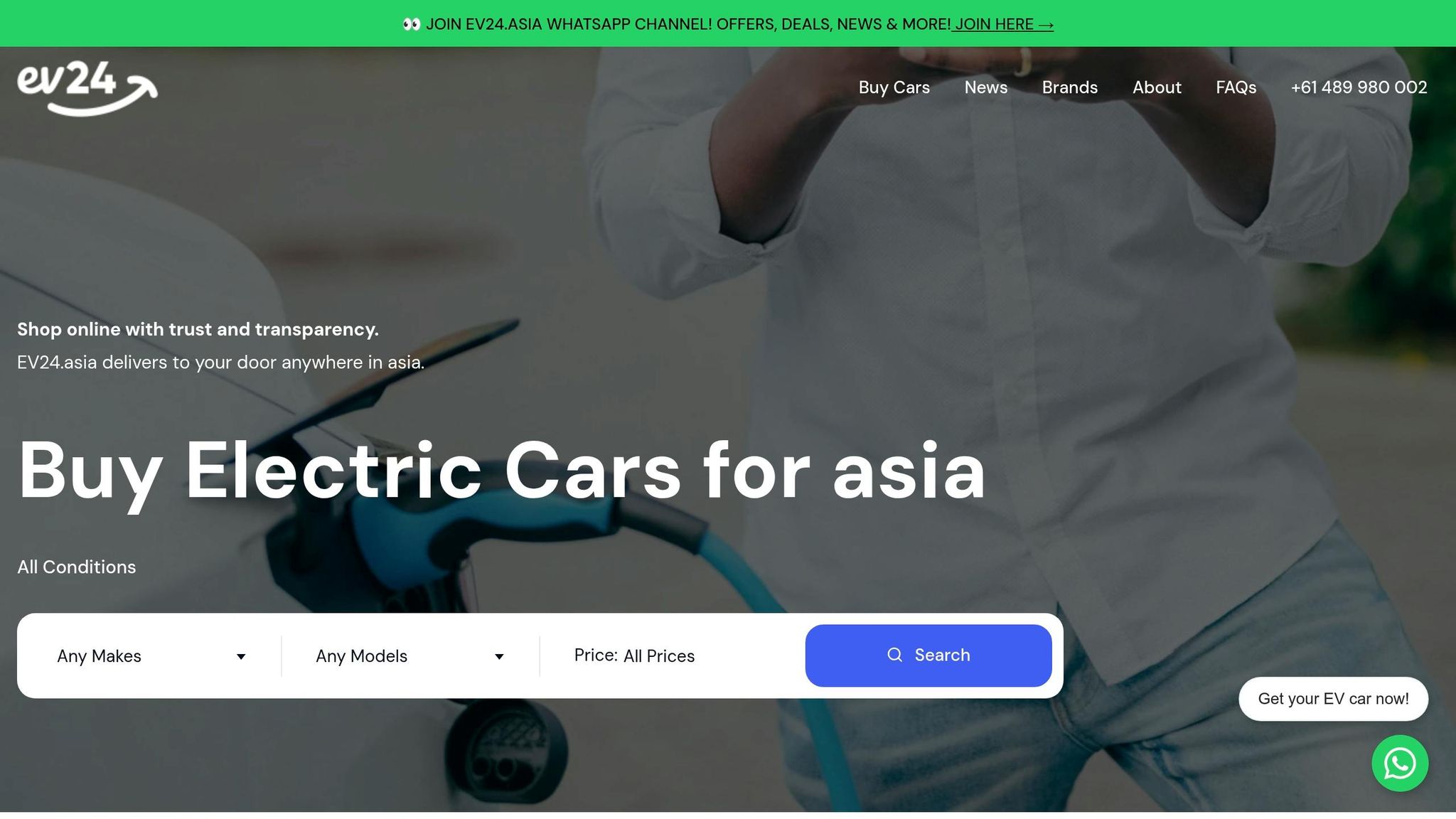
Bringing an EV into Turkmenistan requires official government permission for direct import. This is where EV24.asia steps in to simplify the process by handling the necessary administrative tasks. The platform provides access to a variety of popular brands like BYD, Tesla, Volkswagen, and Leapmotor, offering transparent pricing with no hidden fees.
The import process involves selecting between RoRo (roll-on/roll-off) or container shipping and choosing either port-to-port or door-to-door delivery. EV24.asia also takes care of customs clearance and local registration. For reference, prices can range from the Geely Panda Mini Base at $5,880 to the Zeekr 009 at $85,000. Unlike Uzbekistan, which imposes recycling fees of up to $3,500, Turkmenistan does not officially require such fees.
Key Factors Affecting EV Practicality in Turkmenistan
Economic and Policy Considerations
Turkmenistan’s economic framework offers a mix of opportunities and challenges for the adoption of electric vehicles (EVs). The 2026 Socio-Economic Development Plan aims for a GDP growth of 6.3%, with 72.9% of the contribution expected from the private sector. With planned investments totalling approximately 41.2 billion manats (Rs 3.26 trillion), the country is laying a foundation for market growth.
Efforts to stabilise the national currency and boost private sector involvement create a favourable environment for consumer spending. However, certain regulations pose hurdles. For instance, Ashgabat’s white-only vehicle rule, in place since 2015, forces owners of non-compliant cars to spend between Rs 143,000 and Rs 286,000 on repainting – an expense that can be prohibitive given average income levels.
On the brighter side, Turkmenistan’s surplus electricity capacity supports the potential for EV adoption. A 1,574-MW combined-cycle power plant under construction in Kiyanli promises to ensure consistent power supply, which is essential for reliable EV charging infrastructure. These economic and policy measures create a framework that could drive consumer interest in EVs across the region.
Consumer Demand and Market Trends
Consumer demand and market trends play a vital role in shaping Turkmenistan’s EV landscape. Chinese manufacturers are driving a shift in Central Asia’s automotive sector. In 2024, cars made up about 10% of China’s exports to Central Asia, with a total value of nearly Rs 2.86 trillion. Of this, Chinese electric car exports accounted for Rs 314.6 billion. These manufacturers are offering EVs at competitive prices, often making them more attractive than used petrol vehicles.
"Central Asia’s transition to electric mobility is unfolding faster – and more decisively – than many analysts predicted just a few years ago." – Caspianpost
Neighbouring countries provide examples of how supportive policies can accelerate EV adoption. For instance, Uzbekistan imported nearly 57,000 EVs in 2025, representing over 70% of its total passenger car imports. In contrast, Turkmenistan remains in the early stages of adoption, with charging infrastructure largely limited to urban areas. This limited infrastructure influences consumer choices, as buyers often weigh convenience and accessibility heavily.
However, the region’s growing population and rising purchasing power hint at increasing demand for personal vehicles, including EVs. While Turkmenistan is still adapting its infrastructure and service networks, these demographic and economic shifts point to a promising future for EV adoption.
Conclusion: Are EVs Practical in Turkmenistan by 2026?
The future for electric vehicles (EVs) in Turkmenistan looks promising, though some hurdles remain. With the country exporting nearly 2 billion kWh of electricity annually, its abundant and affordable power supply ensures cost-effective EV charging and a reliable energy grid to support growth in this sector. Additionally, the availability of reasonably priced Chinese EVs provides an affordable entry point for many consumers, laying the foundation for broader adoption.
However, there are challenges to address. Charging stations are mostly concentrated in urban areas, limiting accessibility for rural regions. The EV market itself is still in its early stages. Even so, ongoing upgrades to the national grid and visible government efforts suggest a strong commitment to developing the necessary infrastructure.
For EV owners, the benefits are clear. Lower running costs, reduced maintenance expenses, and competitive pricing across vehicle categories make EV ownership more appealing. Platforms like EV24.asia make the process even easier by offering transparent import pricing, with options ranging from basic models (Rs 0–Rs 7.9 lakh) to mid-range (Rs 7.9 lakh–Rs 23.7 lakh) and premium vehicles (Rs 23.7 lakh+). These economic advantages, combined with improving infrastructure, suggest that while challenges exist, the path forward for EVs in Turkmenistan is increasingly practical and achievable.
FAQs
How much cheaper is charging than petrol in Turkmenistan?
Charging an electric vehicle in Turkmenistan is far more affordable than relying on petrol. As of April 2024, diesel fuel is priced at about $0.28 per litre. This makes electric vehicles a much more economical choice for daily commuting, thanks to their considerably lower running costs compared to traditional petrol-powered cars.
Can I travel outside Ashgabat on an EV in 2026?
By 2026, using an electric vehicle (EV) for trips beyond Ashgabat will be a practical choice. Turkmenistan is ramping up electricity production and upgrading its energy infrastructure to support EVs. The government is also investing in highways and building charging stations, making long-distance EV travel more convenient.
This push aligns with the country’s focus on eco-friendly transport, showing a clear commitment to making EVs a realistic option for journeys outside the capital.
What approvals and papers do I need to import an EV?
Importing an electric vehicle (EV) involves gathering specific approvals and documents. These typically include customs clearance papers, proof of ownership, and compliance certificates. However, the exact requirements can differ depending on the region. To ensure a smooth process, it’s a good idea to consult with local customs authorities or review the import regulations specific to Turkmenistan for accurate and detailed instructions.