
 Arka Pratama
 Japan, an island nation in East Asia, is a global automotive powerhouse and a market of immense interest for the electric vehicle (EV) industry. With a population of over 124 million people and its capital, Tokyo, being one of the world’s most populous metropolitan areas, the country presents a unique landscape for EV adoption. The official language is Japanese, and the currency is the Japanese Yen (JPY). A key consideration for vehicle importers is that Japan drives on the left-hand side of the road. The main ports for vehicle importation are Yokohama, Kobe, and Nagoya, which are well-equipped to handle large volumes of automotive trade.
Importing electric vehicles into Japan is facilitated by a favorable regulatory environment. The Japanese government has completely exempted EVs from import duties and taxes, making it an attractive market for foreign manufacturers. Furthermore, to stimulate demand, the government offers significant incentives, including subsidies of up to ¥900,000 for battery electric vehicles (BEVs) and ¥550,000 for plug-in hybrid electric vehicles (PHEVs). These national subsidies can often be combined with additional incentives from local governments, further reducing the cost for consumers. While there are no specific age restrictions for importing EVs, it is generally easier to import vehicles that are over 25 years old, as they are exempt from some of the more stringent safety and emissions standards applied to newer vehicles.
The Japanese EV market, while still in its early stages, is showing signs of growth. In 2023, the total EV sales volume reached 88,099 units, accounting for a 2.2% market share. A unique characteristic of the Japanese market is the popularity of ‘kei’ cars, or mini-vehicles, which are favored for their affordability and compact size. This preference is reflected in the top-selling EV models, with the Nissan Sakura and Mitsubishi eK X EV, both kei cars, leading the sales charts. This trend indicates a strong consumer preference for smaller, more practical EVs for daily use, particularly in urban environments.
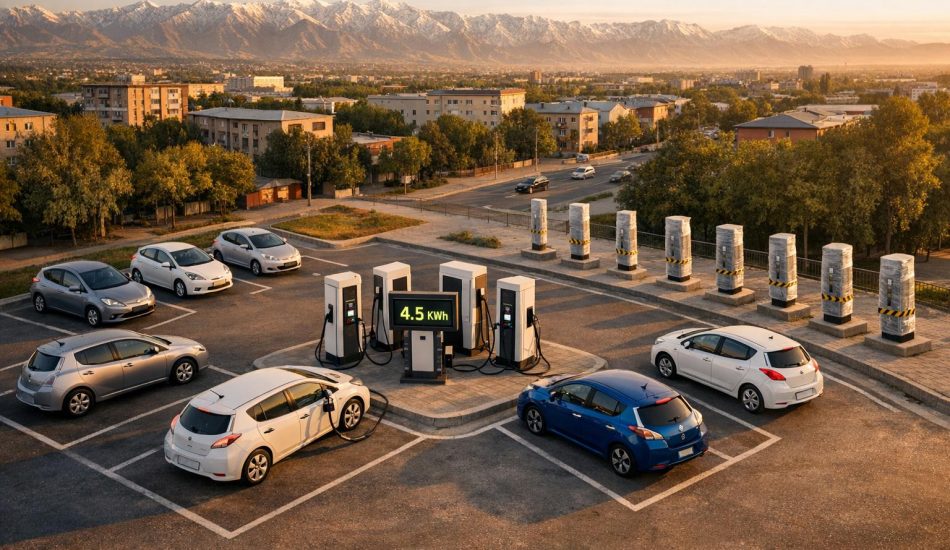
To support the growing number of EVs on its roads, Japan has been steadily expanding its charging infrastructure. As of September 2023, there were approximately 30,000 public charging stations across the country. While specific data on the breakdown between AC and DC fast chargers is to be confirmed, it is estimated that about one-third of the public chargers are DC fast chargers, which can significantly reduce charging times. The charging infrastructure is operated by a mix of public and private entities, with major network operators including e-Mobility Power and Terra Motors. The government has set an ambitious target of increasing the number of charging points to 300,000 by 2030, which will be a critical factor in accelerating EV adoption.
Japan has a deeply entrenched and highly advanced domestic automotive industry, with global giants like Toyota, Honda, Nissan, and Mitsubishi at the forefront. These companies are increasingly investing in EV technology and production. The local EV industry is not limited to cars; it also includes manufacturers of two-wheelers and three-wheelers, such as Yamaha and Suzuki. The ecosystem is further strengthened by a robust supply chain, with leading companies like Panasonic, Denso, and Hitachi manufacturing charging equipment and other key components. The government is actively promoting local EV production through various initiatives, including subsidies for battery manufacturing, to ensure that Japan remains a key player in the global automotive industry’s transition to electric mobility.
The outlook for the Japanese EV market is promising, with significant potential for growth. The government’s commitment to expanding the charging infrastructure and providing generous subsidies will continue to be a key driver of adoption. For EV importers, there are opportunities across different segments of the market. While the demand for affordable and practical kei car EVs is strong, there is also a niche market for luxury and high-performance EVs that appeal to a different consumer base. As the market matures and consumer preferences evolve, Japan is poised to become a major market for electric vehicles in the years to come.