
 Arka Pratama
 Pakistan, a South Asian nation with its capital in Islamabad, is home to a population of over 242 million people. The official currency is the Pakistani Rupee (PKR), and the official languages are Urdu and English, facilitating international business and communication. The country follows a left-hand traffic system, a legacy of its British colonial history, which is a crucial consideration for vehicle importers. The main ports for vehicle importation are the Port of Karachi and Port Qasim, both strategically located to handle large volumes of cargo.
The Pakistani government has introduced a series of regulations and incentives to encourage the adoption of electric vehicles. The import duties and taxes for EVs are structured to favor local assembly and manufacturing. While specific rates can vary, the government has provided concessions, such as a reduced customs duty for completely knocked-down (CKD) and semi-knocked-down (SKD) kits for EVs. For instance, the duty for electric buses, trucks, and prime movers is as low as 1%, while for electric cars, it can be around 25% or more, depending on the vehicle’s value. The National Electric Vehicle Policy (NEVP) is the cornerstone of the government’s strategy, offering subsidies, particularly for electric 2 and 3-wheelers, to make them more affordable for the masses. Regarding vehicle importation, there are age restrictions on used vehicles, typically allowing for the import of cars up to five years old, although these regulations are subject to change as the market evolves.
The electric vehicle market in Pakistan is still in its nascent stages but is showing promising growth. In the first nine months of 2025, the electric 2-wheeler market saw sales of over 56,000 units, capturing a 4.6% market share in its segment. The electric car market is smaller but growing, with sales more than doubling in the past year. While precise annual sales figures for electric cars are yet to be consolidated, the trend is clearly upward. The top-selling EV brands include MG, Audi, Hyundai, and an increasing number of Chinese brands like BYD. Popular models such as the MG ZS EV, Audi e-tron, and Hyundai Ioniq 5 are gaining traction among early adopters, with a notable interest in the SUV category.
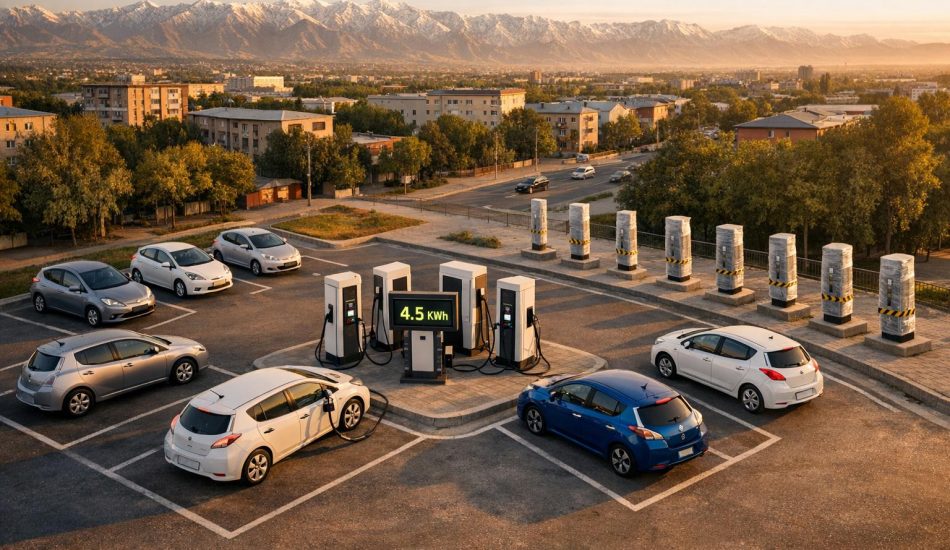
To support the growing EV fleet, Pakistan is actively developing its charging infrastructure. As of 2025, there are over 20 public charging stations across the country, a number that is expected to grow exponentially. These stations offer a mix of AC (Level 2) chargers and DC fast chargers to cater to different vehicle types and charging needs. Several private companies, such as ACharge, Flash Charging Network, and GoGreen Avenue, are at the forefront of establishing a robust charging network, with plans to install thousands of charging points in the coming years. This expansion is critical to alleviating range anxiety and encouraging wider EV adoption.
The local EV industry is also beginning to take shape, with a strong focus on the 2 and 3-wheeler segments, which form the backbone of personal and commercial transport in the country. Several local companies have started assembling and manufacturing electric bikes and rickshaws. The government’s NEVP is a major catalyst for this growth, aiming for 30% of all new vehicles to be electric by 2030 and 90% by 2040. The policy encourages local manufacturing through fiscal incentives, technology transfer agreements, and the establishment of special economic zones for EV production. While local car manufacturing is still in its early days, the groundwork is being laid for a self-reliant EV ecosystem.
In conclusion, the EV market in Pakistan presents a significant opportunity for growth and investment. With a large population, increasing environmental awareness, and strong government support, the country is poised for a rapid transition to electric mobility. For EV importers, the key opportunities lie in introducing affordable and reliable electric vehicles, particularly in the car, 2-wheeler, and 3-wheeler segments. As the charging infrastructure expands and local manufacturing capabilities improve, Pakistan is set to become a key player in the regional EV landscape, offering a promising outlook for a sustainable and green transportation future.